Vote Chori, Election Theft & Institutional Erosion: Why Rahul Gandhi Might Be Right

election_commission_india-madras-courier
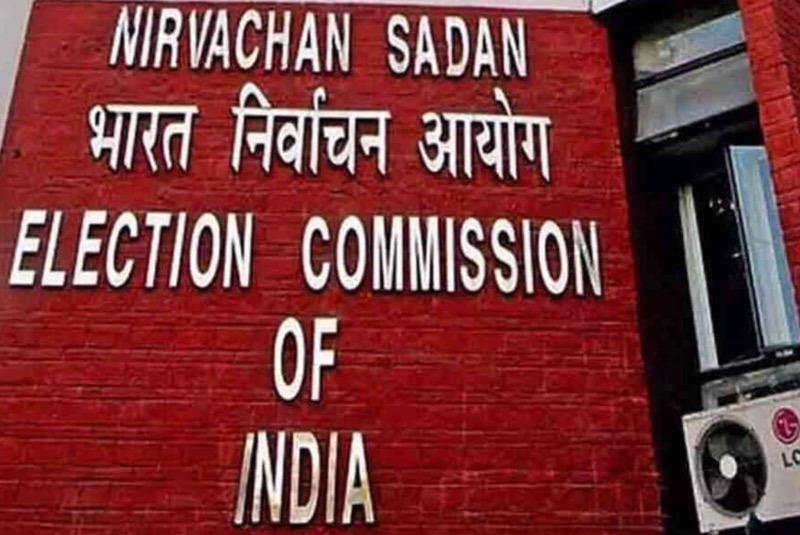
Representational image: Public domain
Gandhi’s campaign serves a purpose. It forces the Commission to explain itself, not just to courts or committees, but to the people.

In politics, often, the myth that those in power can get away with anything is persuasively peddled. But when the truth, which usually hides in numbers, comes out, it shows the ugly reality of what we believe to be the ‘normal’ functioning of a democracy. That is exactly what happened when Rahul Gandhi, the Leader of the Opposition, stood before a packed hall of journalists and party workers, and accused the Election Commission of India of “vote chori.” Election theft.

The data Gandhi presents is precise, almost obsessively so. He speaks of Mahadevapura in Karnataka, of specific booth numbers, of Form 6 being used to flood the electoral rolls with entries that do not appear to be real. He points to voters listed multiple times under slightly altered names. A man registered in Maharashtra and again in Karnataka. A house that appears to house sixty voters. A brewery that somehow becomes a place of residence. Parent names written as “Xyz Xyz.” Photographs so degraded that they resemble postage stamps from the 1960s. Each detail on its own could be dismissed as a clerical error. But Gandhi’s case is built not on exception, but on a clear pattern.

In statistical analysis, there’s a concept called signal versus noise. When data is obfuscated, it often supports those in power. But when data is presented with precision, it becomes a clear signal that points to a certain direction, to a deliberate pattern.

Voter rolls are vast, prone to human error, affected by migration, death, and bureaucracy. But Gandhi argues this isn’t noise — it’s signal. His implication is that the pattern itself, replicated across multiple states and constituencies, is too structured to be random. Too neat in its messiness.

The Election Commission of India — historically one of the country’s most respected institutions — disagrees. It accuses Gandhi of ‘misleading’ the public without methodically responding to Gandhi’s points in a systematic pattern. It merely says he’s misinterpreting voter list formats (without exactly saying how), misreading address conventions (again, without specifying how), and ignoring prior deletions and corrections made through routine verification. It reminds the country that five crore duplicate voters were removed from the rolls since 2021. It stresses that Gandhi’s own party, while in power in Karnataka, used the same voter rolls for a caste census, thereby implicitly validating their legitimacy.

At one level, the Commission’s response is bureaucratically flawed. It has asked Gandhi to submit affidavits, without answering to his claims. Could it be that the Election Commission of India is desperately blaming Gandhi and finding a bureaucratic way out? Perhaps. It wants his claims to be ‘formalised’ through a legal process. It insists that the rules were followed (again, without responding to specific allegations). It says that the law was upheld. And perhaps that is true. But there’s something about the nature of modern democratic institutions that complicates that truth. Lawful does not always mean trustworthy. And trust, once eroded, is rarely restored by procedure or statements.

That is the real subject here. Not voter rolls, not electoral forms, not booth-level inconsistencies. But trust. The invisible currency on which democracies depend. Here, one party is insisting that something is off — and it brings data, not just discontent.

What Gandhi proposes is radical, not because it alleges fraud but because it challenges a deep assumption in Indian politics: that the referee is impartial. The Election Commission has long stood as the gold standard among Indian institutions, praised for its independence, professionalism, and capacity to conduct the world’s largest democratic exercise with remarkable efficiency. But now, its integrity is in question. At least from the data Gandhi presented, it seems that the referee isn’t impartial.

And yet, the questions Gandhi raises aren’t entirely new. Civil society groups have flagged similar issues in the past: voter suppression in tribal regions, under-registration in urban slums, and deletion of names in Muslim-majority constituencies. These stories rarely make front-page news. But when stitched together, they form a kind of shadow ledger, a parallel record of democratic participation that doesn’t always match the official version.

To be clear, Gandhi’s critics have a point. His narrative is politically convenient. He invokes “vote chori,” provides only raw electoral data and anecdotal patterns. But that does not mean the claims lack substance. In fact, the more uncomfortable possibility is that both things could be true: the results could stand, and the system could still be compromised.

That is the paradox of modern democracy. It is not the overt theft of power that undermines legitimacy, but the erosion of clarity. When officials insist that everything is legal but cannot explain it in plain language — that is when trust begins to corrode. Not from scandal, but from opacity.

Gandhi, for all his political baggage, is tapping into something real. A growing discomfort with the gap between how elections are administered and how they are perceived. His demand is not simply for re-election or a recount. It is for machine-readable voter rolls. For transparency in Form 6 usage. For the polling booth CCTV footage to be released publicly. For anomalies to be explained, not dismissed. These are not revolutionary demands. They are procedural ones. But they cut to the heart of a question more existential than any single vote: who controls the machinery of democracy, and how do we know?

Gandhi’s campaign — regardless of its political motivations — serves a purpose. It forces the Commission to explain itself, not just to courts or committees, but to the people. That may be uncomfortable. But it is not unwelcome. In a democracy, legitimacy is not inherited. It is earned, again and again, in every election, at every booth, in every tiny detail, especially when no one is watching.

It is easy to dismiss Rahul Gandhi as a man chasing ghosts. But ghosts, in politics, are often just memories of what was lost. A cleaner system. A clearer result. An electorate that didn’t have to doubt the scoreboard. If those memories are being invoked now, it is not because the past was perfect, but because the present feels murkier.

The Election Commission may be right on procedure. But procedure, like faith, is not enough. Not anymore. Because what Gandhi is really asking is not “was this election fair?” but something deeper. Something that cannot be answered with forms or affidavits. He’s asking: can we still believe what we’re told?

And that is a question no democracy can afford to ignore.

-30-

Copyright©Madras Courier, All Rights Reserved. You may share using our article tools. Please don't cut articles from madrascourier.com and redistribute by email, post to the web, mobile phone or social media.
Please send in your feed back and comments to [email protected]

0 replies on “Vote Chori, Election Theft & Institutional Erosion: Why Rahul Gandhi Might Be Right”