
Uganda, Museveni, And The Chinese Loans That Made Power Stick

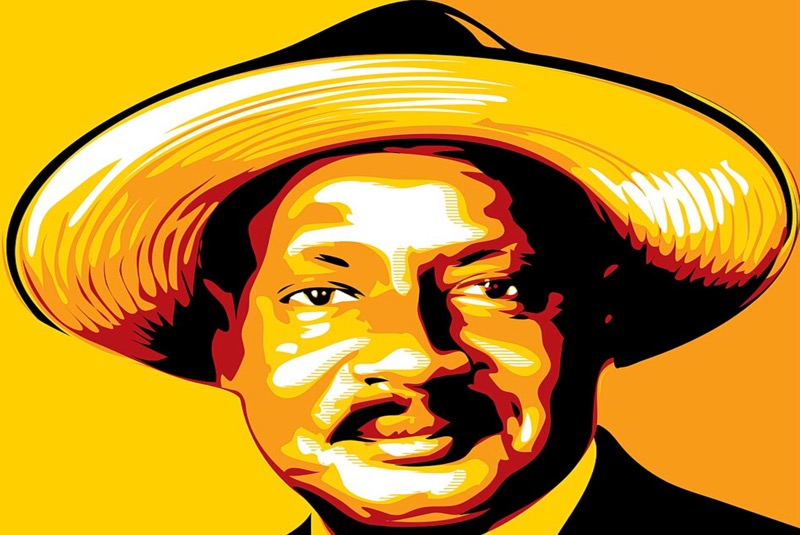
Museveni-Madras-Courier
Museveni, once a revolutionary who spoke of fundamental change, now presides over a state where change is carefully deferred or suppressed.

More than three-quarters of Ugandans have no living memory of a country led by anyone other than Yoweri Kaguta Museveni. Born after 1986, they have grown up with his voice as a constant presence on the radio, his image looming over billboards, and his political philosophy—part paternal lecture, part military command—woven into the rhythms of daily life.

Museveni came to power promising a decisive break from chaos and misrule, and for decades, he has framed his longevity as proof of success. Stability, development, and security are the words his government repeats most often. Yet beneath this narrative lies a quieter, more consequential transformation: the steady hollowing out of Uganda’s institutions and the tightening of a political system increasingly dependent on foreign capital, particularly from China, to sustain itself.

Museveni, now in his eighties, has always been candid about his impatience with restraints. “We don’t believe in term limits,” he once said, with the calm assurance of a man who no longer felt bound by democratic ritual. Term limits were duly removed, followed years later by the elimination of the presidential age cap.

These constitutional amendments were passed by a parliament dominated by his party, the National Resistance Movement, often amid scenes of coercion and heavy security presence. The changes were defended as pragmatic adjustments to Ugandan realities, but they signalled something more enduring: the subordination of constitutionalism to personal rule. Law became elastic, not a boundary but an instrument.

This elasticity has increasingly characterised Uganda’s key institutions. The judiciary, once seen as a potential counterweight to executive power, has been steadily tamed. Critics speak of “cadre judges,” appointed less for jurisprudential independence than for political reliability.

When courts have issued rulings that challenge the state, the response has at times been blunt. In one of the most emblematic moments, armed security personnel surrounded and entered the High Court in Kampala to re-arrest suspects who had just been granted bail. The message was unmistakable. Judicial authority existed, but only so long as it did not interfere with executive priorities.

The media has fared little better. Uganda boasts a vibrant press culture on paper, with talk shows, newspapers, and online platforms that crackle with political debate. In practice, journalists operate under constant threat. Radio stations have been shut down for hosting opposition voices, reporters detained, and editors summoned by security agencies for “questioning.” The effect is not total silence but a pervasive self-censorship, a sense that criticism must be calibrated carefully to avoid reprisal. Power does not need to crush every dissenting voice; it only needs to remind them of its reach.

Opposition politics, meanwhile, has been systematically constrained. Figures who once emerged from within Museveni’s own political circle, disillusioned by his refusal to step aside, found themselves rebranded as enemies of the state. Kizza Besigye, once a close ally, became a perennial challenger and, as a result, a familiar figure in police custody.

More recently, the rise of Bobi Wine, a pop star turned politician whose appeal among young Ugandans threatens the generational legitimacy of Museveni’s rule, has been met with arrests, harassment, and violence against supporters. Elections still take place, ballots are still cast, but the playing field has long ceased to be level.

This consolidation of power has required resources—money to fund security agencies, infrastructure projects to showcase development, and patronage networks to maintain loyalty. It is here that China enters the Ugandan story not as a distant geopolitical abstraction but as a practical enabler of Museveni’s longevity.

Over the past two decades, China has become one of Uganda’s most significant lenders and investors, financing roads, hydropower dams, industrial parks, and flagship projects meant to signal progress. The government frames these investments as evidence of Uganda’s global relevance and economic ambition. They are also deeply political.

Unlike Western aid, which often comes bundled with governance conditions and human rights scrutiny, Chinese loans are presented as strictly transactional: infrastructure in exchange for repayment, development without lectures. For a leader increasingly impatient with criticism and oversight, this model is attractive. It allows Museveni to bypass domestic accountability while presenting visible symbols of advancement: a new highway here, an expanded airport there. Concrete and asphalt become substitutes for democratic legitimacy.

Yet these loans are not gifts. They are commercial agreements, often opaque, negotiated behind closed doors, and backed by sovereign guarantees. Uganda’s debt to China has grown steadily, raising concerns among economists and civil-society groups about sustainability.

The most controversial example is the financing of Entebbe International Airport’s expansion, which was mainly funded by a loan from China’s Exim Bank. When details of the agreement emerged, they revealed clauses that alarmed officials within Uganda’s own Civil Aviation Authority.

Provisions allowed extensive oversight by the lender and offered limited recourse in the event of disputes. Though both governments denied that Uganda risked losing control of the airport, the episode exposed the asymmetry of these relationships.

Dependence is not always dramatic; it is often bureaucratic. Debt repayments quietly shape budget priorities, diverting funds from health or education toward servicing loans. Negotiating leverage shifts subtly. When a government’s fiscal stability relies on continued goodwill from a single creditor, policy independence erodes. For Museveni, Chinese financing has become a political lifeline, enabling him to sustain a centralised system while sidestepping both domestic and Western pressure for reform. For Uganda, it represents a narrowing of options.

The irony is that Museveni still speaks the language of sovereignty and self-determination. He casts himself as a guardian of national independence, resistant to foreign meddling. But sovereignty in the twenty-first century is as much about economic autonomy as it is about flags and borders. When critical infrastructure is built with foreign loans under terms few citizens have seen, when debt obligations constrain future governments, independence becomes conditional. The decisions of tomorrow are shaped by contracts signed today.

As Museveni ages, the system he has built looks increasingly personalised. His wife serves as a senior minister; his son commands the army. Succession remains deliberately ambiguous, discussed only in whispers and on social media. Institutions that might manage a transition—an independent parliament, a trusted judiciary, a professional military insulated from family politics—have been weakened by years of politicisation. Stability, the regime’s greatest boast, now appears inseparable from one man’s continued presence.

China’s role in this story is not that of a puppeteer but of an accelerant. It has not created Uganda’s authoritarian drift, but it has made it easier to sustain. Loans have financed the physical architecture of development while reinforcing a political architecture of permanence. Museveni, once a revolutionary who spoke of fundamental change, now presides over a state where change is carefully managed, deferred, or suppressed.

For Uganda’s younger generation, the contradiction is stark. They have grown up connected to the world, acutely aware of alternatives, and restless under a leadership older than their parents. They see new roads but also mounting debt, shiny infrastructure alongside shrinking civic space.

The question that hangs over the country is not simply how long Museveni will rule, but what kind of state will remain when he eventually leaves. Institutions weakened for the sake of one man’s endurance are difficult to rebuild, and debts incurred in the name of progress do not disappear with a change of leadership. In that sense, Museveni’s greatest legacy may not be the stability he claims, but the dependencies—political, institutional, and financial—that will shape Uganda long after him.

-30-

Copyright©Madras Courier, All Rights Reserved. You may share using our article tools. Please don't cut articles from madrascourier.com and redistribute by email, post to the web, mobile phone or social media.
Please send in your feed back and comments to [email protected]

0 replies on “Uganda, Museveni, And The Chinese Loans That Made Power Stick”