
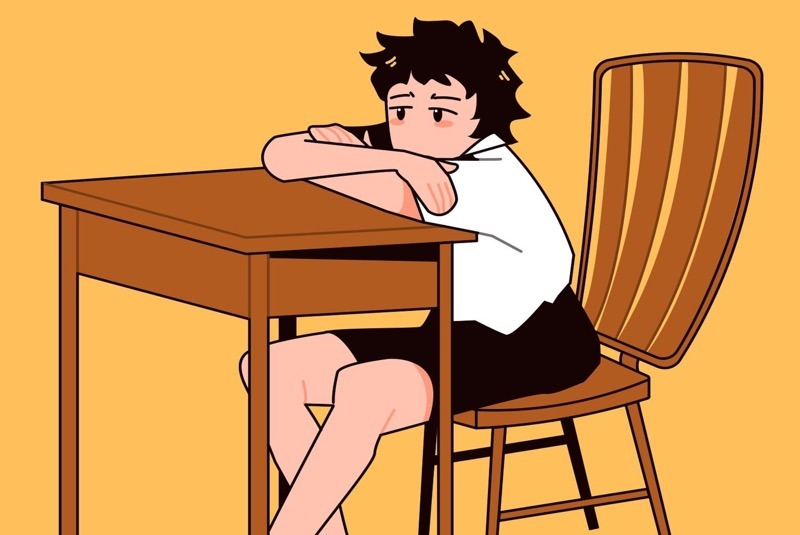
India has long been grappling with the tragedy of student suicides. According to the National Crime Records Bureau (NCRB), over 13,000 students took their own lives in 2022—accounting for 7.6 per cent of all suicides in the country that year. The crisis has become so acute that the Supreme Court recently described it as a “suicide epidemic.”
This year, however, marks a turning point. In two landmark judgments—Amit Kumar v Union of India and Sukhdeb Saha v State of Andhra Pradesh—the Court has taken proactive steps to address the crisis. In Amit Kumar, it ordered the formation of a National Task Force to investigate the root causes of student suicides and propose a long-term regulatory framework. More recently, in Sukhdeb Saha, the Supreme Court issued a comprehensive set of interim guidelines aimed at curbing suicides among students, particularly in higher education institutions. These guidelines represent a crucial first step toward building a mental health support system within India’s education ecosystem.
The Court’s directions include that each educational institution must formulate a mental health policy. Qualified mental health professionals should be appointed. A clear and confidential referral system for psychological support must be established. Institutions must have robust mechanisms to address bullying and harassment. Teachers and staff should be trained in psychological first aid and in recognising signs of distress. Parents should be sensitized not to place undue pressure on their wards. The Court also ordered that access to means commonly used in suicides should be restricted—such as rooftops or ceiling fans in residential institutions. These are serious, systemic suggestions. Importantly, the Court did not wait for the Task Force’s findings to act—it recognised that urgent, preventive steps are needed.
Among these otherwise well-conceived directions, Guideline IV stands out—for both its importance and its ambiguity. This guideline advises educational institutions, especially coaching centres, to “as far as possible” avoid academic batch discrimination, public shaming, or imposing unreasonable academic targets. It is also the only non-mandatory guideline, likely because of its practical complexity. And therein lies the problem. In India’s hyper-competitive coaching culture, academic ranking is not just a pedagogical method—it’s a business model. Coaching centres rely on regular mock tests and internal ranking to evaluate and sort students. High performers get access to the best resources and teachers, enhancing the institute’s success rate in competitive exams. This ranking system, deeply embedded in the ecosystem, inadvertently fuels peer pressure, anxiety, and, tragically, despair. While the intent behind Guideline IV is commendable, its implementation will require a complete cultural shift—one that questions the very structure of India’s exam-oriented education system.
The Supreme Court rightly acknowledges that these guidelines are stop-gap measures. The real, long-term solution lies in the hands of the National Task Force, which has been tasked with identifying the full spectrum of causes behind student suicides. While caste-based discrimination and academic stress have been acknowledged, other systemic and psychosocial factors—family expectations, financial pressures, lack of social support—must also be studied and addressed. Any effective framework must be holistic. It cannot rely solely on institutional responsibility. Parents, students, educators, administrators, and policymakers must all be part of the conversation. Regulations can guide, but empathy, reform, and inclusion must drive change.
These judicial interventions are not the final word—but they are an important beginning. In a country where student suicides are all too frequent, the Supreme Court’s decision to move beyond passive observation is both welcome and necessary. The question now is whether society at large—especially those who design and profit from the current educational system—is willing to listen. Until then, the guidelines stand as a fragile but urgent lifeline, reminding us that behind every statistic is a student, a life, a story that deserved better.
-30-
Copyright©Madras Courier, All Rights Reserved. You may share using our article tools. Please don't cut articles from madrascourier.com and redistribute by email, post to the web, mobile phone or social media.Please send in your feed back and comments to [email protected]