The Silent Siege On Kerala’s Pluralism: How Political Manipulation Is Fracturing Faiths

Kerala_Secularism-Madras_Courier
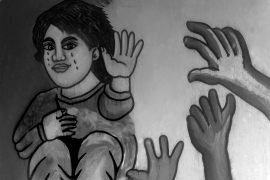
Representational Image: Public domain.
Kerala's identity is that of coexistence—a characteristic markedly different from the engineered hostility that is propagated in social media.

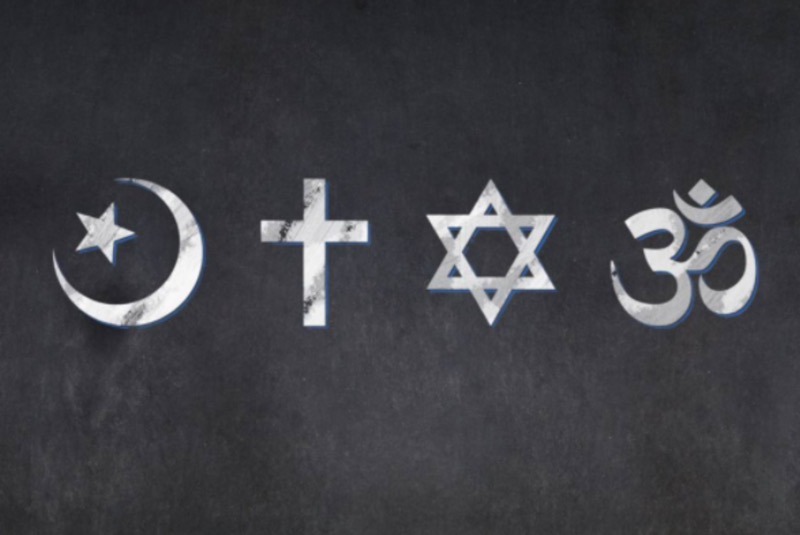
Kerala has long been regarded as the quintessential state for communal harmony and peace. Hindus, Muslims, and Christians have lived together, celebrating one another’s festivals and sharing neighbourhoods and schools.

The literature and films of Kerala have rightly captured the sense of coexistence among people of various faiths; it is a unique culture shaped by an underlying consensus on mutual respect and understanding.

However, this long-standing fabric of communal harmony is now showing unmistakable signs of falling apart, thanks to the devious machinations of the Sangh Parivar—the ideological pillar of the BJP. 

Traditionally, the Christians and the Muslims of Kerala, who together make up nearly half of the state’s population, have supported either the CPM-led Left Democratic Front or the Congress-led United Democratic Front, leaving no chance for the BJP to come to power in the state.

Realising that driving a wedge between the two major minority communities in the state is the only way to grab power, the Rashtriya Swayamsevak Sangh (RSS)—the ideological fountainhead of the Bharatiya Janata Party (BJP)—has, through a methodical and prolonged campaign of insinuation, successfully created distrust between these communities.

Recently, it has succeeded in persuading sections of the Christian community to turn against the Muslim community, spreading prejudicial motifs through social media platforms.

What were once platforms for engaged conversations, social media now dominates the landscape for generating distrust. False narratives concerning “love jihad,” ‘hijab,” and alleged “Muslim takeover of Christian lands” now occupy the airtime of seemingly endless WhatsApp groups and Facebook pages.

In October 2025, St. Rita’s Public School in Palluruthy, Kochi, operated by the Latin Catholic Church, was swept into a crisis. An instance of a Muslim girl wearing the hijab, in violation of the school’s uniform policy, led to a communal flashpoint.

What should have been nothing more than a routine convention about the dress code became, in the febrile social media world, “an attack on religious liberty” and “a deliberate provocation by Christian managements.” Videos, voice notes, and memes characterised the episode in stark terms.

Before long, communal organisations were staging protests and counter-protests. A student’s personal decision became a public debate about identity and religion that compromised trust between Muslims and Christians.

A similar distortion happened earlier this year at Munambam in the coastal belt of Ernakulam, where about six hundred Latin Christian families faced claims by the Kerala State Waqf Board that the land they occupied was waqf land. The High Court rebuked the Board for waiting 69 years to make its claim, describing the act as arbitrary.

However, the nuance was completely lost on social media. The situation was recast as “Muslims trying to take Christian land.” Hashtags, short videos, and provocative words soon appeared in local WhatsApp groups, while the BJP’s functionaries declared themselves “defenders of Christian interests.”

This incident proved the ease with which Kerala’s complicated land rights issues are reconfigured into stories of religious victimhood. What was fundamentally a legal issue had become a communal spectacle.

Perhaps the most pernicious of all has been the recycling of the “love jihad” myth — the dubious claim that Muslim men entice non-Muslim women into marriage and conversion. In Kerala, this narrative has transformed into a newer term, “live jihad,” a catch-all term for any arrangement between a Muslim man and a Christian woman, be it friendship or marriage.

Alarmingly, a section of the Christian clergy and certain groups affiliated with churches have repeated this story. Some members of the church’s clergy have warned their followers in sermons, asking them to be wary of “conversion traps.” Others have warned parents through church publications, justifying what was once mere Sangh Parivar propaganda.

Unfortunately, this response stems from a permanent, deep-seated anxiety the clergy have: a decline in the proportion of Christians in the population, concern about seeing Muslims as competitors in education and business, and the loss of political clout.

Kerala’s investment in high literacy and digital development, once a source of pride, could be a double-edged sword. The spread of misinformation is faster in Kerala than in nearly all states. Any 30-second clip sent to a group—a priest warning of Muslim designs and conspiracy or videos of a doctored photo of a hijab protest—can reach tens of thousands in hours. These networks thrive on emotional content. Outrage gets clicks, and suspicion keeps them there.

Everything—the state’s Human Development Index, the strong tradition of public health and education, and even cultural capital—is rooted in its pluralism. If Christian–Muslim relations deteriorate in the state, it will seriously impact the state. Every interfaith project that engages communities of women and their families—from cooperatives to self-help groups—will ultimately fail. The political conversation will descend to the level of identity wars, and the moral capital Kerala has built over the past 40 years as a tolerant, literate, and politically aware society will be eroded.

If we are to stop this free fall, arts and faith community leaders, clergy and bishops representing Christianity, Islam, and Hinduism must serve the community and speak together, clearly and unequivocally, against the weaponisation of faith. 

Kerala’s identity is that of coexistence—a characteristic markedly different from the engineered hostility that is propagated in social media. The challenge is not only to reject falsehoods, but also to reaffirm what generations have constructed: a secular, inclusive ethos that ensures the religious practice of one person does not ever compromise the dignity of another.

Now that the world is witnessing the decline of a state long celebrated for its enlightenment, the question for every Keralite—Hindu, Muslim, or Christian—is straightforward: Will they share the next hate message, or will they share hope?

-30-

Copyright©Madras Courier, All Rights Reserved. You may share using our article tools. Please don't cut articles from madrascourier.com and redistribute by email, post to the web, mobile phone or social media.
Please send in your feed back and comments to [email protected]

0 replies on “The Silent Siege On Kerala’s Pluralism: How Political Manipulation Is Fracturing Faiths”