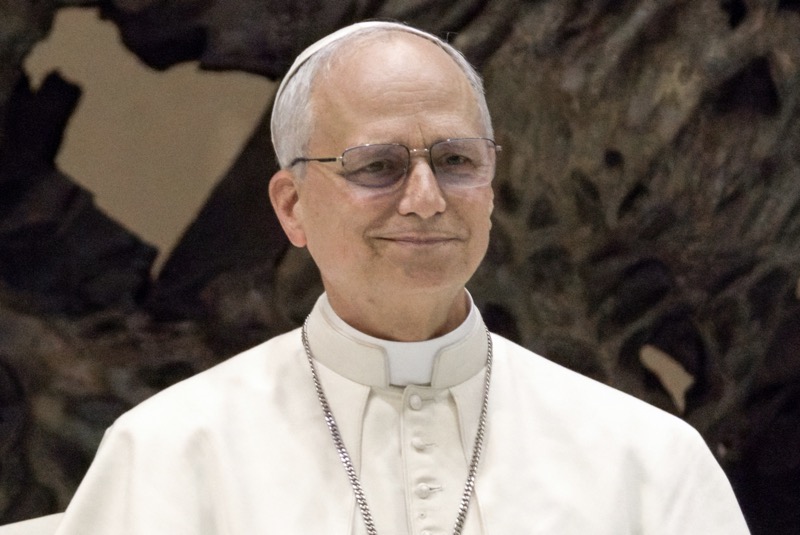
The Pope’s recent remarks underscore a fundamental principle: power, when exercised without restraint, leads to moral corrosion. His warning about “tyrants ravaging the world” was not delivered as a geopolitical briefing. Instead, he said, in his plainspoken style with simplicity and clarity, that the suffering of ordinary people is the only metric that matters.
Beneath that simplicity lies a question that is far more complex: why does tyranny endure in an era that prides itself on democratic norms and global interdependence?
To answer that question, we must recognise that tyranny does not always appear in the same uniform. The twentieth century trained us to identify tyranny with repression: the spectacle of marching armies, censored newspapers, and prison camps. Those markers have not disappeared, but they are no longer the only signs.
In the modern era, strongmen operate in the grey space between legality and coercion. They hold elections, but hollow them out. They speak the language of the people, but surreptitiously dismantle the institutions.
The Pope’s critique, of course, reflects on the brutality of authoritarian regimes. However, it also highlights the erosion of moral accountability that allows such regimes to take root.
There is a tendency, particularly in the West, to treat tyranny as an external problem—something that happens elsewhere, in places with weaker traditions of governance. Some may take comfort in such a belief. However, it is misleading and can lead to complacency.
Tyrants are not confined by geography. They emerge wherever fear can be mobilised, wherever inequality becomes so entrenched that it distorts political life, and wherever truth becomes negotiable.
The Pope’s intervention is striking because it focuses on the human consequences: displacement, hunger, and the despair of communities that face violence. In doing so, he reframes tyranny not as a category of government, but as a pattern of harm.
Consider the role of narrative. Historically, tyrants have been master storytellers. They construct a version of reality in which their authority appears justified and necessary. The story might centre on national revival, cultural purity, or existential threat. What matters is its emotional resonance. Once that narrative takes hold, it becomes difficult to challenge it because it does not operate on the level of evidence alone. It becomes an identity.
The Pope’s language, by contrast, deliberately resists this pull. He does not offer a competing grand narrative. He returns, again and again, to individual dignity. He asks listeners to measure political claims against lived experience rather than ideological coherence.
There is also the question of complicity. Tyranny is rarely sustained by a single individual; it survives on networks of active and passive enablers: bureaucrats who follow orders, citizens who look away, international actors who prioritise stability over justice.
In this context, the Pope’s critique becomes uncomfortable, particularly for audiences who see themselves as observers rather than participants. By emphasising the interconnectedness of the modern world, he implies that the suffering caused by tyrannical systems is not as distant as it might seem. Supply chains, tariffs, and diplomatic alliances serve as conduits through which repression is ordered.
What distinguishes the Pope in this conversation is the framework he uses. His argument is rooted in a morality that centres on vulnerability. The poor, the displaced, and the marginalised are not peripheral concerns; they are the lens through which all political arrangements should be evaluated.
His polemic stands in contrast to a conventional approach, which tends to prioritise order, growth, and security. The Pope does not dismiss those goals outright, but insists that they cannot be pursued at the expense of human dignity. It is a standard that is easy to endorse in theory and difficult to apply in practice.
The difficulty lies in the way modern societies process information. We are inundated with images of suffering to the point where they risk becoming distant and abstract. Tyranny, in this context, can feel like background noise in an endless stream of crises.
The Pope’s rhetoric cuts through that by reintroducing a sense of immediacy. When he speaks of people being “ravaged,” the word is visceral. It resists the distancing effect of statistics and policy debates. It asks the listener to confront the human cost directly.
However, moral clarity does not automatically translate into political change. Critics argue that the Pope’s statements, while compelling, lack the specificity needed to influence policy. They might point out that condemning tyranny is easier than addressing the structural conditions that allow it to persist.
These critiques are not without merit. But they also risk underestimating the role of moral authority in shaping public discourse. The Pope does not command armies, but his influence lies in his ability to shift the terms of the conversation, to make certain arguments seem untenable.
To see how this works, it is useful to look at the historical context. The Catholic Church has had a complicated relationship with political power, at times aligning itself with authority and at others challenging it.
The Pope emphasises solidarity with the marginalised and scepticism towards concentrated power. His comments on tyranny are a set of principles that can be applied across contexts.
Today, as the world is experiencing multiple crises, his words resonate even more. Conflicts in various regions have led to large-scale displacement. Economic inequalities have widened, both within and between countries. Technological changes have transformed the way information is produced and consumed, creating new opportunities for manipulation.
In such an environment, the mechanisms that once served as checks on power can weaken. The Pope’s warning, then, is not just about the presence of tyrants, but about the fragility of the systems meant to contain them.
Moreover, his remarks pose an implicit challenge to both political leaders and individuals. If tyranny is sustained by patterns of behaviour, then to resist it, we must be willing to question our assumptions, pay attention to those most affected by political decisions, and accept a degree of discomfort. This is not a call to heroism. It is a call to attentiveness and to moral vigilance, which is easily eroded by the routines of daily life.
The effectiveness of such a call depends, in part, on the audience’s willingness to engage with it. In a polarised environment, where statements are often filtered through partisan lenses, even a broadly framed critique can be interpreted as taking sides.
This is another challenge the Pope faces. His effort to speak in universal terms can be both a strength and a limitation. It allows his message to travel across contexts, but it also leaves room for selective interpretation. Different groups may hear his words as confirmation of their existing views rather than an invitation to reconsider them.
Still, there is something enduring about the approach he takes. By focusing on the human consequences of power, he sidesteps many of the debates that tend to dominate political discourse. He does not ask whether a particular policy is efficient or whether a particular leader is effective. He asks what happens to people. In this sense, his critique of tyranny is not about identifying villains but about redefining what counts as success.
It implies that the struggle against tyranny is an ongoing process, which requires constant attention to the ways in which power is exercised and justified. Institutions matter, but so do the habits that shape how those institutions function. Narratives matter, but so does the willingness to question them. The Pope’s remarks serve as a reminder that these elements are interconnected. When one weakens, the others are affected.
In the end, what makes his intervention notable is its persistence. He has returned to this theme repeatedly, in different contexts and with different emphases. That repetition can be read as a sign of urgency, but also as an acknowledgement of how difficult the problem is to resolve.
Tyranny, in its various forms, adapts. It evolves alongside the societies it inhabits. Confronting it requires a similar adaptability, a willingness to rethink assumptions and to engage with complexity.
There is no guarantee that such efforts will succeed. History offers ample evidence of their limitations. But it also suggests that the absence of such efforts carries its own costs.
By framing tyranny as a moral issue rather than a purely political one, the Pope expands the scope of responsibility. He invites a broader range of actors into the conversation. The world he describes—where unchecked power inflicts widespread harm—is not hypothetical. The question is how that description is received, and what follows from it.
-30-
Copyright©Madras Courier, All Rights Reserved. You may share using our article tools. Please don't cut articles from madrascourier.com and redistribute by email, post to the web, mobile phone or social media.Please send in your feed back and comments to editor@madrascourier.com