
The Global Crisis Of Sexual Violence in War Zones

Rape-war-madras-courier
Representational image: Public domain.
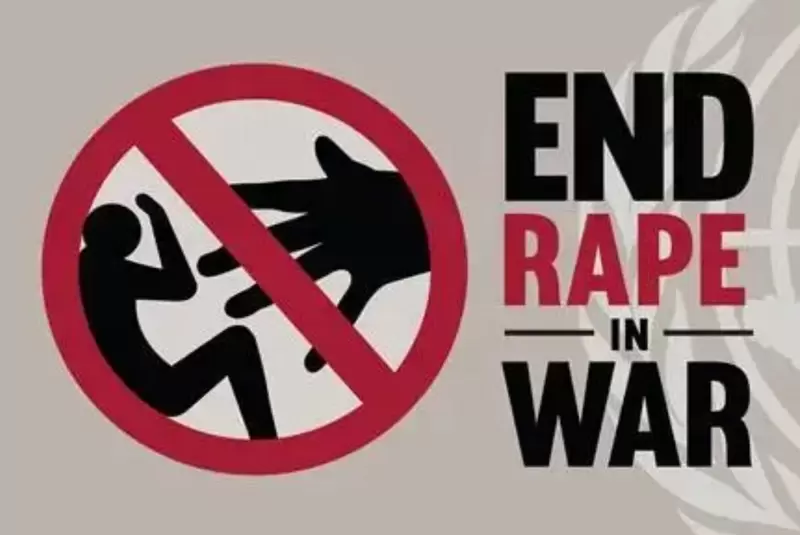
The sexual violence that plagues conflict zones is not an unfortunate byproduct of war; it is its own weapon of destruction, one that leaves scars long after the last shot is fired.

In the remote, war-torn regions of the Democratic Republic of the Congo, a survivor recounts the brutal assault that defines her life. It’s a memory she can neither outrun nor silence. “One day, when we went out to look for firewood in the bush, we fell into the hands of armed, hooded men who raped us,” she recalls. “We had no one to come to our aid, even though we screamed in the bush! When I got home, I remained calm and did not talk to anyone. I decided not to go to the hospital because I was afraid and ashamed.”

This harrowing testimony, gathered in 2024, illustrates the ongoing, often overlooked epidemic of sexual violence in conflict zones. It is a global crisis that has garnered alarming but insufficient attention.

For years, international organisations such as the United Nations have sounded the alarm about the devastating toll of conflict-related sexual violence, with Secretary-General António Guterres condemning it as “a devastating form of attack and repression.” The impact, he adds, is “multifaceted,” ranging from physical injuries to profound psychological trauma, destruction of family structures, and a breakdown of entire communities. And yet, despite the overwhelming evidence, these violations remain disturbingly entrenched in the strategies of armed groups across the world.

Sexual violence in conflict zones is not a tragic anomaly, but rather a persistent and calculated weapon of war. Women, children, refugees, and even men are often caught in the crossfire of battles they did not choose, enduring horrific violations of their bodies and souls. The victimisation of civilians—particularly women and girls—has become a systematic element of warfare, a grotesque tool for asserting power and terrorising populations into submission.

Where the world’s focus tends to rest on the economic fallout of war—disrupted supply chains, collapsing markets, rising commodity prices—equal weight should be placed on the human cost. The suffering of individuals, particularly the sexual violence that scars women and children, remains a global injustice that is still treated as an afterthought.

According to a recent UN report, sexual violence in conflict-affected regions has increased by roughly 35 per cent, with gang rape becoming an increasingly common tactic. In 2024 alone, 1,938 children were subjected to sexual violence; it’s an appalling 50 per cent increase compared to just four years prior. Yet, these statistics are almost certainly an underestimation, given that many cases go unreported due to cultural taboos, fear of retribution, and the widespread absence of healthcare infrastructure.

The true extent of this violence is obscured not only by its horrifying nature but also by the precarious conditions in which it unfolds. In conflict zones, where resources such as food, water, and shelter are scarce, the surge in exploitation and trafficking comes as little surprise.

Armed groups use sexual violence as a form of subjugation and control. Women and girls are abducted, enslaved, and sold as commodities in a brutal economy of violence. Some of these groups even employ rape as a military strategy—one that serves multiple objectives. By targeting women and girls, they aim to destabilise entire communities, diminish resistance, and degrade the moral and social fabric of the populations they seek to conquer.

What is even more chilling is the deliberate use of rape and sexual enslavement as tools of ethnic and political warfare. The sexual exploitation of women often targets those seen as “the enemy.” It’s a symbolic way of punishing men by violating their women, a practice rooted in patriarchal notions of honour and shame.

According to the United Nations, a staggering 97.5 per cent of documented cases of sexual violence in these regions involve girls, underscoring the specific and disproportionate suffering endured by children. Each of these numbers represents not just a statistic, but a shattered future; a child forever altered by unspeakable trauma.

The toll of sexual violence in conflict is not confined to the physical realm. Its consequences ripple through communities, shattering families and deepening the wounds of war. For survivors, the path to recovery is fraught with challenges—trauma, stigmatisation, and often a total absence of support.

In the wake of such violence, legal frameworks and institutions meant to deliver justice are often weak or non-existent. The absence of a functioning rule of law in many conflict zones further impedes survivors’ access to justice. And when international laws are violated, the gap between legal norms and their enforcement remains as wide as ever.

Given this grim reality, what can be done to address the pervasive issue of sexual violence in conflict zones? Experts agree that while efforts to hold perpetrators accountable remain crucial, there must also be a more immediate, practical approach to support survivors.

International organisations such as the World Health Organization (WHO) have outlined guidelines for responding to gender-based violence in conflict, advocating for survivor-centred care and training local health providers to offer both immediate and long-term support. But even these efforts are often hindered by severe underfunding, logistical challenges, and the broader context of lawlessness and impunity.

The tragedy is compounded by the barriers survivors face in reporting these crimes. Fear of retaliation, the stigma attached to sexual violence, and a lack of access to safe reporting channels are significant obstacles to accountability.

In many cases, survivors are left to navigate this overwhelming trauma without adequate medical or psychological support. As a result, many suffer in silence, further perpetuating the cycle of abuse and neglect.

The international community has long promised to end impunity for crimes of sexual violence, but these promises are frequently unfulfilled. Without a more concerted global effort—one that includes meaningful legal reforms, stronger accountability mechanisms, and a greater commitment to the well-being of survivors—these atrocities will continue to unfold, largely unchecked.

As the world shifts its focus to the macroeconomic consequences of war—whether oil prices or refugee crises—there must be a deeper reckoning with the human cost. The sexual violence that plagues conflict zones is not an unfortunate byproduct of war; it is its own weapon of destruction, one that leaves scars long after the last shot is fired. And until we begin to understand war not just in terms of resources lost, but in terms of dignity stolen and futures erased, the true cost of conflict will remain tragically incomplete.

-30-

Copyright©Madras Courier, All Rights Reserved. You may share using our article tools. Please don't cut articles from madrascourier.com and redistribute by email, post to the web, mobile phone or social media.
Please send in your feed back and comments to [email protected]

0 replies on “The Global Crisis Of Sexual Violence in War Zones”