The Discipline of Not Doing: How to Do Less, Not More

Do-Less-Madras-Courier
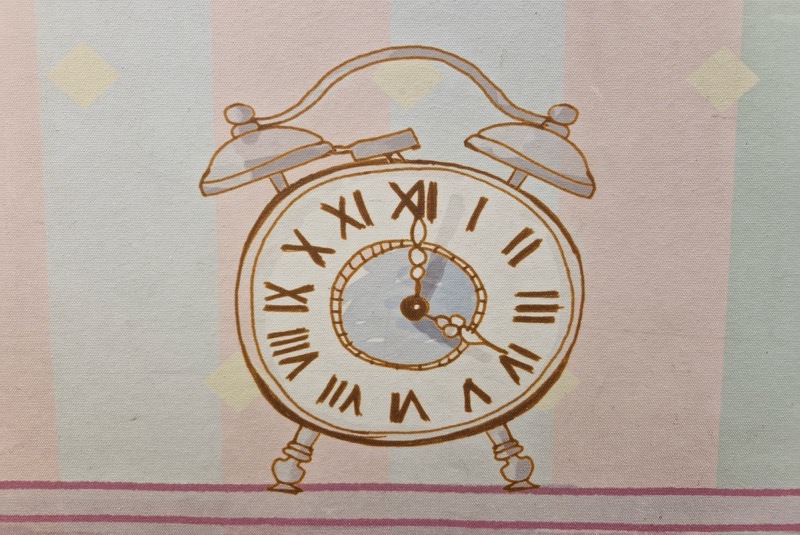
Representational Image: 7MB
In a world of endless tasks and distractions, cultivating a "not-to-do" list helps reclaim focus, creativity, and long-term success.

There’s an odd paradox at the heart of modern life: we chase more—more opportunities, more experiences, more productivity. Yet, we end up with less of what we truly want: focus, clarity, and the capacity to make meaningful progress toward long-term goals.

We build sprawling “to-do lists” that span continents of ideas, yet rarely consider the counterweight to ambition: the discipline of not doing. Strange as it sounds, cultivating a list of things not to do is one of the most pragmatic strategies for reclaiming our cognitive lives.

To understand why, picture the human mind as a limited bandwidth processor. This is not a metaphor but a documented reality, as noted by researchers. Studies across psychology and neuroscience show that the brain’s ability to sustain attention is an acquired trait. However, the demands placed on it by modern digital environments are relentless.

Long before smartphones, the psychologist Gloria Mark observed that knowledge workers would switch tasks nearly every three minutes, fragmenting their attention so profoundly that they rarely spent more than a few minutes uninterrupted on any given project. This erratic pattern was shown to sap focus and diminish deep work.

In recent years, this phenomenon has only intensified. Peer-reviewed research published in Cognitive Research: Principles and Implications highlights a negative relationship between frequent media multitasking and executive function — the suite of cognitive processes that includes attention control and goal-directed behaviour.

Meanwhile, longitudinal studies of adolescents suggest that habitual media multitasking correlates with increased attention problems over time. These are not experimental anecdotes but large-scale data pointing to a clear pattern: constant mental switching weakens our capacity to stay focused on substantive tasks.

This is where the idea of a not-to-do list transcends productivity fad and becomes a psychological strategy. Most productivity frameworks—Pomodoro techniques, task batching, productivity apps—assume that we will do more: more tasks, more output, more checkmarks. But there’s a deeper insight from cognitive science: the more you reduce unnecessary switches and interruptions, the more mental energy you free for purposeful work. Behavioural scientists describe this phenomenon as reducing decision fatigue; when fewer trivial decisions compete for your attention, your cognitive system can allocate more resources to what matters most.

If your morning begins with a reflexive scroll through social feeds, your brain expends precious executive control before your day has truly begun. A Harvard Health study explains that even the presence of a smartphone — not just its use — can inhibit focus by acting as a constant, low-grade distraction. From pop-up alerts to endless feeds of content designed to trigger dopamine responses, digital environments are engineered to keep you engaged just long enough to be diverted from your own agenda.

Let’s bring this down to everyday life. Imagine you start your day with the intention of working on a long-term project—say, writing a paper, mastering a skill, or planning a business strategy. An email notification, a Slack ping, a trending tweet disrupts your flow. According to cognitive psychologists, every time you switch tasks, your brain enters a period of “re-orientation” where it must re-engage with the original task, costing significant time and mental effort. In fact, researchers (such as those studying interruption science) have found that it can take nearly half an hour to fully resume a complex task after a distraction.

This cognitive cost is not trivial. It accumulates. And it undermines the very conditions you need to achieve deep, meaningful work: extended concentration, uninterrupted thinking, and sustained effort toward long-term goals. An obsession with short-term gains—liking posts, checking brief updates, responding immediately—offers quick hits of satisfaction but diminishes your capacity for long-term achievement.

A not-to-do list addresses this directly by naming the common culprits of distraction and removing them from the realm of accidental choice. Instead of resisting impulses in real-time, you pre-decide where you will not allocate your attention. It might include items like:

  • “Do not check messages until after completing the day’s most important task.”
  • “Do not agree to meetings without a clear agenda.”
  • “Do not engage in social media scrolling during designated deep work time.”

These aren’t moral edicts; they are structural decisions rooted in an understanding of how the brain functions. The point is not to stifle pleasure but to protect cognitive bandwidth.

The importance of this cannot be overstated. As behavioural research shows, multitasking—especially when it involves switching between unrelated media and tasks—has been associated with diminished executive control and slower response times on tasks requiring sustained attention. In other words, the cost of distraction is slower thinking and weaker memory—two of our most valuable cognitive assets.

In addition to preserving focus, a not-to-do list offers what psychologists call environmental structuring. Instead of waiting for sheer willpower to resist every distraction—as if human willpower were an inexhaustible resource—you design your environment to make distraction less tempting. Silence notifications. Batch communication. Schedule blocks of uninterrupted time. These steps create the conditions for what researchers call deep work—periods of intense concentration during which significant progress on meaningful tasks actually happens.

Critically, this approach also creates space for meta-cognition—thinking about thinking. When the mind is not constantly reacting, it can reflect, plan, and deliberate. There is mounting evidence from cognitive research that such reflection is not a luxury; it’s a key ingredient in creativity and long-term achievement. Without moments of uninterrupted thought, you lose the ability to integrate complex ideas, test hypotheses internally, and develop strategic insight.

This is not just theory. Many high performers quietly adopt variations of not-to-do practices. Writers block off time to write without email. Researchers refuse to open social media during work hours. Entrepreneurs schedule “no-meeting days” to protect cognitive space. None of this is flashy, and none of it generates immediate external validation—but cumulatively, it produces results that matter.

And yet, resistance to this idea is understandable. We live in a culture that equates freedom with endless choice. Social media encourages the belief that engagement equals influence, that responsiveness equals productivity, and that constant connectivity equals relevance. But this is a false equivalence. Freedom without focus is chaos. More inputs do not make you smarter; they make your mind noisier.

The most successful thinkers and creators are not those who do everything. They are those who deliberately choose what not to do. A curated attention economy, managed by a not-to-do list, preserves the inner conditions necessary for substantial, forward-looking work. It aligns your daily routines with your deepest aspirations rather than the fleeting demands of digital distraction.

In the end, the radical act is not accumulation but subtraction. It is the calm, rational decision to remove activities that do not serve your long-term goals. It is the recognition that your time, attention, and intention are limited — and that protecting them is not a self-indulgence, but an investment in your future self. Quietly and steadily, not-to-do lists reshape not just our schedules, but our lives — grounding them in purpose rather than perpetual distraction.

-30-

Copyright©Madras Courier, All Rights Reserved. You may share using our article tools. Please don't cut articles from madrascourier.com and redistribute by email, post to the web, mobile phone or social media.
Please send in your feed back and comments to [email protected]

0 replies on “The Discipline of Not Doing: How to Do Less, Not More”