The latest agreement between the United States and Iran offers a moment of relief in a region exhausted by war. Months of confrontation have rattled energy markets, disrupted supply chains, and heightened fears of a wider regional conflict. Yet the significance of the deal extends beyond diplomacy and economics. If it holds, even imperfectly, it may spare thousands of civilians from further suffering. Among them, children have the most at stake.
Wars are usually narrated through the language of power. Governments speak of deterrence and red lines. Military planners debate strategy. Television panels tally gains and losses as though conflict were a ledger. Diplomats eventually emerge to negotiate terms. Lost beneath these familiar narratives is an unsettling reality: war is often experienced most acutely by those who have no role in making it.
As the confrontation between the United States and Iran appears to have entered a period of relative pause—even as violence persists elsewhere in the region, including Lebanon—children remain its most vulnerable victims. They neither chose this conflict nor shaped the decisions that produced it. Yet they bear many of its consequences.
The numbers alone are sobering. In March 2026, UNICEF reported that more than 1,100 children across West Asia had become casualties within days of the conflict’s outbreak in February. Statistics convey scale, but they often obscure the human stories behind them.
One such story emerged from Iran on 28 February 2026, when projectiles struck Shajareh Tayyebeh Girls’ Elementary School in Minab, in Hormozgan Province, during school hours. According to UNICEF, 168 girls between the ages of seven and twelve were killed, and many others were injured. What should have been an ordinary day of lessons became a scene of devastation. The attack transformed a place associated with learning and safety into a symbol of war’s indiscriminate reach.
Israeli children have experienced a different but equally unsettling reality. Missile attacks repeatedly disrupted daily life, sending families between homes, schools and bomb shelters. Even those who escaped physical injury often endured prolonged fear, separation from relatives and the psychological trauma that accompanies life under threat.
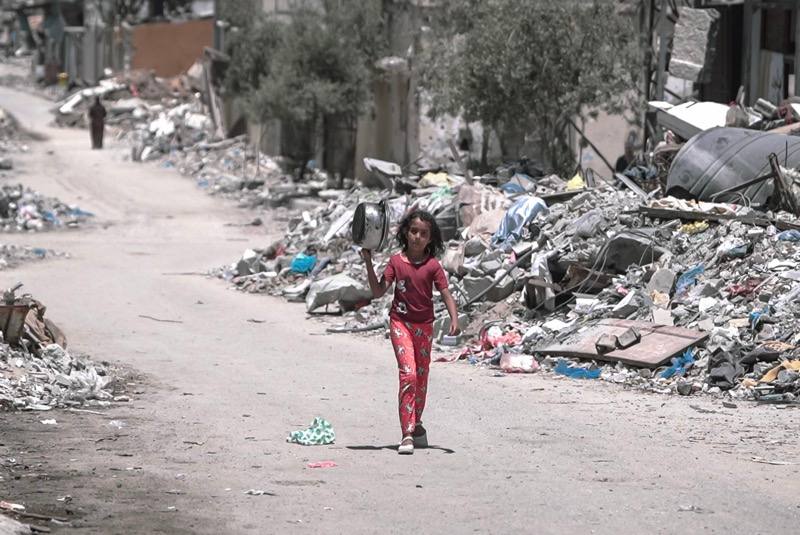
In Lebanon, humanitarian agencies reported the displacement of hundreds of thousands of children. Many witnessed the deaths or injuries of family members. Others were forced into overcrowded shelters with limited access to education, healthcare and adequate nutrition. Displacement does not merely uproot families; it interrupts childhood.
Even in Gulf states, children were not entirely insulated from the conflict. School closures, emergency preparedness measures, shortages of essential goods and persistent fears of regional escalation created an atmosphere of uncertainty. War’s effects travel far beyond the battlefield.
The most enduring damage is often invisible. Every strike that destroys a neighbourhood, a school or a hospital sets off consequences that ripple through communities long after the explosions cease. The destruction of educational institutions is particularly corrosive.
In Iran, numerous schools reportedly became inoperable during the conflict. For children, schools are more than buildings. They provide routine, stability, friendship and a sense of possibility. They are places where the future remains imaginable.
When schools close, education is interrupted, teachers disappear and social networks fracture. Childhood, ordinarily defined by growth and discovery, becomes defined by waiting. Across conflicts in 2025 and 2026, attacks on educational institutions increased sharply, depriving many children of the support systems that help societies recover after war.
Healthcare systems have faced similar pressures. Medical facilities were already struggling to cope with growing civilian casualties when some came under attack. Across the region, hospitals have operated under immense strain.
In Gaza, years of conflict left healthcare services overwhelmed even before the latest escalation. Children requiring vaccinations, treatment for chronic illnesses or emergency care often faced delays that carried lasting consequences.
The degradation of civilian infrastructure compounds these problems. Damaged water systems, sanitation networks and power supplies increase the risk of disease and malnutrition. Children, particularly the youngest, are often the first to suffer. UNICEF has repeatedly warned that attacks on essential infrastructure place millions at risk, including those living far from active combat zones.
Food insecurity has become another defining feature of the crisis. Conflict disrupts supply chains, restricts humanitarian access and drives up prices. Across the region, these pressures have deepened hunger. In Gaza, child malnutrition rose sharply, with thousands requiring treatment. Medical experts warn that prolonged undernutrition during childhood can impair physical growth, weaken immunity and hinder cognitive development for years to come.
Yet the deepest scars will be psychological. Children who witness violence, lose family members or endure repeated displacement often carry those experiences into adulthood. Anxiety, depression, nightmares and post-traumatic stress do not disappear when a ceasefire is signed. The end of fighting does not automatically restore a sense of safety or faith in the future.
The moral balance sheet of war cannot be measured solely in territorial gains, military successes or diplomatic settlements. Its true accounting lies elsewhere: in classrooms left empty, in hospitals struggling to function and in the lives of children forced to navigate a world shaped by decisions they neither made nor understood. States may wage wars and leaders may justify them, but the burden falls most heavily on those least responsible for their existence.
-30-
Copyright©Madras Courier, All Rights Reserved. You may share using our article tools. Please don't cut articles from madrascourier.com and redistribute by email, post to the web, mobile phone or social media.Please send in your feed back and comments to editor@madrascourier.com