
Serendip On Lake Temagami: An Island Where Cultures Converge

Lake-Temegami-Madras-Courier
Representational Image
Where Indigenous wisdom, pristine wilderness and Indian tradition converge on a remote Canadian island of remarkable tranquillity.

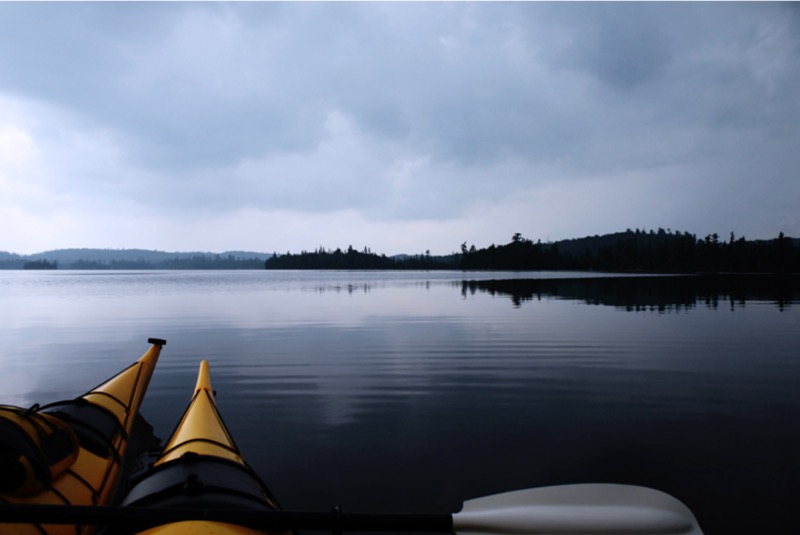
To round a bend in a remote lake in northeastern Ontario (Canada) and come upon the Indian tricolour whipping in the fierce north wind atop a mast on a little wooded island is a delicious surprise that defies credibility. Fondly nicknamed Serendip for the happy coincidence of representing the intersection of distant cultures, reaching this idyll entailed a 400-kilometre drive from Toronto, followed by a half-hour boat ride on the expansive Lake Temagami (meaning ‘deep water’).

The Teme-Augama Anishnaabe (Deep Water People), an Indian tribe (now referred to in politically correct terminology as First Nations), claim to have been in occupation of this region covering thousands of square kilometres for 9000 years – until the appearance of the white man.  

Where they have not been integrated into the general population, the Anishnaabe, who jealously proclaim their age-old culture of oneness and interdependence, are confined to reserve settlements. Notwithstanding their diminished physical presence, the First Nation’s belief in coexistence and respect for all things in nature is reflected in the preservation of this waterscape, much as it existed through the preceding aeons.

The Canadian Government acknowledges the need to curb large-scale colonisation and exploitation of the Temagami region, limiting the scope of ‘development’ to residential cottages and campsites on selected islands while generally preserving the integrity of the bordering mainland.  Of the more than a thousand islands in the lake – ranging from tiny outcrops to promontories covering a few acres each – residential constructions have been permitted on about half under strictly defined ecologically friendly conditions. 

Bounteously endowed with pristine forests and cerulean waters, the Temagami region shows how the faith of indigenous peoples in ‘sacred nature’ can find expression, even thrive, in the modern world.  The Anishnaabe, who define themselves as ‘the good humans’, believe that all life contains the sacred breath of the Creator or Great Spirit (Gitche Manitou), who enjoins respect for all creation and non-interference in another being’s path.

Temagami today presents a picture of harmony and tranquillity, with the remarkable non-encroachment of the Anthropocene on the resounding silence, broken only by the sound of lapping waves, the melancholy call of the loon and the sweet trilling of the white-throated sparrow.  Towering white pines proclaim their longevity, indispensable spruce showcase their versatility, and ubiquitous cedars, twisted by the winds into tortured shapes or leaning far over the water, demonstrate their resilience.  The blue waters abound with aquatic life; busy beavers at their dams add excitement to quiet bays; moose venture unmolested into lotus beds to feast on flowers and stems. 

For almost nine months of the year, the lake remains frozen over.  Except for an adventurous handful, all the residents of the islands stay at home in more clement places.  Human activity is limited to small expeditions of intrepid fishers who angle for trout through holes drilled in the ice.  Life is hard, as it must have been for First Nation people through the ages.

In a calendar determined by nature, the Anishnaabe have evocative names: February is ‘trout month’, May is the ‘flower month’ with the emergence of the first blooms, June the strawberry month, September the month of crushed leaves indicating fall, and so on.  As Temagami thaws, island residents return to their (mainly) log cabins to make the most of the brief summer.  This is the brief window available for refurbishment of their (sometimes) hundred-year-old hand-built homes after the ravages of winter.  From clearing paths and driving out rodents to re-roofing and re-painting, repairing canoes and docks, much activity is squeezed into the all too short summer to keep the verdant islands habitable.

The compensation for all the hard work is the opportunity to revel in unsullied nature and crystal air, to imbibe the silence while listening to nature, to bask in the gentle sun and read in the shade of the pines, to catch magnificent sunsets and gaze at unpolluted night skies, to canoe into the many branches and bays of the lake and hike through trails in search of a rare flower or bird.  Add to this the un-urban pleasures of performing one’s toilet in an open-air cabin and showering in a leaf-enclosed shelter under the trees.

On tiny Serendip (island number 924), with the Canadian flag and Indian tricolour fluttering on its dock, divergent cultures mingle in a harmonious blend.  The Anishnaabe reverence for nature is all-pervading; the Great Spirit is the numinous overseer; Western pragmatism and efficiency make daily life fun- and activity-filled and wonderfully comfortable; the more recent subcontinental infusion adds its own ancient cultural vibe, accompanied by the aroma of Indian spices and the echo of the Gayatri and Padme chants.

-30-

Copyright©Madras Courier, All Rights Reserved. You may share using our article tools. Please don't cut articles from madrascourier.com and redistribute by email, post to the web, mobile phone or social media.
Please send in your feed back and comments to [email protected]

0 replies on “Serendip On Lake Temagami: An Island Where Cultures Converge”