Revolt Of The Cockroach Generation

Cockroach-Madras-Courier
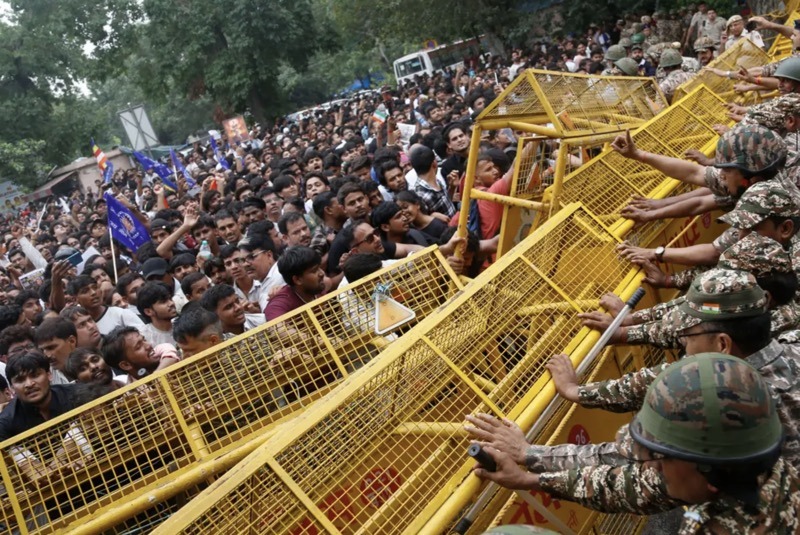
Representational Image; public domain
India's Cockroach Generation challenges convention and revolts against corruption and authoritarianism.

For millions of young Indians, years of preparation for competitive examinations increasingly culminate in postponement, cancellation, litigation, paper leaks, and uncertainty. Unemployment remains high, economic insecurity deepens, and political discourse appears ever more consumed by religious divisions rather than economic solutions. A nation that once celebrated its demographic dividend risks turning it into a demographic disaster.

India is not short of ambition. It is short of institutional credibility.

No government can eliminate unemployment overnight. But governments can choose whether public debate revolves around employment, education, productivity, and institutional reform—or around identity, symbolism, and perpetual outrage. Modi came to power on the promise of development. However, India’s political conversation has drifted decisively towards artificially concocted religious polarisation.

For millions of students, the examination system has become an exhausting marathon whose finish line keeps moving.

Recruitment examinations are delayed. Question papers are leaked. Vacancies remain unfilled for years while candidates age out of eligibility. Honest students watch their aspirations dissolve because institutions fail to protect the integrity of the system designed to reward merit.

An examination system is not merely an administrative mechanism. It is a promise that effort matters. Every leaked paper, cancelled examination, and unexplained delay chips away at that promise. Corruption in recruitment is not only financial misconduct; it robs people of hope. It tells capable young people that their diligence competes against influence, incompetence, and institutional decay.

This crisis is dangerous because India’s greatest asset is its youth. The country proudly boasts one of the world’s youngest populations. But demographics alone create no prosperity. Young people become economic engines only when education translates into productive employment. Otherwise, they become reservoirs of frustration.

Economic growth, though headline figures may appear impressive, cannot be judged solely by stock market records, GDP projections, or infrastructure announcements. Growth that fails to generate broad-based employment loses political legitimacy. A graduate driving for a ride-hailing platform after years of preparing for examinations is not reassured by macroeconomic statistics. Numbers matter. Lived experience matters more.

Instead of addressing these issues, critics argue that the Modi government has increasingly relied on religious polarisation and identity politics to shape electoral narratives. Whether through contentious public debates, symbolic controversies, or emotionally charged rhetoric, political energy often appears to be directed toward questions of identity rather than livelihood.

Electoral politics rewards emotional appeals. Jobs require patient policy; outrage delivers immediate headlines. Building schools, reforming recruitment systems, strengthening universities, and modernising labour markets are difficult. Mobilising voters around religious identities is politically simpler. But simplicity should not be confused with statesmanship.

The danger is not religion. It is the substitution of cultural mobilisation for economic governance. When every election becomes a referendum on identity, there is less political space for demanding answers about unemployment, inflation, educational quality, healthcare, or administrative accountability. Citizens begin debating one another instead of scrutinising those who govern them.

Democracy depends not only on elections but on institutions capable of questioning executive power. Here too, concerns have grown. Critics argue that decision-making has become increasingly centralised, with authority concentrated in the Prime Minister’s Office and dissent within institutions becoming progressively less visible. Parliamentary debate has often been suppressed. Opposition voices complain of inadequate deliberation on major legislation. Civil society organisations describe increasing pressure. Journalists know that there is narrowing of editorial freedom.

These criticisms deserve consideration because in a democracy, authority requires accountability. Strong leadership and democratic pluralism need not be enemies. Indeed, enduring leaders strengthen institutions rather than overshadow them.

A healthy democracy depends on an independent media capable of investigating power without fear or favour. India’s media landscape remains diverse, energetic, and competitive. But persistent concerns about ownership concentration, political pressure, and commercial dependence cannot be dismissed lightly. When significant sections of television news amplify government narratives rather than interrogate them, public debate becomes impoverished.

Critics have argued that the growing influence of a relatively small group of large corporate conglomerates over sectors ranging from infrastructure to telecommunications and media has contributed to an unhealthy concentration of economic and informational power. Democracies require citizens to believe that institutions serve the public interest rather than privileged relationships between political authority and concentrated wealth.

The consequences extend beyond journalism. When media organisations hesitate to investigate uncomfortable questions, governments face fewer incentives to correct policy failures. Accountability weakens. Public discourse narrows. Citizens receive spectacle instead of scrutiny.

Patriotism is not measured by the volume of applause offered to governments. Instead, it is measured by the seriousness with which societies confront their own shortcomings. Democracies mature not by silencing criticism but by welcoming it as an instrument of correction.

Will India become a country where young people trust that examinations are fair, institutions impartial, and opportunities genuinely meritocratic? Will it build an economy where growth creates meaningful employment rather than false optimism? Will political competition revolve around ideas for improving education, healthcare, innovation, productivity, and governance rather than increasingly polarised religious debates?

These questions cannot be postponed indefinitely. A frustrated generation eventually stops waiting.

India’s youth are asking for functioning institutions. They want examinations conducted honestly, recruitments completed on time, universities strengthened, businesses encouraged to create jobs, and governments willing to discuss uncomfortable realities rather than redirect public attention elsewhere.

Political slogans cannot substitute for employment. Religious symbolism cannot replace institutional reform. Fake national pride cannot compensate for administrative failure.

Governments everywhere prefer favourable headlines to difficult conversations. But history is rarely kind to administrations that mistake narrative management for governance. Economic aspirations suppressed by cultural mobilisation do not disappear; they accumulate. Disillusionment deferred eventually becomes disillusionment expressed.

India’s greatest competitive advantage has always been the aspirations of its people. Preserving those aspirations requires institutions that command confidence, governments willing to tolerate criticism, media capable of questioning power, and politics that treats citizens not merely as voters to be mobilised but as individuals seeking dignity through opportunity.

The republic’s future will not be decided by television debates, social media campaigns, or carefully choreographed spectacles. It will be determined by whether India’s young citizens believe that hard work matters, honesty is rewarded, and democracy listens. That is the test that truly matters. It is also the one no government can afford to fail.

-30-

Copyright©Madras Courier, All Rights Reserved. You may share using our article tools. Please don't cut articles from madrascourier.com and redistribute by email, post to the web, mobile phone or social media.
Please send in your feed back and comments to [email protected]

0 replies on “Revolt Of The Cockroach Generation”