In the late 1940s, the celebrated US diplomat, George Kennan, held a rare distinction among Western officials. He was among the few with profound insights into the intriguing universe behind Joseph Stalin’s Iron Curtain.
While serving as Chargé d’Affaires in Moscow, Kennan became renowned as the architect of the Cold War “Containment” policy, which laid the foundation of the Truman Doctrine and the Marshall Plan. His expertise continued to influence US foreign policy thinking in the post-Cold War era. On 5 February 1997, his Op-Ed in the New York Times titled “A Fateful Error” carried a forewarning:
[B]luntly stated…expanding NATO would be the most fateful error of American policy in the entire post-Cold War era. Such a decision may be expected to inflame the nationalistic, anti-Western and militaristic tendencies in Russian opinion; to hurt the development of Russian democracy; to restore the atmosphere of the Cold War to East-West relations, and to impel Russian foreign policy in directions decidedly not to our liking …
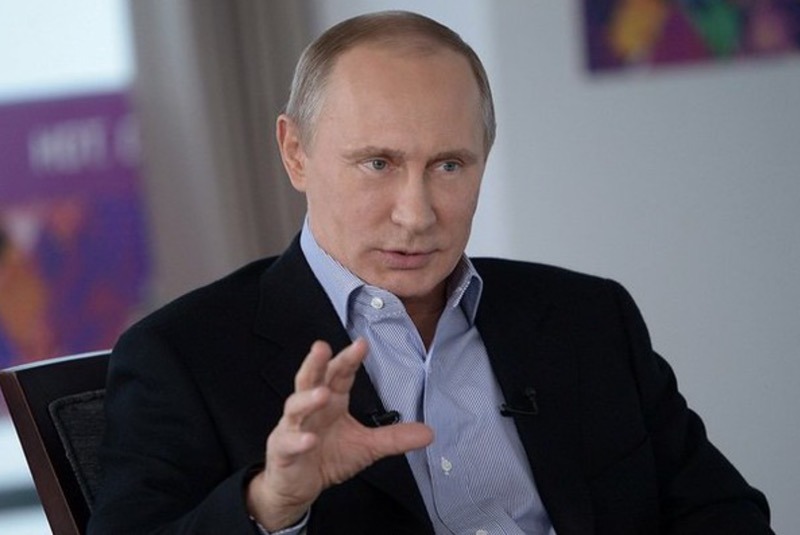
The Russian invasion of Ukraine on 24 February 2022 is widely condemned in the Western media as an act of unprovoked aggression by the Russian dictator, Vladimir Putin. However, it is essential to delve into the chequered history of Cold War dynamics before committing to foregone conclusions.
The historical setting is German reunification at the fall of the Berlin Wall, when US Secretary of State James Baker made a “gentleman’s promise” to Russian President Michael Gorbachev that NATO’s military jurisdiction will not move an inch eastward.
This was a necessary condition during negotiations to elicit the Kremlin’s consent. It further incentivised them to dismantle the Warsaw Pact and dissolve the Soviet Union in accordance with the landmark political and socioeconomic reforms of “Perestroika,” “Glasnost,” and “Uskoreniye.”
Although not legally encoded, the assurance made by the United States to Russia was first breached during Bill Clinton’s presidency. He was emboldened by a weakened Russia engulfed in the painful transition into a market economy, mired by constitutional crisis, oligarchical anarchy, and rampant property theft. Seizing this opportunity, in 1999, NATO expanded its membership to include Poland, Hungary, and Czechoslovakia.
The expansion continued under President George W. Bush Jr. Within five years, NATO’s reach extended to seven more countries: Estonia, Lithuania, and Latvia in the Baltics; Bulgaria and Romania straddling the Black Sea littoral; Slovenia in the Balkans; and Slovakia.
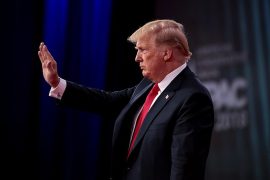
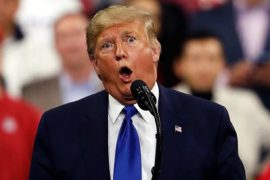
Further enlargement followed during President Obama’s term in 2009, when Albania and Croatia joined NATO. Under President Donald Trump in 2019, Montenegro was also admitted into the alliance.
NATO’s expansion met with strong resistance from Russian leaders, beginning with Boris Yeltsin, though his objections ultimately went unheeded. Vladimir Putin has consistently voiced Russia’s concerns on this issue, most notably during the 2007 Munich Security Conference. There, he characterised NATO’s ongoing enlargement as a “serious provocation that reduces the level of mutual trust.”
Putin also referenced the promises made by the United States government and highlighted a 1990 statement from then-NATO Secretary General Manfred Wörner in which he said: “The fact that we are ready not to place a NATO army outside of German territory gives the Soviet Union a firm security guarantee.” Putin asserted that these guarantees were never upheld, and the perfidious lapses further estranged Moscow and Washington.
For the first fourteen years of Vladimir Putin’s leadership, Western nations did not view him as an existential threat, despite his authoritative style of governance. During this period, Putin was even invited to the NATO summit, in Bucharest, in 2008. At this summit, NATO announced that Georgia and Ukraine would eventually be granted membership.
This revelation provoked a strong reaction from Putin, who openly expressed his profound displeasure. Nevertheless, policymakers in Washington, operating under the assumption that Russia’s military capabilities were diminished, chose to continue with the policy of NATO enlargement, undeterred by the security concerns raised by Russia’s leaders.
The prospect of NATO’s expansion into Ukraine and Georgia presents a unique and heightened concern for Russia, distinct from the alliance’s previous enlargement into other Baltic and Balkan countries. At the core of this apprehension is the strategic importance of the Black Sea region, which hosts Russia’s vital Sevastopol Naval Base. Russian leadership harbours concerns that such political manoeuvres could endanger Russia’s naval presence and operational access not only to the Black Sea but also to the Mediterranean and, by extension, the Middle East.
If both Ukraine and Georgia were to join NATO, Russia would find itself surrounded on multiple fronts, encircled by five NATO member states: Turkey, Ukraine, Georgia, Bulgaria, and Romania. Russia perceives such a development as a direct threat to its longstanding military and security interests in the region and, in the larger scheme of things, jeopardises European security.
Pro-Western apologists often assert that European nations have the sovereign right to determine their alliances and partnerships, including the decision to join NATO. However, it is essential to recognise that NATO is fundamentally a military and political alliance, not an economic one. Membership carries the potential for the deployment of military assets and ballistic missiles near Russian borders, a factor that deeply heightens security tensions. In context, the United States and NATO Alliance have been training and arming the Ukrainian military since 2014.
The double standards of the United States’ foreign policy are evident from its historical opposition to the formation of military alliances in the Western Hemisphere, as articulated in the Monroe Doctrine of 1823. The doctrine declares:
…the defense of our own, which has been achieved by the loss of so much blood and treasure, and matured by the wisdom of their most enlightened citizens, and under which we have enjoyed unexampled felicity, this whole nation is devoted. We owe it, therefore, to candor and to the amicable relations existing between the United States and those powers to declare that we should consider any attempt on their part to extend their system to any portion of this hemisphere as dangerous to our peace and safety.
These principles prompt deliberations regarding whether similar reasoning applies to other nations, such as Russia, in their perspectives on NATO expansion, US intervention, and military build-up near their borders. Are Russian blood and treasure inferior to US blood, and will the wisdom of their most enlightened citizens count?
Claims regarding President Putin’s alleged imperial ambitions and intentions to annexe Ukraine and subsequently much of Eastern Europe to recreate a post-World War II Russian empire lack credence. All available information points to the contrary.
Critics cite a famous article Putin wrote on 12 July 2021 titled, “On The Historical Unity of Russians and Ukrainians”, revealing his sinister designs for conquest and expansionism. They cite passages referring to Ukraine as “Therefore modern Ukraine is entirely the product of the Soviet era” and “One fact is crystal clear: Russia was robbed, indeed.”
They quote him to underpin his actions in Donbas, its apparent justification and fresh annexation: “Apparently, and I am becoming more and more convinced of this: Kiev simply does not need Donbas.”
However, in the same article, he also conveys a nuanced perspective on the relationship between Russia and Ukraine. Putin acknowledges the depth of historical and sociocultural ties, while emphasising the Ukrainians’ right to self-determination.
He addresses their desire for independence: “How should we treat that? There is only one answer: with respect.” Further, he affirms, “You want to establish a state of your own: you are welcome!” In concluding the 5000-word essay, Putin recognises Ukrainian sovereignty: “And what Ukraine will be—it is up to its citizens to decide.”
These statements challenge the propaganda that Putin intends to incorporate Ukraine into a greater Russia fully, highlighting instead a complex stance on Ukrainian autonomy and the future of Russo-Ukrainian relations.
Two months before the invasion of Ukraine, Moscow sent a draft, “Agreement on Measures to Ensure the Security of the Russian Federation and Member States of the North Atlantic Treaty Organization”, to both Washington and Brussels to ratify and sign. Putin demanded that all NATO military infrastructure be dismantled from its eastern alliance and that buffer zones of zero NATO deployment be created in the Baltic states.
However, the cardinal requirement was the assurance that Ukraine would be denied entry into NATO and that the “open door policy” would be reversed, admitting any NATO aspirant within Europe. Regretfully, both the United States and NATO chose to disregard Putin’s diplomatic solution.
Shortly after the invasion of Ukraine, Russia made clear that it was not seeking a prolonged military conflict. Within four days, Moscow initiated diplomatic outreach to Kyiv, opening negotiations in Belarus. These talks were soon followed by parallel tracks involving Israeli mediation and subsequent meetings in Istanbul. Progress in Istanbul suggested a diplomatic solution was within reach; however, Ukraine eventually withdrew from negotiations, reportedly influenced by the United States and the United Kingdom.
Throughout the crisis, President Putin maintained, “It is not our plan to occupy Ukraine.” Instead, the primary concern was preventing Ukraine from becoming a stronghold for U.S. realpolitik and NATO military expansion directed against Russia. Putin believes that “Russia cannot feel safe, develop, and exist while facing a permanent threat from the territory of today’s Ukraine.”
The certainty of Russian retaliation and the prospect of economic instability within the European Union contributed to resistance from key European leaders regarding Ukraine’s ambitions for NATO membership. Notably, French President Nicolas Sarkozy and German Chancellor Angela Merkel opposed extending NATO membership to Ukraine during the 2008 Bucharest Summit, underscoring the complexity and divisions within the alliance itself regarding enlargement and regional security. Merkel recently defended her stance that admitting Ukraine would have been perceived by Putin “as a declaration of war.”
The allegations of Western officials that Putin’s decisions are arbitrary and despotic, and there are dissident voices within the administration pertinent to Ukraine’s NATO membership, have been refuted by Will Burns, the eighth Director of the CIA and former US ambassador to Russia. In a memorandum to then Secretary of State Condoleezza Rice, Burns expressed his misgivings:
Ukrainian entry into NATO is the brightest of all red lines for the Russian elite, not just Putin. In more than two and a half years of conversations with key Russian players, from knuckle-draggers in the dark recesses of the Kremlin to Putin’s sharpest liberal critics, I have yet to find anyone who views Ukraine in NATO as anything other than a direct challenge to Russian interests.
The involvement of the United States and the United Kingdom was pivotal in the failure of the Istanbul negotiations. The real reasons for the debacle will probably be shrouded in secrecy, leaving only propaganda for public consumption.
Over the past century, patterns have shown that capitalism often relies on conflict for economic growth and capital accumulation. This concept, referred to as “militarized accumulation,” emerges when excessive capital cannot find productive or profitable outlets due to overproduction or underconsumption, which can lead to economic stagnation.
In these scenarios, the Transnational Capitalist Class (TCC) depends on state actors to instigate conflicts and create war zones, facilitating the profitable reinvestment of capital in military and weapons industries. In a vicious cycle of destruction and reconstruction, channels of productive investments open up. The onset of the Russia-Ukraine War illustrates this dynamic: the United States’ defence budget increased significantly, and $175 billion in military and economic aid was provided to Ukraine, highlighting the economic dimensions underpinning prolonged conflicts.
The economic value of Ukraine’s mineral resources is estimated at $15 trillion. Any future peace agreement requiring reconstruction efforts—due to the widespread destruction caused by war—would likely involve the allocation and management of Ukraine’s substantial natural resources through either bilateral arrangements or broader multinational agreements among influential and hawkish stakeholders. President Trump has clearly articulated his interest in Ukraine’s rare earth minerals, as evidenced by the signing of the US-Ukraine minerals deal in April 2025.
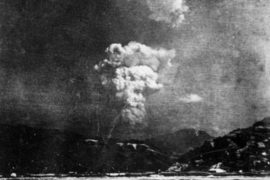
The prospect of Russia losing this war introduces the harrowing risk of nuclear escalation. Such an outcome could have catastrophic consequences, threatening the very survival of humanity. And the only weapons required now to save the planet from obliteration are diplomacy and prudence.
-30-
Copyright©Madras Courier, All Rights Reserved. You may share using our article tools. Please don't cut articles from madrascourier.com and redistribute by email, post to the web, mobile phone or social media.Please send in your feed back and comments to [email protected]