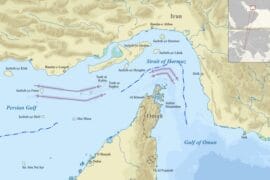
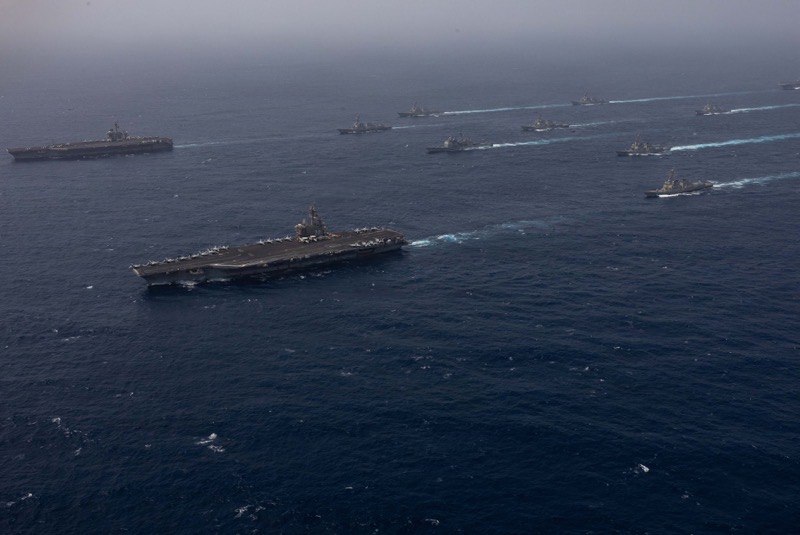
The collapse of the ceasefire between the United States and Iran on July 8 has once again placed the Strait of Hormuz at the centre of international concern. Iran’s targeting of vessels attempting to transit the strait without Tehran’s approval prompted American strikes against Iranian military targets.
The US President Donald Trump subsequently declared that the ceasefire was “over,” and argued that further negotiations would be a “waste of time”. Since then, both sides have entered another cycle of confrontation, each attempting to demonstrate strength without triggering a conflict neither can easily control.
The immediate dispute may appear to concern military operations and diplomatic failures, but the deeper struggle is about power. Control of the Strait of Hormuz gives Iran an instrument of influence that compensates for its disadvantages against the United States and its allies. Washington possesses superior military technology and resources, but Tehran possesses geography. In a region where energy routes determine economic security, geography remains a powerful weapon.
The conflict has therefore become a contest over who controls the terms of regional order. For Iran, restricting access through the Strait of Hormuz is a demonstration that it cannot be isolated or pressured without consequences. For the United States, allowing such control to continue would represent a strategic setback, forcing Washington to negotiate from a weaker position. The result is a confrontation where neither side can easily retreat without appearing to concede.
Since the initial ceasefire was announced in April, the pattern has been familiar. Iranian forces have targeted selected vessels seeking to cross the strait without Tehran’s permission, preventing the United States from establishing a shipping corridor along the Omani coast beyond Iranian influence. American forces have responded with strikes against Iranian military sites along the southern coastline. After several days of escalation, both sides have generally stepped back, aware that a wider war would impose enormous costs.
The latest exchange, however, carries a warning. American strikes reportedly included two civilian bridges connecting Tehran with Mashhad, beyond conventional military targets. The decision may have been intended as a symbolic gesture rather than a fundamental expansion of the campaign, particularly given its timing coinciding with the burial of Iran’s supreme leader, Ali Khamenei, in Mashhad. But once civilian infrastructure becomes part of the conflict, the possibility of further escalation becomes harder to dismiss.
The Gulf states now face a familiar yet increasingly difficult dilemma. They depend on American security guarantees, but they also depend on regional stability. Their economies are built on energy exports, international investment and global trade, all of which require predictable maritime routes. A prolonged confrontation in Hormuz threatens not only their security but also their economic ambitions.
Iran’s decision to expand pressure beyond previous limits has forced the Gulf monarchies to reconsider their strategies. During Israel’s 12-day war in June 2025, Tehran avoided direct attacks on Gulf states. This time, the message has been different: Iran is prepared to demonstrate that regional instability will have consequences for all actors.
The response has exposed differences among Gulf countries. The United Arab Emirates has moved closer to Israel and Washington, seeing stronger alignment with the United States as the safest response to Iranian pressure.
Saudi Arabia has adopted a more complicated position. Riyadh was dissatisfied with the level of American protection during the early stages of the conflict and initially wanted Washington to pursue a more forceful campaign against Tehran. When that outcome did not occur, Saudi policy shifted towards balancing multiple relationships, supporting Pakistan-led mediation efforts while maintaining its partnership with the United States.
Other Gulf states have pursued their own cautious approaches. Qatar has strengthened its position as a mediator, alongside Pakistan and potentially beyond. Oman has attempted to preserve its traditional role as an intermediary, maintaining communication with Iran while responding to American demands regarding the strait. Bahrain remains closely aligned with Saudi Arabia, while Kuwait’s priority is restoring calm.
For India, the consequences of the crisis are particularly significant. The Gulf is not simply a region of strategic interest; it is deeply connected to India’s economy and society. Millions of Indians live and work in Gulf countries, energy imports from the region remain essential, and maritime trade routes through the Arabian Sea link India to global markets. Any prolonged disruption in Hormuz would quickly translate into economic pressure through higher energy costs, shipping uncertainty and inflationary effects.
New Delhi’s diplomatic challenge is therefore substantial. India maintains strong relations with the United States and Gulf countries while also preserving important historical links with Iran. The crisis reinforces the difficulty of maintaining strategic autonomy in a world where rival powers increasingly demand alignment. India’s interests lie not in choosing sides but in managing a conflict that would destabilise the region on which its economic growth depends.
The military balance also suggests that a decisive outcome may remain elusive. American and Israeli strikes have inflicted serious damage on Iranian capabilities, targeting military installations, leadership figures, naval assets, missile systems and drone infrastructure. However, Iran’s power has rested partly on its ability to operate through dispersed and mobile systems. Missiles, drones, small boats and naval mines provide Tehran with options that are difficult to eliminate through conventional air campaigns.
This resilience explains why the conflict has become a test of political endurance rather than military strength. Iran entered the war facing severe economic difficulties, domestic pressures and sanctions. Those problems remain, compounded by reconstruction costs estimated at more than $270 billion. But the regime has gained political value from demonstrating survival and defiance.
The strategic consequence is that Iran has improved its negotiating position. Before the conflict, discussions focused on uranium enrichment limits, sanctions relief and the restoration of international inspections. The question of Hormuz has now overshadowed those issues. Any future agreement will have to address the reality that Iran has gained leverage over a vital international waterway.
For the Trump administration, this creates a difficult political challenge. The United States entered the confrontation seeking to demonstrate strength and force Iran to make concessions. Instead, it faces a conflict in which military superiority has not produced a decisive political victory. Tehran remains economically weakened, but it has avoided collapse and retains the ability to disrupt regional stability.
Modern conflicts are rarely decided by firepower alone. Power depends on the ability to translate military advantage into political outcomes. In the Gulf, geography has allowed a state under pressure to challenge a stronger opponent and impose costs far beyond its borders.
The Strait of Hormuz is therefore more than a shipping route. It is a reminder of the fragile foundations on which the global economy rests. A crisis that begins with a handful of vessels in a narrow waterway can affect energy prices in Asia, political calculations in Washington and economic confidence around the world.
The future of the conflict will depend on whether diplomacy can catch up with military escalation. If Washington and Tehran continue to pursue victory through pressure alone, the region risks remaining trapped in a cycle of confrontation. But if both sides recognise that neither can easily impose its will, the same geography that has created the crisis may eventually provide the foundation for compromise.
For India and the wider world, the message is clear: stability in the Gulf is not a regional luxury. It is a global necessity.
-30-
Copyright©Madras Courier, All Rights Reserved. You may share using our article tools. Please don't cut articles from madrascourier.com and redistribute by email, post to the web, mobile phone or social media.Please send in your feed back and comments to editor@madrascourier.com