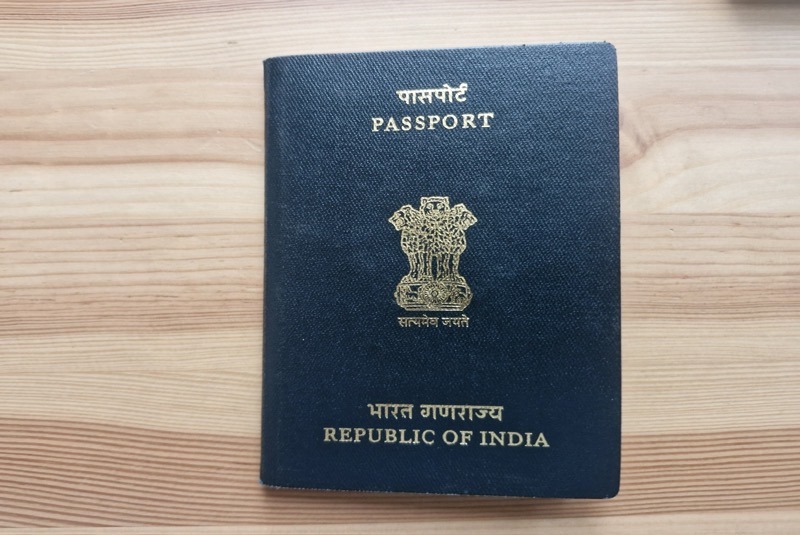
The Ministry of External Affairs (MEA), during the Passport Seva Divas, clarified that a “passport is not a proof of citizenship.” The MEA’s clarification has attracted significant pushback because many ordinary citizens already struggle to prove their citizenship and, in some cases, face the risk of exclusion and statelessness. We live in a time where a passport, Aadhaar card, birth certificate, driving licence, PAN card, ration card, and, ironically, even a voter ID card is insufficient to conclusively settle questions of citizenship.
The government subsequently defended this claim on two main grounds: first, that under Section 20 of the Passport Act, 1967, a passport may be issued to a non-citizen; and second, that a Bombay High Court judgment in 2013 refused relief to three illegal migrants even though they had produced Aadhaar cards, passports, and birth certificates.
I argue that a passport should be conclusive proof of Indian Citizenship. Under Section 20 of the Passport Act, 1967, the Central Government has exceptional power to issue a passport or travel document to non-Citizens in “public interest.” The Compendium of Instructions/guidelines relating to the issue of Passport in India/Abroadclarifies that this power vests exclusively with the Central Government. No other Passport Authority is empowered to exercise this authority, and all cases involving the issuance of passports to non-Indian citizens require prior approval of the Central Government, unless that power has been specifically delegated.
Further, the purpose behind incorporating the aforesaid provision is evident from Clause 20 of the Statement of Objects and Reasons, which states that a passport may be refused on the ground that the applicant is not a citizen of India, except in special cases undertaken in compliance with international conventions and usages.
Therefore, Section 20 is not a general provision but, rather, an exception carved out of the general rule. The general rule remains that an Indian passport can only be issued to an Indian citizen. By stating that a passport is not proof of citizenship, the Ministry of External Affairs appears to present an exception as the general position.
Section 20 operates within a very restricted domain. The Compendium of Instruction/guidelines relating to issue of Passport in India/Abroad relating to the issue of Passports in India and abroad clarifies that the powers under Section 20 may be exercised by the Embassy of India, Bangkok, to issue passports to persons of Indian origin residing in Thailand whose nationality status has not been verified; by the Embassy of India, Yangon, to issue passports for a restricted period to persons of Indian origin residing in Myanmar and holding Foreigners Registration Certificates issued by the Government of the Union of Myanmar; and by the Passport Officer, Ahmedabad, to issue Certificates of Identity to persons of Indian origin who returned to India from Kenya and Uganda and are residing within the State of Gujarat and the Union Territory of Dadra and Nagar Haveli.
Apart from this narrow class of individuals falling within the exception carved out under Section 20, a passport should ordinarily constitute valid proof of citizenship. Therefore, except in the limited exceptions expressly recognised under Section 20, the issuance of a passport presupposes that citizenship has already been established.
As for the Government’s second contention — that the 2013 Bombay High Court judgment establishes that a passport is not valid proof of citizenship, there exists a subsequent judgment of the Supreme Court in Association for Democratic Reforms & Ors. v. Election Commission of India & Ors., wherein the Court recognised passports and birth certificates as conclusive proof of citizenship. Paragraph 158 of the judgment states:
“It may not be out of place to note that a Ration Card, unlike a Passport or a Birth Certificate, is certainly not a conclusive proof of citizenship.”
Therefore, the Government cannot refuse citizenship claims of millions of individuals by relying on an exception carved out under Section 20 of the Passports Act. Section 20 was enacted to address exceptional situations involving refugees and asylum seekers and to prevent statelessness, as observed by the Court in Harina v. Regional Passport Office.
Except for the limited exceptions contemplated under Section 20, in all other cases, an individual is not merely required but legally mandated to establish their citizenship before becoming entitled to an Indian passport. Passports issued under such special and exceptional circumstances ought to carry distinct identifiers distinguishing them from passports issued in the ordinary course.
Therefore, the Government ought to clarify its position by stating that, except in cases falling within Section 20, a passport constitutes conclusive proof of citizenship.
Lastly, this concern becomes more acute in light of the Government’s long-standing commitment under Section 14A (inserted via Act 6 of 2004, (w.e.f. 3-12-2004)) of the Citizenship Act, 1955, which envisages the issuance of a National Identity Cards. Had this framework been fully implemented, a statement by the MEA that a passport is not proof of citizenship would not have generated such uncertainty or public concern.
In the absence of a dedicated citizenship-identification framework, statements diminishing the evidentiary value of commonly relied-upon documents risk placing an undue burden on ordinary citizens. The Government has failed to discharge its obligations under a law enacted two decades ago, and that failure has become the root cause of the hardship faced by ordinary citizens today.
-30-
Copyright©Madras Courier, All Rights Reserved. You may share using our article tools. Please don't cut articles from madrascourier.com and redistribute by email, post to the web, mobile phone or social media.Please send in your feed back and comments to editor@madrascourier.com