
How Policy Uncertainty Is Rewriting Asia’s Economic Future

Trade-policy-madras-courier
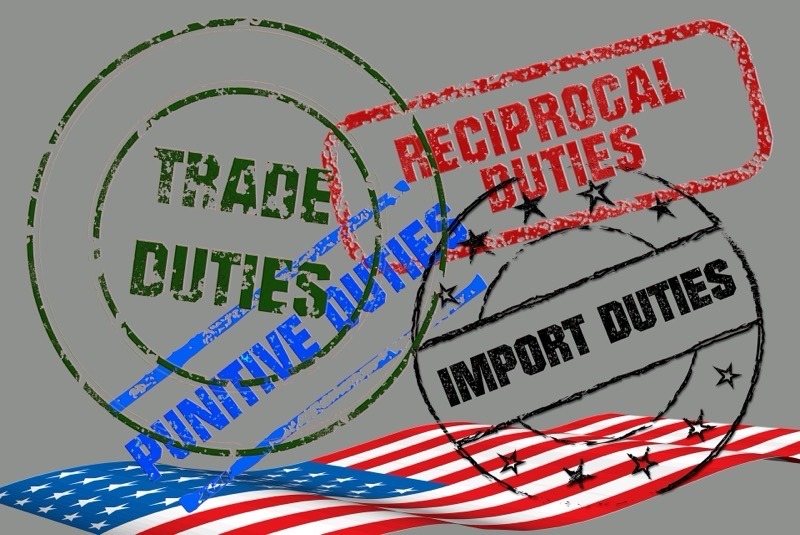
Representational illustration; public domain .
As multilateral trade institutions weaken and geopolitical rivalries intensify, trade policy uncertainty is becoming a defining feature of the global economic order.

In a global economy already strained by inflation, geopolitical rivalry, and post-pandemic recovery challenges, a new threat looms large: trade policy uncertainty. The resurgence of protectionist measures—ranging from export restrictions and sanctions to abrupt tariff hikes and sudden exits from trade agreements—has injected fresh volatility into international trade. Nowhere is this more evident than in Asia, where major economies like China and India are feeling the ripple effects of an increasingly unpredictable trading system.

According to the Global Trade Alert initiative from the University of St. Gallen, 2024 saw 429 trade-related policy interventions worldwide, of which 323 were considered discriminatory. This steady drift away from multilateralism has not only eroded trust in the rules-based trading order but also unnerved businesses and investors, who are finding it harder to plan for the future amid growing trade frictions.

China, which commands roughly 15 percent of global exports, has become a central player in this shifting landscape. Amid persistent tensions with the United States, foreign firms are increasingly wary of expanding production facilities in the country, fearing punitive tariffs or sudden policy reversals. Economists warn that continued trade policy uncertainty could shave as much as 5.65 percent off China’s GDP. Export-intensive industries such as textiles and apparel are especially vulnerable, with projections suggesting they could suffer losses nearly 8 percent above the national average. The effects are not limited to China itself; countries integrated into its supply chains are also experiencing disruptions, especially those that export raw materials for Chinese manufacturing hubs.

India, while not yet as trade-exposed as China, is also contending with significant risks. Though the country has set an ambitious goal of becoming a US$2 trillion export economy, that vision is increasingly challenged by external shocks and internal inconsistencies. Sectoral analysis shows that India’s primary industries are more sensitive to global volatility, while the manufacturing sector tends to react more sharply to shifts in domestic policy. A recent study finds that a one percent increase in global trade uncertainty results in a 0.284 percent decline in Indian imports over the long term, suggesting that uncertainty tends to suppress trade activity more broadly over time.

Compounding the challenge is the ongoing fallout from the Russia–Ukraine conflict, which has roiled energy markets and disrupted supply chains. In the fiscal year 2023–24, India’s exports declined by 3.11 percent, while imports dropped by 8 percent. That trend could worsen if instability continues. The return of Donald Trump to the White House and his renewed push for reciprocal tariffs have only heightened anxieties. For India, sectors such as chemicals, metal products, automobiles, pharmaceuticals, jewelry, and food processing are considered especially vulnerable to policy shocks emanating from the United States.

Faced with these risks, businesses are adopting a range of mitigation strategies. One widely endorsed approach is supply chain diversification, aimed at reducing reliance on a single source or region. According to research from the Centre for Economic Policy Research (CEPR), greater international sourcing diversity can reduce the economic impact of major supplier disruptions by up to 50 percent. When multiple economies face repeated shocks, the same diversification can also reduce growth volatility by around 5 percent.

Reshoring and nearshoring are also gaining ground, as firms look to bring production closer to home or to politically aligned partners. A study by the Inter-American Development Bank suggests that nearshoring could unlock as much as US$78 billion in additional annual exports for Latin America and the Caribbean, with opportunities concentrated in industries like automobiles, textiles, pharmaceuticals, and renewable energy. However, the International Monetary Fund has warned that reshoring to a narrow set of partners could reduce global diversification and make countries more vulnerable to systemic shocks—especially if domestic disruptions occur. While reshoring might benefit strategic sectors such as semiconductors or defense-related manufacturing, labor-intensive industries like textiles may stand to gain more from regional diversification.

Beyond supply chain strategies, some firms are stockpiling critical inputs as a buffer against trade disruptions, while others are turning to financial instruments like currency derivatives and forward contracts to hedge against tariff and exchange rate volatility. Still others are lobbying policymakers and trade associations for greater regulatory clarity and participation in future trade negotiations, hoping to reduce exposure to abrupt or opaque policy changes.

Regional trade agreements are emerging as another tool for managing trade risk. By establishing predictable rules and tariff frameworks among partner countries, these agreements can stabilize cross-border commerce and increase investor confidence. They also help businesses navigate regulatory compliance more easily across jurisdictions by harmonizing standards and reducing bureaucratic uncertainty.

The broader picture is sobering. As multilateral trade institutions weaken and geopolitical rivalries intensify, trade policy uncertainty is becoming a defining feature of the global economic order. For Asia’s major economies, the path forward will depend on their ability to navigate this uncertainty through pragmatic policymaking, strategic partnerships, and resilient supply chains. The question now is not whether the world can return to the era of liberalized trade—but how countries can adapt to a new era in which unpredictability is the only constant.

-30-

Copyright©Madras Courier, All Rights Reserved. You may share using our article tools. Please don't cut articles from madrascourier.com and redistribute by email, post to the web, mobile phone or social media.
Please send in your feed back and comments to [email protected]

0 replies on “How Policy Uncertainty Is Rewriting Asia’s Economic Future”