The war waged by the US and Israel against Iran stems significantly from the fact that both the US and Israel are settler societies. Few people think of the US today as a settler society: its origins as a group of settler colonies have long been lost to view. But the fact that it has become a rich superpower by settling foreigners on the land of the indigenous inhabitants of North America is never far below the surface of American culture. It partly accounts for the readiness of so many Americans to support Israel, another settler society, in its genocide in Gaza and its attack on Iran, and to be indifferent to the fate of not only Palestinians but the inhabitants of the whole region Israel seeks to control. What Patrick Wolfe called the ‘logic of elimination’ that is inherent in settlement – the drive to eliminate the indigenous population in one way or another, not excluding genocide – is an almost necessary, if unconscious, element of the prevailing mindset of settler societies, reinforced by historical myths of heroic struggles to overcome savagery and make deserts bloom.
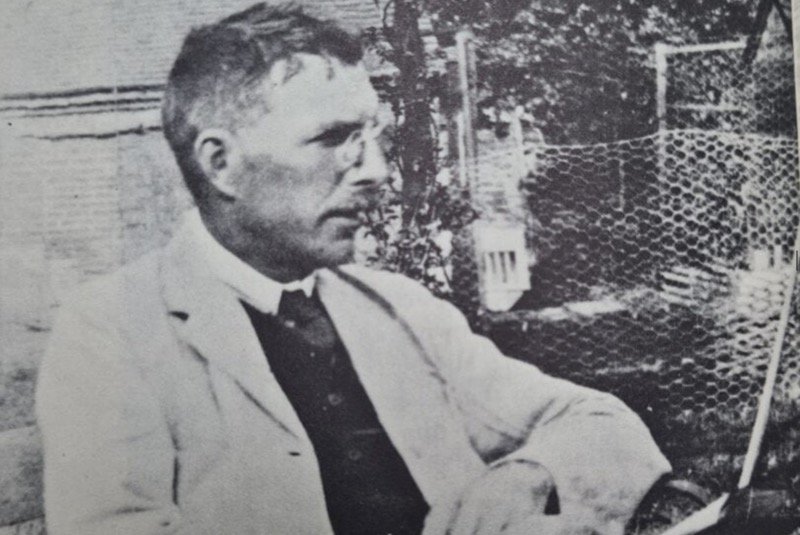
One of the first to analyse this was a doctor working in the settler colony of Kenya from 1905 to 1913, whose ideas had an impact far beyond Kenya, and whose unlikely story also had an interesting link to India. Newly qualified in medicine, Norman Leys first arrived in Africa from Glasgow in 1901, aged 26. His first job was in Portuguese East Africa (Mozambique), where he was shocked and revolted by the racism and brutality of the Portuguese officials.
In 1904, he joined the colonial medical service in neighbouring Nyasaland (Malawi), a British Protectorate, where he learned that the British, while not brutal, were no more concerned with the welfare of the African population than the Portuguese. A year later, in 1905, he was posted to the port town of Mombasa, in what would become the Kenya Colony. In Mombasa, he witnessed a stream of affluent Britons disembarking from ships and taking the train up to the Kenya Highlands to stake claims to land. In 1908, he was posted to the settler township of Nakuru in the heart of the Highlands.
By this time, the settlement of the Highlands was nearly complete. However, in 1910, Leys learned that the Governor was about to give some settlers a piece of land belonging to the pastoral Maasai tribe, which they had been solemnly promised would be theirs forever. Leys wrote to the Labour Party MP Ramsay MacDonald (later the first Labour Prime Minister) to alert him. MacDonald asked questions. The Colonial Office was embarrassed. The move eventually went ahead, but the Governor had to resign. For his part, Leys was demoted and posted back to Nyasaland. And there the matter might have rested, with the wrong not righted and the whistleblower consigned to oblivion. But that would have been to reckon without three things that made this particular whistleblower different.
First, he had worked out the logic of settler colonialism, kept detailed notes, and was passionately determined to try to end it. The settlers, backed by the colonial administration, were forcing Africans to work for them on land that only a few years earlier had been theirs. More than that, Leys did the sums and calculated that in the near future the ‘settler system,’ which he called ‘a modern form of slavery,’ was bound to spark a revolt.
In 1915, there was a rebellion in Nyasaland — where Leys was exiled — led by John Chilembwe. It was bloodily suppressed, which made Leys increasingly desperate to try to prevent the same thing from happening in Kenya. In his remote corner of Nyasaland, he had no real hope of doing anything about it, since he had no independent income and needed his salary. However, he did start planning to write a book. And the second thing that made him different was that he was an exceptional writer, though he never recognised this himself. He had what the American historian John Cell called ‘a poetic grasp of the concrete,’ a terse but vivid style, powered by deeply held conviction. The book, which he eventually published in 1924, was called Kenya and became a bestseller. It went into four editions and was republished 40 years later.
By this time, he had gone back to his home in England. To supplement his meagre pension, he ran a one-person medical practice in a small village in Derbyshire, but his overwhelming priority was campaigning against settler colonialism in Kenya. In this, he was so successful that, working with another former Kenyan official, MacGregor Ross, he made Kenya the focus of the debate about empire and race that finally took off in Britain in the 1930s – Kenya, with a mere three million Africans, not India with its population of 250 million.
His book played a big part in this, but he also produced a stream of articles and letters to the press and – less frequently, as he hated speaking – addressed meetings. And here, a third aspect of his character was critical: he was completely indifferent to what other people thought of him. He broke with many decent, liberal-minded people who saw themselves as ‘pro-native’ but who wouldn’t risk the social discomfort of openly opposing government policy. To his dismay, he found that there were plenty of people like this in Britain, including senior mission officials, whom he called Pharisees – professing good principles but failing to act on them. Whereas he himself had no hesitation in opposing the authorities, and was ready to pay the price.
What made him different in this way is impossible to say, although his strange childhood surely had something to do with it. His mother died when he was barely a year old, following the birth of his young brother. His father was a struggling barrister who couldn’t afford to look after the two babies on his own, so they were brought up in the home of their grandfather, a Presbyterian minister in a small town near Glasgow.
Ten years later, the boys’ father remarried, but at the same time, he converted to Catholicism. The grandfather was appalled. To save the boys, now aged 11 and 10, from the Pope, he sent them secretly to a boarding school run by the American evangelist Dwight Moody in Northfield, Massachusetts. The father sued for custody, but the old man went to jail for contempt of court rather than say where they were. Eventually, the son relented, and the grandfather was released, but the boys didn’t see their father again until they were almost adults.
By then, at any rate, it is clear that Norman Leys had formed a very definite view of the world and a willingness to stand up for what he thought was right and damn the consequences, something that would mark him off from all the other doctors and most of the missionaries in Kenya, not to mention almost all the colonial administrators and all the settlers. And from most liberals in England.
His anti-racism was entirely unsentimental. He saw Africans simply as people like any others, no better or worse, but deserving the same rights. He had no time for do-gooders, who more often than not harboured a benevolent but patronising kind of racism. ‘Occasionally some pious old woman tells me I must have a great love for Africans’, he told a friend. ‘When he or she hears my answer she moves swiftly to the other end of the room and I become “that dreadful man.”’
This is where the story of Leys and Kenya intersects in a small but telling way with the story of Indian nationalism. In 1924, the missionary Edward Thompson, a friend and biographer of Tagore, was back in Britain with the manuscript of a book he had written called The Other Side of the Medal. He thought the British public should know about the dark side of British rule in India and the role it had played in giving rise to Indian nationalism.
His book contained a frank account of the record of British injustice and brutality in India, especially the unspeakable atrocities committed in putting down the Great Rebellion of 1857-58. But he hesitated to publish it. He told the eminent liberal Gilbert Murray that he was afraid Indian ‘extremists’ would use it as ‘a quarry for half bricks’ (i.e. to throw in the fight for independence). Then he read Kenya, which was, he saw, ‘a frank enough handling of a trouble far nearer to our own time and immediate interests.’ If Leys could do it, he should. The Other Side of the Medal came out the following year.
It’s hard, if not impossible, to gauge the historical impact of articulate and fearless dissidents, voices that the powerful can’t silence. They rarely achieve their aims in their lifetimes. The bloodbath that Leys feared in Kenya arrived in 1950, a few years after his death, in the suppression of the ‘Mau Mau’ rebellion. But immovable truth-tellers stiffen the backbones of others, and their ideas survive.
Leys’ critique of settler colonialism was developed by activists like Frantz Fanon and academics like Patrick Wolfe, whose seminal article on ‘settler colonialism and the elimination of the native’ is a key text for anti-imperialists now. And today’s fearless critics of the genocide in Palestine, like Francesca Albanese, and of the USA’s war on Iran, like Jeffrey Sachs, belong to the same precious tradition, and will enjoy posthumous respect long after the genocidists and warmongers have been reviled and forgotten.
[Note: The author, who studied and wrote about Kenya in the 1960s and 70s, never knew Norman Leys, his half-uncle, but researched his life for a political biography, Norman Leys and Settler Colonialism in Kenya, published by Merlin Press in 2025.]
-30-
Copyright©Madras Courier, All Rights Reserved. You may share using our article tools. Please don't cut articles from madrascourier.com and redistribute by email, post to the web, mobile phone or social media.Please send in your feed back and comments to editor@madrascourier.com