Most diplomats can point to one episode that lingers long after postings blur into memory. For me, that moment came during my early years in Japan. I served there twice—first from 1982 to 1985, and later from 1991 to 1994—and the contrast between the two could not have been sharper.
The second posting coincided with India’s economic liberalisation and the early onset of the Look East Policy, when engagement with East Asia was acquiring new momentum. The first, by contrast, belonged to a very different era. India then barely registered on Japan’s strategic or public consciousness, and any small success in attracting attention felt like a minor victory. Looking back from today’s close and consequential India–Japan partnership, that world feels almost unrecognisable.
It was during that first stint, when I was a young Second Secretary handling information, that I found myself involved in what I still fondly describe as “elephant diplomacy.” Two baby elephants—Asha and Daya—gifted by Prime Minister Indira Gandhi to Tokyo’s Ueno Zoo, briefly captured the Japanese imagination and even challenged the near-monopoly that giant pandas, symbols of Sino-Japanese goodwill, had long enjoyed. Yet the story of elephants in Ueno Zoo, and of India’s quiet place in Japanese popular memory, runs deeper.
As my friend Pallavi Aiyar recounts in her book Parenting in Japan, Ueno Zoo first received elephants from India a century ago. In 1924, two elephants—John and Tonki—arrived from the forests of Karnataka. Tonki’s name amused Japanese visitors with its echo of tonkatsu, the popular pork cutlet, while John’s decidedly Western name added to the curiosity. Run by the Tokyo Metropolitan Government, Ueno Zoo was then, as it remains today, Japan’s most prominent public zoo, and the elephants quickly became its star attractions.
Later, a Thai elephant named Hanako joined them. The Second World War brought tragedy. As Tokyo was being relentlessly bombed, fears arose that large animals might escape if the zoo were hit, posing a danger to an already traumatised population. In one of the most painful episodes of wartime Japan, the authorities ordered that the largest animals be put down. John, Tonki, and Hanako were starved to death, a decision that has since become part of Japan’s collective wartime memory.
After the war, Ueno Zoo reopened, but the absence of elephants was keenly felt, especially by children. Schoolchildren from the Ueno area began petitioning members of the House of Councillors and eventually wrote to the Indian Embassy. What started as a small appeal grew into something larger: more than a thousand children wrote directly to Prime Minister Jawaharlal Nehru, asking if India could send an elephant so their generation would not be deprived of a joy their parents had known.
Nehru responded with characteristic warmth. In 1949, an elephant from Karnataka, affectionately remembered as “Indira the Elephant”, arrived in Japan by ship, accompanied by Indian mahouts. Hoisted ashore in a harness, she soon became a symbol of post-war renewal. Indira travelled across Japan, delighting children growing up amid scarcity and recovery. Her story is far less recorded than India’s invitation to Japan for the 1951 Asian Games or Justice Radha Binod Pal’s dissent at the Tokyo Trials, but in its own way, it represented a deeply human form of diplomacy.
When I arrived in Tokyo in 1982, Indira was old and unwell. She passed away the following year. At Ueno Zoo’s annual memorial ceremony for animals that had died, Indira was remembered with particular emotion. In the presence of dignitaries, including India’s Ambassador, K.P.S. Menon, tributes were paid to her life.
Addressing her memory, the zoo’s director spoke words that Mrs Lalitha Menon recalls: “You came from a faraway country. It must have been so difficult to adjust to this new land that became your home. And yet, day after day, for so many years, you brought happiness to so many. You will never be forgotten.” Before her garlanded photograph, everyone bowed, as one would to an old and dear friend.
Her death stirred something once again. Children from Ueno, encouraged by their mothers, many of whom had themselves written to Nehru decades earlier, formed a delegation to request another Indian elephant. As the junior diplomat speaking Japanese, I was tasked with receiving them. It was a touching moment. The mothers spoke of their own childhood campaign for Indira, completing a generational circle.
Yet circumstances had changed. India’s Wildlife Protection Act now imposed strict controls on the export of elephants. Even so, the Embassy recommended that New Delhi consider the request as a gesture of goodwill at a time when India had largely faded from Japan’s strategic horizon. Japanese companies such as Mitsubishi, Nissan, and Toyota were just beginning tentative explorations in India; the Maruti–Suzuki partnership was still new. No Japanese Prime Minister had visited India since Nobusuke Kishi in 1957.
That changed in 1984. Prime Minister Yasuhiro Nakasone, intent on recalibrating Japan’s diplomacy, saw India as an important Asian partner. During his landmark visit to India in June that year, India announced it would gift two baby elephants, Asha and Daya, to the Ueno Zoo, where they would grow up alongside Japanese children.
Tragedy soon intervened. Indira Gandhi was assassinated in October 1984. Nakasone returned to India for her funeral, an extraordinary second visit in the same year. Deeply moved, he resolved to attend the elephants’ welcome ceremony in Tokyo personally.
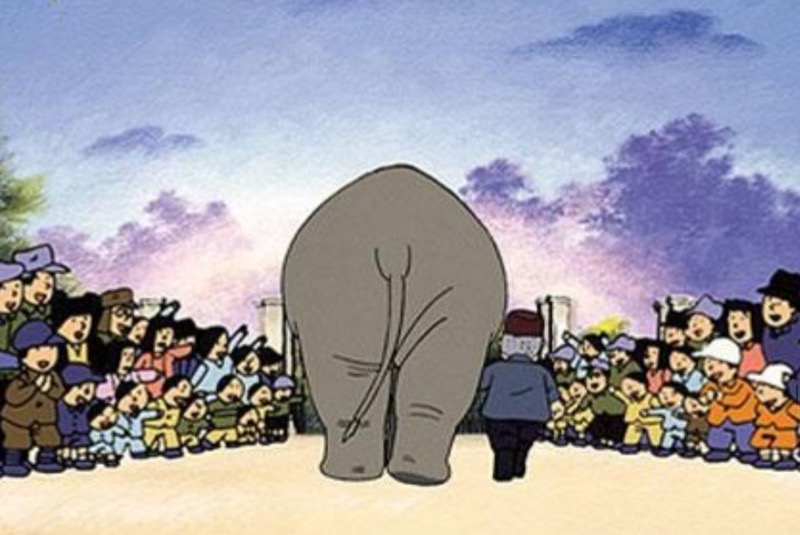
This time, Asha and Daya arrived by cargo aircraft. The embassy ensured strong media coverage, and I found myself at Narita Airport fielding questions from journalists. Playing on Japanese animal counters, I jokingly referred to the elephants as ni-hiki no zō emphasising the baby aspect rather than the correct ni-tō no zō, emphasising the elephant, drawing laughter. When the crates were opened, photographers expecting a dramatic trunk instead saw a gently swaying tail as the mahouts had opened the crates from behind to keep the animal’s calm. It also put to rest the popular myth that elephants are transported with chickens to soothe them.
For days, Asha and Daya dominated Japanese media. Elephant diplomacy had once again worked its quiet magic.
At the welcome ceremony in Ueno Zoo, mothers who had once petitioned for Indira now organised their children to sing for the new arrivals. We ensured reciprocity by arranging for Indian schoolchildren to perform as well. Their rendition of “Ichak Dana Bichak Dana” charmed the audience.
Prime Minister Nakasone spoke warmly, and as the embassy’s language officer, I translated his remarks into English and rendered our Chargé d’Affaires G.S. Iyer’s speech into Japanese among the proudest moments of my language training. When I left Japan a year later, the zoo authorities attended my farewell reception and presented me with two soft toy elephants.
By then, postcards featuring Asha and Daya were circulating widely among schoolchildren, and commemorative medallions had been produced for distinguished guests. It was a modest episode in diplomatic terms, but a meaningful one, a reminder that long before technology and trade defined relationships, diplomacy sometimes moved on padded feet, with raised trunks and a gentle capacity to touch hearts.
-30-
Copyright©Madras Courier, All Rights Reserved. You may share using our article tools. Please don't cut articles from madrascourier.com and redistribute by email, post to the web, mobile phone or social media.Please send in your feed back and comments to [email protected]