Craven Journalism Is The Greatest Enabler of Modi’s Misrule In India

Media-modi-madras-courier
Representational image; public domain.
India's craven journalism rewards obedience over accountability, leaving democracy diminished and citizens dangerously underinformed today.

There was a time when India’s media took pride in speaking truth to power. Today, it speaks for power. A large section of the mainstream media has abandoned its role as the fourth estate. It is serving as a conveyor belt for government narratives while marginalising, caricaturing or vilifying voices that challenge the political establishment.

Clearly, India’s journalism is facing an unprecedented crisis. But the crisis is not about bias. Bias has always existed. The problem is the collapse of institutional courage.

For supporters of the Cockroach Janata Party, this failure is impossible to ignore. They argue that their movement has been met with silence, selective derision, or conspiratorial accusations of protestors attempting to overthrow the government. Indeed, whether by omission or editorial choice, the movement has struggled to receive sustained engagement afforded to established political and corporate actors. Silence can be as powerful as censorship.

When editors decide that some movements are not worthy of public attention, they shape the political conversation. Democracy depends upon citizens hearing competing ideas, not only those deemed acceptable by television executives and media proprietors.

The transformation of NDTV has become symbolic of a broader decline. Once regarded as one of India’s most respected television news organisations, the Adani Group acquired it, fuelling concerns about editorial independence. Many believe the channel is unwilling to confront the government as it once did.

This is not simply about one broadcaster. Public confidence in mainstream media has eroded significantly.

Across much of Indian television, journalism has given way to crass political theatre. Prime-time debates have become corrosive spectacles in which anchors often engage in shouting matches and resort to confrontational posturing. Guests shout over one another while complex constitutional, economic and social questions are reduced to divisive debates or partisan politics.

The objective is to inflame. Noise has replaced reporting. Performance has replaced investigation. The loudest voice triumphs over the strongest evidence. The greatest casualty is the public, which deserves journalism that illuminates rather than distracts.

Meanwhile, independent media organisations and dissenting voices have faced increasing legal, regulatory and financial pressure. Journalists, editors and press freedom advocates have warned that the cumulative effect can discourage rigorous reporting. The possibility of official retaliation, and the government’s power to take down content, encourages self-censorship.

Fear is embedded in newsrooms through deliberate government manipulation. Stories are softened; headlines become cautious, and Investigations are delayed. Difficult questions disappear. That is the true meaning of craven journalism—not simply favouring one political side, but surrendering journalism’s essential purpose because confronting power is too costly.

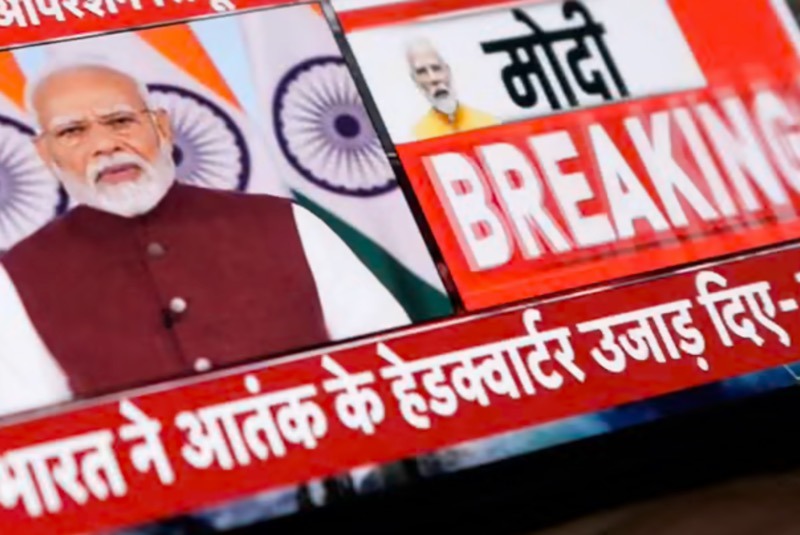
Nothing illustrates this democratic deficit more than the Prime Minister’s relationship with the press. Narendra Modi has not held regular open-ended press conferences in the manner common to many parliamentary democracies since becoming Prime Minister in 2014.

Instead, his public communication has largely taken place through speeches, interviews and carefully managed settings. Such an approach limits opportunities for independent journalists to ask sustained questions on matters of public importance.

Veteran journalist Rajdeep Sardesai has written that the Prime Minister’s Office tightly choreographs media interactions with the Prime Minister. If access to the country’s most powerful elected leader is tightly choreographed, accountability suffers.‘

Power that is never challenged becomes comfortable. Journalism that never challenges power becomes subservient, serving its master’s agenda.

The defenders of today’s media landscape often argue that viewers receive the journalism they demand. That explanation is too convenient. Journalism is not merely another entertainment business driven by ratings. It carries a democratic obligation to inform citizens honestly, scrutinise governments fearlessly and investigate those who wield power, regardless of political affiliation.

Instead, too many television personalities appear content to function as political performers. Some present themselves as prosecutors, others as cheerleaders, but relatively few behave like independent journalists. Studio debates resemble partisan contests rather than good-faith attempts to discover the truth.

The consequences extend beyond any single government or political party.

Once journalism becomes accustomed to proximity to power, recovering its independence becomes difficult. The precedents established today will shape the freedoms available to future governments, future journalists and future citizens.

The question raised by supporters of the Cockroach Janata Party is therefore larger than their own movement. It is whether India’s democratic conversation is becoming so narrowly managed that new or dissenting political voices struggle to receive fair hearing. A healthy democracy should expose emerging movements to rigorous scrutiny—not erase them from public discussion or reduce them to caricature.

-30-

Copyright©Madras Courier, All Rights Reserved. You may share using our article tools. Please don't cut articles from madrascourier.com and redistribute by email, post to the web, mobile phone or social media.
Please send in your feed back and comments to [email protected]

0 replies on “Craven Journalism Is The Greatest Enabler of Modi’s Misrule In India”