Commonwealth Dreams, Uncommon Barriers: How Casteism Continues To Shape Who Gets To Compete For India

Casteism_Sports_Madras_Courier
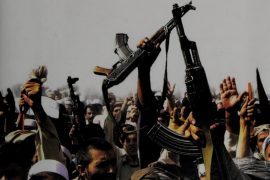
Representational image: Public domain/wikipedia.
As India eyes the Commonwealth Games in 2030, it has the rare chance to align ambition with introspection. Winning medals is important, as is deciding who gets to compete for them.

If India succeeds in its newly approved bid to host the 2030 Commonwealth Games, the event could symbolise a coming-of-age moment, a spectacle of global athleticism performed on Indian soil. One could easily imagine the gleaming stadiums, the synchronised opening ceremony, the triumphant headlines. But beneath the layers of pride, something more fragile will be at stake: whose stories get told, whose talent gets nurtured, and whose voices remain unheard.

The Games will also serve as a mirror. And what it reflects may have less to do with medals than with memory of how India treats its athletes, especially those who come from the margins.

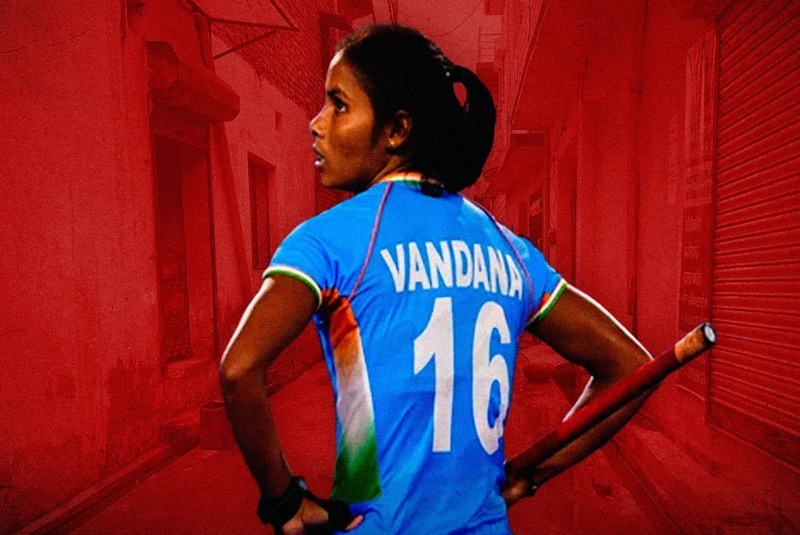
Take, for instance, Vandana Katariya.

She ran faster than most could dream, wielded her hockey stick like a sword, and carried the nation’s hopes in Tokyo. Yet when she returned home, she was met not with garlands, but with slurs. Her only fault? Daring to excel while being Dalit.

Sport, in its most idealistic form, is supposed to transcend boundaries of class, caste, and creed. It promises meritocracy and a chance to rise through determination and willpower. But in India, caste has always lingered like a watermark. Sometimes invisible, at most times stark, it is always present. In moments of both victory and defeat, it finds a way to remind those from marginalised communities of their “place.”

Vandana Katariya was an outstanding player in India’s women’s hockey team during the Tokyo Olympics. The team defied expectations, made history, and sparked celebrations across the country. But when they narrowly missed out on a medal, the tone shifted for some. In Haridwar, upper-caste men gathered outside her home and hurled casteist slurs at her family, claiming that the team had lost because it had “too many Dalit players.”

The moment wasn’t an anomaly. It was a crack in the surface that revealed a deeper, unsettling truth: casteism is not absent from Indian sports—it’s just dressed better.

This wasn’t an isolated outburst from a pair of disgruntled bigots. It was a reminder of the social architecture that continues to shape access, opportunity, and perception in Indian athletics. Despite constitutional protections, despite the brochures of equality and progress, athletes from marginalised castes are subjected to subtle—and not so subtle—forms of exclusion.

If this feels like a modern issue, it isn’t. More than a century ago, Palwankar Baloo, India’s first Dalit cricketer, embodied both the triumph and the torment of such dualities. He was hired by the Poona Club in 1892, initially to prepare cricket pitches for British officers. But his left-arm spin was too good to ignore. He was allowed to bowl to the officers in the nets, and soon, his talent forced its way onto the field.

Yet during matches, Baloo was not permitted to sit with his teammates. He drank tea from a separate cup. His caste dictated not only where he could sit, but where he could stand, eat, and sleep. And still, he excelled and became a star. He represented India in its earliest cricketing contests. But Baloo’s story is not just one of breakthrough but also of accommodation. He had to succeed in spite of his caste. That caveat continues to follow too many.

Fast-forward to today. Social media has amplified visibility and also vulnerability. For athletes from Dalit and tribal backgrounds, it has meant exposure to both celebration and hate. In cricket, wrestling, boxing, hockey, and weightlifting—sports that have traditionally seen greater participation from lower-caste and rural athletes—the path to the podium is often lined with invisible hurdles. Poor infrastructure, indifferent federations, and systemic bias still dominate the terrain.

It’s not just about verbal abuse. It’s about who gets scouted. Who gets sponsorship. Who is seen as a future star, and who is merely a workhorse. It’s about whose biographies get written, whose faces land on billboards, whose injuries are treated in time. It’s about access, not only to facilities and funding, but to imagination.

For young Dalit athletes, the climb is vertical and jagged. In many villages, a running track is a dusty lane. A training camp is a borrowed school ground. A coach might be an elder sibling or a retired PT teacher. There are no recovery specialists, sports psychologists or protein bars. And yet, athletes come. They train. They run. They push through pain and poverty to win district meets, state trials, and national selections.

But when they arrive on the world stage, caste travels with them in the press box, selection committees, and commentary panels. It hovers, unnamed but perceptible.

The Tokyo Olympics were supposed to be a turning point for Indian women’s hockey. It still might be. The team’s gritty, inspired, improbable performance won admiration across the country. They became symbols of aspiration. But even as the applause rang, so did the whispers. Vandana Katariya didn’t just have to play well. She had to prove she belonged.

What those men in Haridwar said wasn’t simply cruel. It was strategic. It was a social reprimand disguised as a sporting opinion. It wasn’t about the match. It was about reminding her that no matter how far she’d come, there were limits to how far she could go.

But perhaps, inadvertently, they sparked something else. Because even as the slurs echoed, the country reacted. Hashtags trended. News crews arrived. Stories of Vandana’s early training—practising barefoot, sharing one stick among three sisters, her father selling goats to buy her gear—resonated. They reframed the narrative. For a moment, the country looked at an athlete and saw her as a person. And in that moment, caste didn’t disappear. But it was challenged.

Resistance to caste discrimination is not new, but it’s evolving. Today, it manifests not just in protest marches or legal battles but in the choices of young athletes who refuse to be reduced by their background. They wear their identity not as a burden but as a badge. They use their sport as both expression and defiance.

Laws exist. Article 14 promises equality. Article 15 prohibits discrimination. But laws are static. Change is dynamic. It happens in spaces that aren’t televised—in locker rooms, training camps, rural sports hostels. It happens when a coach chooses on talent, not surname, when a federation funds a player from Manipur as readily as one from Mumbai, when victory isn’t filtered through ancestry.

And yet, the responsibility doesn’t lie with institutions alone. The media, the fans, and the sponsors are all co-authors of the sporting narrative. And the stories we choose to tell matter.

Casteism in Indian sports is not a side note. It is the plot that shapes the main story. But like all stories, this one, too, can change. Maybe not overnight, but over a decade. And what better occasion to commit to that change than now?

As India eyes the Commonwealth Games in 2030, it has the rare chance to align ambition with introspection. Winning medals is important, as is deciding who gets to compete for them. Infrastructure, planning, and logistics are the visible components of success. But inclusion, dignity, and fairness are the soul.

If India wants to shine on the global stage, it must first look inward to the dusty fields where raw talent is forged, to the invisible hands that carry the weight of national pride. To the young girl who dreams of a podium, knowing she’ll have to dodge both defenders and discrimination to get there.

The question, then, isn’t just whether India can host the Games.

The question is whether it’s ready to honour every player who makes those Games possible—regardless of caste, geography, or last name. If it can, the Commonwealth Games of 2030 won’t just be a sporting milestone. They’ll be a moral one.

-30-

Copyright©Madras Courier, All Rights Reserved. You may share using our article tools. Please don't cut articles from madrascourier.com and redistribute by email, post to the web, mobile phone or social media.
Please send in your feed back and comments to [email protected]
0 replies on “Commonwealth Dreams, Uncommon Barriers: How Casteism Continues To Shape Who Gets To Compete For India”