Bangladesh’s Political Drift: A Dangerous Wake-Up Call for India

Bangladesh-Madras-courier
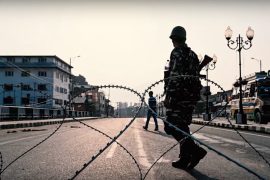
Representational image: Public domain.
It’s time for India to rethink its strategy towards Bangladesh. The Chicken Neck cannot remain a weak link in India’s strategic posture.

Bangladesh, since its independence from Pakistan in 1971, has been in a constant state of political flux. The turbulence, whether in the form of political rivalries, military coups, or the resurgence of radical ideologies, is hardly new. Yet recent developments in the region — a worrying drift towards anti-Indian sentiment, an increasing rapprochement with Pakistan, and the revival of radical Islamic parties — signal something more ominous: the potential for a more destabilised and hostile neighbour that could drastically affect India’s national security. This is a wake-up call for India’s political and strategic leadership.

India’s relationship with Bangladesh, once seen as a beacon of hope for regional peace and cooperation, is now strained. The country’s interim government, with its visible anti-Indian stance, has turned increasingly towards Pakistan, fanning the flames of an ideological divide that, until recently, seemed to have cooled. But what’s most disconcerting is the rise of radical groups within Bangladesh, some openly hostile to India’s interests. The danger this poses is not limited to rhetoric; it manifests in tangible threats, from fostering radicalised elements along India’s northeastern borders to the ongoing demographic shift in the region, driven by unchecked migration that threatens to destabilise the delicate social and political equilibrium.

But India’s concerns cannot stop at the borders. The country’s most vulnerable strategic chokepoint lies in the Siliguri Corridor, more colloquially known as the Chicken’s Neck — the narrow land passage that connects the Indian mainland to its northeastern states. This corridor is vital to the nation’s territorial integrity and logistical connectivity. Should any adversary, internal or external, destabilise the Chicken Neck, India would find its northeastern states isolated and vulnerable, with catastrophic consequences for national security. The stability of Bangladesh, therefore, is not just a matter of bilateral relations; it’s a matter of India’s survival.

Yet, in 1971, when India fought alongside the Mukti Bahini and helped bring Bangladesh into being, there was a remarkable opportunity to secure more than just a moral victory. India’s military success under the leadership of Prime Minister Indira Gandhi and General Sam Manekshaw was nothing short of extraordinary. The 1971 Peace Treaty with Pakistan demonstrated India’s ability to handle victory with responsibility. Despite the immense leverage India held over Pakistan, it did not exploit this power for strategic gain. Instead, it chose the path of diplomacy, negotiating the return of 93,000 Pakistani prisoners of war in line with the Geneva Conventions.

But there’s a glaring strategic oversight in that post-war calculus. The Chicken’s Neck — the lifeline to India’s northeast — was left dangerously unprotected. With a decisive military victory in hand, India could have seized a long-term strategic advantage by either capturing Chittagong port or, more realistically, negotiating a lease agreement with Bangladesh for access to the port and the establishment of a naval base. The Bay of Bengal is an important maritime highway, providing India with invaluable access to trade routes and critical military positioning in the region.

The price of war is high — in human lives, resources, and the toll it takes on a nation’s psyche. But the rewards of strategic victories, if leveraged correctly, can ensure long-term economic prosperity and national security. India’s military success in 1971 could have been used to create a regional security framework that would have cemented India’s strategic dominance in South Asia. Instead, the focus was on diplomatic engagement, and in doing so, India lost out on an opportunity to secure access to critical waterways and a strategic port that could have fortified its interests for decades to come.

Fast forward to today, India finds itself at a crossroads. The situation in Bangladesh is deteriorating, and the geopolitical dynamics are shifting in ways that could have profound consequences for India’s security. The rise of Islamic radicalism, coupled with a growing anti-Indian sentiment, is a cocktail for instability in the region. The Government of India, which has long prided itself on its regional influence, must now consider an assertive approach to safeguarding its interests. This is not merely a matter of diplomatic niceties or friendly relations with a neighbour; it’s a matter of national security.

It’s time for India to rethink its strategy towards Bangladesh. The Chicken Neck cannot remain a weak link in India’s strategic posture. India’s military strength is formidable, and it must not shy away from using that power to secure its interests. India should initiate discussions with Bangladesh, offering a mutually beneficial agreement that would allow India access to Chittagong port and the establishment of a naval base. A lease agreement for the port and the Bay of Bengal, akin to a hundred-year treaty, could strengthen India’s regional standing and provide a crucial counterbalance to China’s growing presence in the Indian Ocean.

Wars, as history teaches us, are fought not only for immediate gains but to secure long-term national interests. India must act decisively to protect its future. The time for timidity has passed. India, as a regional power, should not hesitate to redraw the boundaries of its influence. It must expand its strategic footprint in the Bay of Bengal and ensure that Bangladesh’s instability does not threaten the integrity of its borders. The days of “chickening out” are over. The nation’s security depends on it.

-30-

Copyright©Madras Courier, All Rights Reserved. You may share using our article tools. Please don't cut articles from madrascourier.com and redistribute by email, post to the web, mobile phone or social media.
Please send in your feed back and comments to [email protected]

0 replies on “Bangladesh’s Political Drift: A Dangerous Wake-Up Call for India”