The United States and Iran have agreed on a two-week ceasefire. If this ceasefire endures, it will be remembered in history as an example of a ‘military campaign’ intended to constrain Tehran that, in fact, has strengthened it.
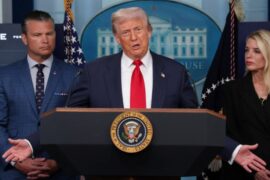
This conclusion runs against the triumphant, pompous claims emanating from Washington and Jerusalem. Trump has heralded the agreement as a victory, while Netanyahu pointed out the scale of strikes inflicted on Iranian assets.
Tehran has also declared success; its security establishment has endorsed the ceasefire, on the condition that attacks—including on Lebanon—cease.
Competing claims of triumph are common when hostilities cease. However, they reveal the substance beneath them. The terms of the truce indicate that Iran has not been forced into submission but has instead shaped the pathway to de-escalation.
To understand this, let us begin with the economic dimension. The conflict has repeatedly jolted global energy markets, with prices reacting sharply to supply disruptions. At the centre of this volatility lies the Strait of Hormuz, through which a significant share of the world’s oil passes.
The ceasefire restores passage through this chokepoint, but not on neutral terms. Iranian oversight remains pivotal, underscoring where leverage resides. Control over Hormuz is not merely a military asset; it is a structural advantage embedded in the Iranian economy.
Tehran is converting that advantage into tangible gain. During the conflict, it reportedly experimented with levies on shipping traffic, a practice that, if sustained, would create a new stream of revenue. Combined with the prospect of sanctions relief and renewed access to frozen assets, such a chokehold over the world’s oil resources could prove significant.
Reconstruction—necessitated by sustained bombardment—requires funding. Ironically, the war that targeted Iran’s infrastructure will ultimately furnish it with the financial resources to rebuild its infrastructure robustly.
Such economic reintegration would carry wider strategic consequences. When restrictions ease, Iran would re-enter global markets at a time when there is persistent demand for energy. Its capacity to influence supply—and, by extension, price stability—would increase accordingly. That influence is difficult to counter solely through military means.
From this vantage point, the diplomatic process takes a different hue. The ceasefire was not dictated after a decisive defeat. Instead, it was negotiated amidst continuing uncertainty. Reports suggest that discussions have gravitated towards Tehran’s proposals, rather than the more expansive set of demands once advanced by Washington.
Earlier American ambitions, which reportedly included far-reaching constraints on Iran’s strategic capabilities, have receded from the centre of talks. In their place stands a framework aligned with Iran’s priorities: sanctions relief, security guarantees and limits on external military pressure.
Such a shift indicates a recalibration. For Washington, the immediate objective is to halt escalation and steady markets unsettled by the threat to energy flows. For Tehran, the aim is far more ambitious: to consolidate the leverage accumulated during the conflict and translate it into lasting concessions.
The asymmetry is striking. One side seeks respite; the other seeks transformation. A ceasefire forged under such conditions is not a neutral pause. Instead, it is a mechanism for locking in an advantage.
The military picture reinforces this interpretation. Undoubtedly, the United States and Israel possess overwhelming conventional military capabilities. The scale and precision of their strikes attest to that superiority. However, in this instance, military prowess has not produced decisive political outcomes.
Iran has absorbed sustained attacks without breaking. The loss of senior figures has instead led to rapid replacement and continued cohesion. This resilience reflects endurance built over years of adapting to external pressure.
Long before the present conflict, sanctions compelled Iran to reconfigure its economy and security doctrine. Networks were diversified, institutions hardened, and strategies refined to exploit asymmetry. The war appears to have accelerated these tendencies.
Tehran has demonstrated an ability to disrupt critical arteries of the global economy, withstand punitive strikes, and draw adversaries into negotiations on terms that include economic concessions. Far from collapsing, it has leveraged pressure into bargaining power.
This dynamic exposes a paradox. Military campaigns are designed to degrade an opponent’s capabilities and compel compliance. When they fall short of decisive victory, they create opportunities for adaptation. The targeted state learns, adjusts, and, in some cases, emerges more capable than before. Iran’s trajectory fits this pattern. The campaign aimed at weakening Iran has turned it into a resilient and strategically agile actor.
The dissonance between rhetoric and reality is pronounced in the American case. Mr Trump’s declarations of total victory sit uneasily alongside the narrowing of American objectives. The reopening of Hormuz—Washington’s priority—has been achieved, but at the price of engaging with a negotiation framework shaped by Tehran. It suggests not triumph, but pragmatism: an acknowledgment of the limits of coercion and the need for an off-ramp from escalation.
Israel faces a related dilemma. Its military operations have demonstrated reach. However, their strategic payoff remains uncertain. The curtailment of Iranian influence was a central aim; the outcome may instead entrench it. Provisions curtailing Israel’s activity in neighbouring arenas, particularly Lebanon, hint at constraints that would have been difficult to enforce before the conflict. Israel has not achieved a lasting strategic advantage.
Moreover, the ceasefire carries implications for the broader regional order. For decades, American influence in the Middle East has rested on a combination of security guarantees and economic pressure. Both pillars show signs of strain. Allies have watched the conflict unfold with a mixture of concern and reticence, wary of escalation yet unconvinced by its rationale.
Soft power, too, has taken a hit. America’s ability to rally international support is diminished, its messaging undercut by the vulgarity and brashness of its leadership. In contrast, Iran has managed to frame itself as a state resisting an external aggressor, a narrative that resonates in the global South. This does not amount to a shift in allegiance. However, it complicates the diplomatic landscape in which future crises will play out.
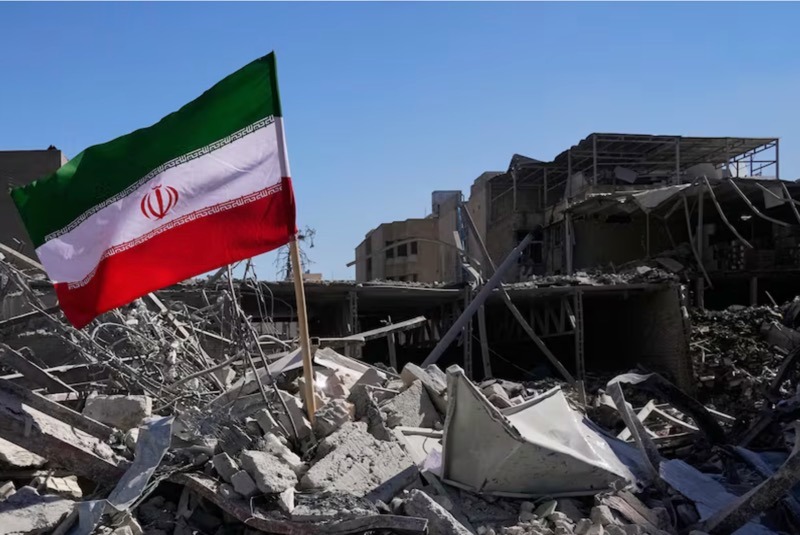
This does not imply that Iran has emerged unscathed. The damage inflicted on its infrastructure is significant, as is the loss of experienced personnel. Economic recovery, even with sanctions relief, will not be straightforward. Domestic pressures may test the regime’s cohesion. However, relative to the objectives articulated by its adversaries, Iran appears to have preserved its core capabilities while opening pathways to potential gain.
The fragility of the current arrangement should not be underestimated. Ceasefires in this region can sometimes break down with startling rapidity. Miscalculation, provocation or shifts could reignite hostilities. But even a temporary pause can have lasting effects if it alters expectations and redistributes leverage.
What, then, does this episode reveal about the nature of power? It suggests that dominance in one domain—however overwhelming—is insufficient on its own. Military superiority must be matched by a political strategy capable of converting it into durable outcomes. Economic strategy, meanwhile, can constrain and empower, depending on how it is wielded and resisted. In this case, the interplay of these factors has produced an outcome that defies the initial logic of the war.
The ceasefire, in this sense, is less about ending than about exposure. It strips away the noise of conflict and reveals underlying realities. The truce does not simply pause violence; it highlights a redistribution of advantage that occurred while the war raged. For all the talk of victory in Washington and Jerusalem, the balance sheet tells an ambiguous story in which Iran has avoided defeat and positioned itself to shape the next phase on favourable terms.
A war launched to curtail Iran’s influence may have underscored the limits of external power. In its wake lies a world in which assumptions of dominance are increasingly open to question.
-30-
Copyright©Madras Courier, All Rights Reserved. You may share using our article tools. Please don't cut articles from madrascourier.com and redistribute by email, post to the web, mobile phone or social media.Please send in your feed back and comments to [email protected]