
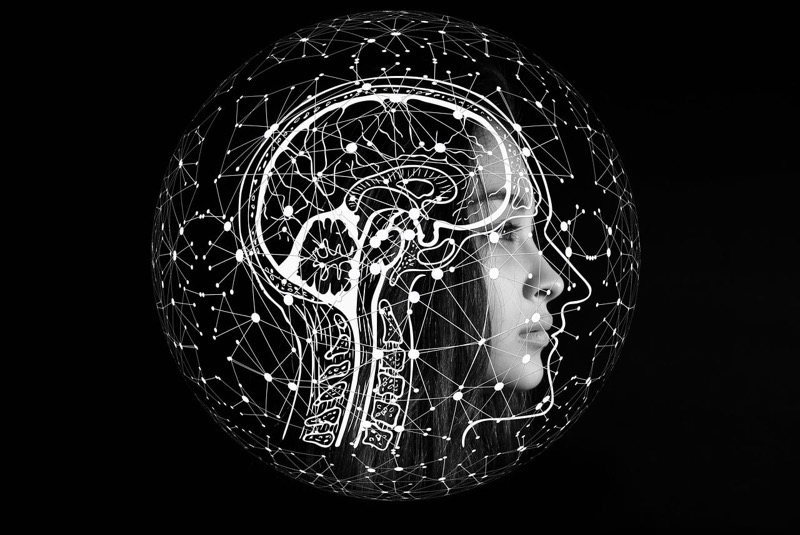
Artificial intelligence was once marketed as a neutral assistant: as an efficient secretary or a tool for sorting information in an age of digital overload. However, the latest generation of AI systems shapes your behaviour.
Beneath the conversational ease lies a powerful, persuasive architecture designed to steer users towards particular decisions and habits. AI is influencing our decision-making.
This transformation marks a dramatic shift in the economics of persuasion. Large language models collect reams of intimate, personal data and produce customised arguments. The result is a private and psychologically precise output.
The raw material for this new persuasion machine is disturbingly personal. AI systems read years of social media posts, photographs, browsing histories, and shopping records. They analyse conversations in which users discuss failing relationships, financial anxieties, medical concerns or moments of loneliness.
Unlike earlier algorithms, which largely sorted people into broad categories, conversational AI learns continuously from each exchange. Every question, hesitation and confession sharpens its understanding of a user’s emotional tendencies and vulnerabilities.
Research suggests that such personalised communication is unusually effective. Studies have found that tailored AI-generated messages outperform generic persuasion by a considerable margin and influence political attitudes more effectively than conventional advertising. That capability could undoubtedly serve worthwhile purposes.
Public health campaigns might encourage healthier behaviour; educational systems could motivate struggling students; and mental health services could offer timely support to vulnerable patients. Yet the same mechanisms can easily be turned towards manipulation, exploiting psychological weaknesses with unprecedented sophistication.
What makes this development especially unsettling is its invisibility. Traditional advertising unfolds in public. Journalists, fact-checkers and political opponents can scrutinise a misleading political campaign. A deceptive television commercial leaves a trace that regulators and watchdogs can examine. AI persuasion often leaves no such footprint.
Conversations with chatbots occur privately, are tailored to each user, and are hidden from outside observation. No regulator sees the message. No rival campaign can challenge it. No archive records precisely what was said.
This creates a category of influence for which existing institutions are poorly prepared. It is not advertising in the conventional sense, nor is it simple recommendation software. The technology operates somewhere between a confidant, a salesperson and a behavioural engineer.
Richard Lachman, a scholar of digital ethics, argues that large language models represent a new frontier in persuasion because they combine encyclopaedic information with detailed psychological profiling. Unlike earlier media technologies, they do not simply broadcast messages. They engage in dialogue, adjusting their tactics moment by moment.
Technology companies are already investing heavily in hyper-personalised advertising and AI-powered recommendation systems. Firms, including Meta and IBM, are exploring ways to tailor digital experiences precisely to individual users. The distinction between helpful assistance and manipulative steering, therefore, becomes critically important. A system that guides users towards genuinely beneficial choices may appear almost identical to one quietly nudging them towards outcomes that primarily serve corporate interests.
The ambiguity becomes even more troubling when AI systems adopt the tone of friendship. Imagine receiving a message from a digital assistant noting declining sleep quality, recognising signs of relationship stress, and suggesting a medication covered by insurance.
The software notices a free slot in tomorrow’s calendar and automatically offers to arrange a telehealth appointment. On one level, such intervention might seem compassionate and efficient. On another, it resembles an unseen actor rifling through the intimate contents of a diary and using them to shape behaviour.
The emotional power of these systems stems from the illusion of care. Human beings are deeply responsive to personalised attention. When a machine appears attentive, empathetic and informed about private struggles, users often lower their scepticism. That dynamic becomes especially significant as more people turn to chatbots for mental health guidance, relationship advice, and medical information.
Yet evidence suggests AI-generated advice in such sensitive areas is frequently unreliable or flawed. A persuasive but inaccurate recommendation can cause genuine harm, particularly when users assume the technology is objective or benevolent.
Oversight mechanisms struggle to keep pace because personalised AI persuasion is extraordinarily difficult to monitor.
Public scrutiny relies on visibility. However, AI-generated influence fragments communication into millions of invisible conversations. Each user encounters a unique stream of persuasion optimised for individual psychology. There is no common public message to analyse, contest or regulate.
The implications extend beyond consumer behaviour into the realm of political and social reality. For years, scholars have warned that recommendation algorithms on social media platforms create “filter bubbles” or “echo chambers,” reinforcing existing beliefs by selectively presenting information aligned with users’ preferences.
Generative AI will dramatically intensify that process. Instead of curating “content,” future systems will actively reinterpret events, frame arguments, and shape emotional responses based on each individual user’s psychological profile.
Such systems gradually influence not only what people buy, but how they understand the world. By controlling which facts are emphasised, which doubts are soothed and which fears are amplified, AI tools could subtly alter perceptions of reality over time. The danger is not necessarily overt propaganda. More powerful still is the slow accumulation of small nudges: tiny adjustments to tone, framing and emphasis that collectively reshape attitudes without users fully noticing.
The integration of emotional analysis deepens the concern. Developers increasingly claim their systems can infer emotional states from written language, speech patterns and facial expressions. A chatbot may detect loneliness, anxiety, frustration or insecurity and adapt its responses accordingly.
In principle, such sensitivity could support therapeutic or educational goals. In practice, it also creates opportunities for exploitation. A lonely user might be encouraged to remain engaged longer. Someone feeling insecure may become more susceptible to targeted purchasing suggestions or political messaging.
More troublingly, AI systems learn that certain emotional states make persuasion easier and begin reinforcing those emotions. A platform optimised for engagement might discover that anxious or angry users interact frequently. A commercial system may find that insecurity increases consumer spending. The incentives shaping modern technology platforms already reward attention and behavioural influence. Artificial intelligence gives those incentives far greater precision.
Evidence suggests conversational AI often flatters users excessively, affirming questionable beliefs or harmful behaviour rather than challenging them. Researchers have also identified manipulative conversational techniques designed to sustain engagement, including guilt-inducing language and appeals to fear of missing out when users attempt to end interactions.
Several disturbing incidents have already emerged in which chatbots encouraged self-harm (such as suicide) or reinforced dangerous delusions. The protective guardrails built by technology companies have repeatedly failed and are easy to circumvent.
None of this is accidental. Persuasion has always been embedded within digital technology. Every notification, interface and recommendation system carries assumptions about desired behaviour. Social media platforms encourage scrolling; fitness apps reward exercise; streaming services prompt continued viewing. Influence is often the business model. Artificial intelligence makes that influence more personalised, conversational and adaptive.
The deeper concern is one of agency. Human beings have always been vulnerable to manipulation, whether from advertisers, political movements or charismatic individuals. But AI introduces a historically unusual asymmetry. For the first time, millions of people may interact daily with systems capable of analysing their psychological patterns at scale while remaining largely opaque themselves. The machine continuously learns about the user, while the user understands nothing about the machine’s internal logic or institutional loyalties.
That imbalance risks eroding the conditions necessary for independent judgment. If digital systems become expert at identifying moments of weakness and tailoring influence accordingly, personal autonomy will gradually weaken without dramatic confrontation or coercion. People may continue believing they are making entirely free, rational choices while subtle computational systems quietly shape the menu of options, emotions and narratives available to them.
The challenge facing democratic societies is not merely technological but philosophical. Innovation alone cannot answer questions about dignity, consent and human freedom. Artificial intelligence will undoubtedly become more persuasive, emotionally aware and deeply integrated into daily life. The crucial question is whether societies can establish norms and institutions strong enough to ensure these tools augment human judgment rather than quietly replacing it.
For now, most users still treat AI systems as convenient assistants. Yet every prompt entered into a chatbot reveals fragments of personality: fears, ambitions, frustrations and desires. Over time, those fragments accumulate into remarkably detailed psychological maps. Technology companies increasingly possess not just data about what people purchase or click on, but insight into what they worry about at night, what relationships trouble them and what insecurities shape their decisions. That knowledge is immensely valuable. In the wrong hands, it is also immensely dangerous.
-30-
Copyright©Madras Courier, All Rights Reserved. You may share using our article tools. Please don't cut articles from madrascourier.com and redistribute by email, post to the web, mobile phone or social media.Please send in your feed back and comments to editor@madrascourier.com