
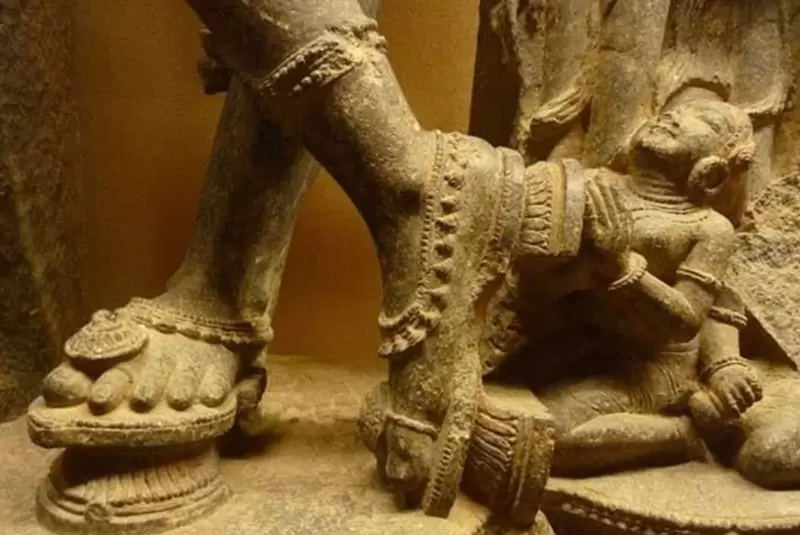
In the grand weave of history, we are taught to believe that fashion was a Western invention—a bauble borne of European excess, sparkling only after it had crossed the seas to India. But as with all grand narratives, this too has a crack. Look closely at the sculptures of the Konark Sun Temple in Odisha, and the simplicity of this assumption begins to unravel, thread by thread. These intricate stone figures—some seven hundred and fifty years old—tell a different story. They feature women poised on high heels, mirrors in hand, skirts billowing as if caught in a wind no longer of this world. This is not the whimsical creation of a nineteenth-century designer or the flashy product of a twentieth-century runway. This is an India centuries before the arrival of the West.
The usual history is this: that footwear, particularly the high heel, arrived in India courtesy of European influence after Vasco da Gama’s voyage in 1497. And yet, here we are, confronted with the evidence of women balancing on raised soles in the thirteenth century—two and a half centuries before these so-called European innovations ever made their mark. A coincidence? Or something more? A mere artistic flourish? Or perhaps a prescient understanding of what it means to lift oneself from the ordinary into the extraordinary?
Copyright©Madras Courier, All Rights Reserved. You may share using our article tools. Please don't cut articles from madrascourier.com and redistribute by email, post to the web, mobile phone or social media.Please send in your feed back and comments to [email protected]