The Spectacle Of British Governance In Colonial Malabar

Empire-Malabar-Madras-Courier
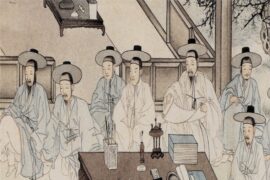
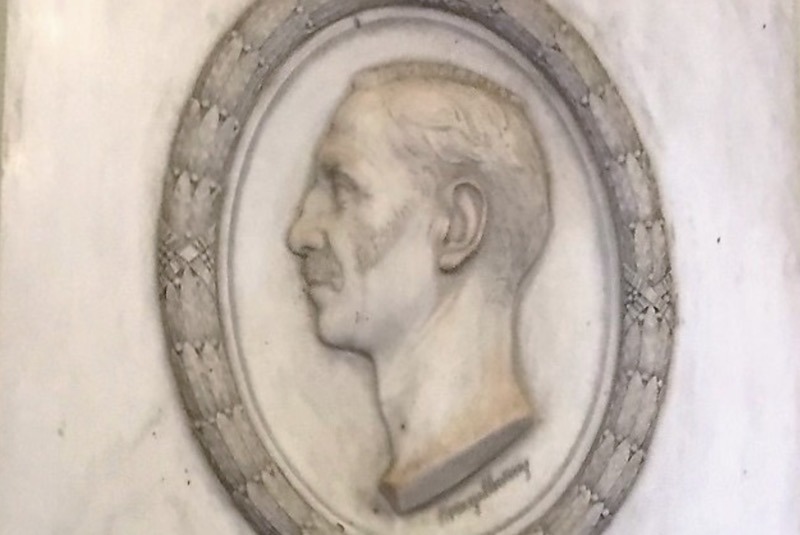
Representational Image: Public domain.
This essay traces the ceremonial tours of Madras Governors through colonial Malabar in the early twentieth century. It shows how imperial authority was staged & received.

The Kozhikode Regional Archives still preserve the tour diaries of the Madras Governors. Bound in fading grey volumes, they record every minute detail, informing us of how the empire moved through Malabar. Every train arrival, motor halt, reception committee and loyalty speech was entered with precise timings.

Malabar was then a district of the Madras Presidency, and it was partly through these tours that the British state was administered. The Empire did not only rule from Madras; it arrived at scheduled hours at railway platforms, circuit bungalows, forest lodges, and island beaches.

In one such tour, the then-Governor, Lord Pentland, reached Calicut at seven in the morning on 12 April 1913. He had left Madras at seven in the evening on the eighth, reached Coimbatore by dawn, and proceeded to visit its important landmarks and meet prominent people. From there, he headed further west to Calicut, where he was immediately escorted to East Hill as the guest of C. A. Innes, the acting Collector of Malabar.

April, as they say, is a cruelly hot month. And so, at every address, the speakers expressed regret that His Excellency had come in the wrong season to appreciate the beauty of the land. Only select Indians were allowed to meet the Governor. At luncheon, one Indian ICS officer sat among Europeans. At dinner that evening, none.

The interviews that followed were granted only to those recognised by the imperial order as legitimate civic interlocutors, such as Khan Bahadur Muthu Koya Thangal and O. Krishnan. There was no stated hierarchy. But there was an order, and it revealed all that needed to be known.

***

Incidentally, the route Pentland took was not the only way a Governor entered the district. Six years earlier, in September 1907, Arthur Lawley had come down from the Nilgiri hills into Nilambur, not by train but by motor car along the Karkur Ghat.

On his way to Calicut, he stayed in the forest bungalow beside the Kovilakam of the Nilambur Tirumalpad, who took care of his entertainment during his brief stay in that forested region. A rogue elephant that had killed a forest guard two days earlier was being hunted. We are told the Governor killed it with one shot, and that the party followed it up by hunting down a bison as well [The Fifth Tour of H.E. The Hon. Sir Arthur Lawley, Governor of Madras – Malabar, September 13th to 24th, 1907, Government Press, Madras, 1919, p. 64]. 

The form of welcome here was feudal, not municipal. And the spectacle was one of dominion over land and life, offered in the language of aristocratic honour. The pace was unhurried. There was still time to admire the river, to comment on the teak forests, to speak of the wild dogs and lemurs that moved in those hills. There was no war in Europe, and the Empire could still perform itself as leisure.

***

Returning to the 1913 visit, Pentland was taken to the standard sites on such itineraries, beginning with the Zamorin’s College, where Muslims and lower castes were still not admitted. He inspected the Women and Children’s Hospital, where separate wards existed for Brahmins, Nayars, Europeans, Eurasians, and others. And in a show of philanthropy often exhibited by the colonialists, he was taken to the mental hospital as well.

Then came the ritual of speech. At the end of his turn, Oyitty Krishnan, Chairman of the Calicut Municipal Council, declared that their gratitude and attachment be conveyed to His Most Gracious Majesty, the King Emperor, whose message of love and sympathy during the Delhi Durbar had sent a thrill of joy throughout this vast empire (First Tour of the Right Hon. The Lord Pentland, Governor of Madras – Coimbatore and Malabar, April 8 to 22, 1913, Government Press, Madras, 1913, p. 85).

The Vice President of the Malabar District Board went further, affirming midway through his address that there was no part of the Presidency where the British Crown was regarded with more affection or loyalty (Ibid., p. 86). The language was not spontaneous. It had been rehearsed long before.

The president of the Jenmi Sabha spoke next. There are many races in this district, he said, and customs may differ. Yet, all are united in deep and unswerving loyalty to the King Emperor and in warm appreciation of the peace and security enjoyed under British rule (Ibid., pp. 87–88).

But their fidelity was not without a request. The Governor was urged to keep in mind the traditional land tenures in these parts when any future reform is attempted.

The Himayat-ul-Islam Sabha, representing the Mappila Muslims of the town, affirmed that their community yielded to none in loyalty to the British throne and was ever ready to sacrifice all it could for the interests of its paternal government (Ibid., p. 101). Interestingly, at the same time, simmering religious and economic discontent was also present among their poorer Muslim brethren in the countryside, who had been revolting sporadically against the colonial regime for several years, a discontent that would culminate a few years later in the Malabar rebellion of 1921.

The war in Europe was still a few months away. There was time for leisure. From Calicut, Pentland, accompanied by his white male companions, including the Collector Innes, travelled by sea aboard the Hardinge to the Laccadive and Minicoy Islands.

The accounts from these islands read like imperial ethnography performed as theatre. The Governor was welcomed with exotic dances in colourful dresses on coral beaches. In one of the islands, a former amin who had once met a Madras Governor insisted that His Excellency listen to his gramophone, which he alone possessed in the whole island. Those on tour enjoyed the trip so much that, at the end of it, there was widespread regret that it had come to an end.

Pentland, who returned from the islands, was again received in Calicut and left for Ootacamund on the twenty-first of April. The heat and dust of the coast were left behind as the archives note the ascent to cooler air. The files close quietly. The empire, having arrived, withdrew to the hills, where it governed from a distance, confident that the district had once again performed its obedience.

***

Pentland would return to Malabar again. But when he did so in August 1918, during the First World War, the mood had altered. The visit was no longer a ceremony but a mobilisation. Recruitment had been found wanting in Malabar. It was said that the Malayali clung too strongly to their home, and that Malayali mothers loved their sons too much, making enlistment difficult.

A Thiyya assistant recruiting officer was proposed to coax the hesitant among that community, which, in numbers, dominated the coast. Landlords, as always, rose to reaffirm their service to the Empire. The Raja of Kollengode proposed setting aside scholarships in his school for the children of those who were recruited.

Vengayil Krishnan Nayanar reminded the Governor that he had already given away two hundred and fifty acres the previous year to those who enlisted, and had lent paddy without interest to the families of soldiers drawn from his estate (Twentieth Tour of H.E. The Right Hon. The Lord Pentland, Governor of Madras – Calicut, Vellore, Bellary, Anantapur, Hosur, Bangalore and Kollegal, August 8th to September 4th, 1918, Government Press, Madras, 1919, p.26).

Recruitment was no longer an honour. It had become arithmetic. The empire had once arrived here to receive loyalties. It has now returned to calculate returns.

-30-

Copyright©Madras Courier, All Rights Reserved. You may share using our article tools. Please don't cut articles from madrascourier.com and redistribute by email, post to the web, mobile phone or social media.
Please send in your feed back and comments to [email protected]

0 replies on “The Spectacle Of British Governance In Colonial Malabar”