
The Overlooked Danger of Excessive Protein Intake

protein_madras-courier
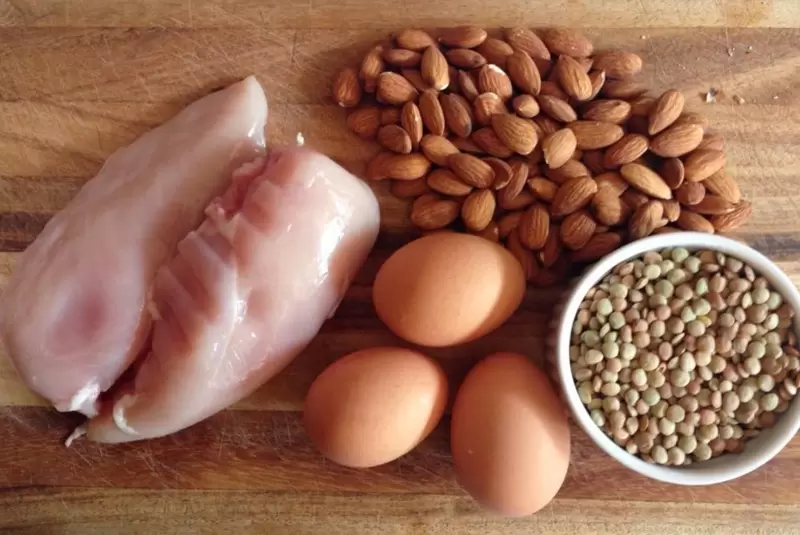
Representational image: Public domain/Wikimedia.
Protein is not evil. But like fire, potent fuel for life’s forge, it demands respect.

A blender whirs with a thick, creamy swirl of powdered protein in the dawn filter of kitchen light. On Instagram, a young woman posts a slo‑motion video: she lifts her shaker, a triumph of white muscle. Every scroll reinforces one relentless message: more protein equals more gain. But beneath the surface of this cultural impulse lies a less‑discussed question: can protein, the celebrated building block of the human body, become too much of a good thing?

For decades, protein has held a near-sacred status in our diets: the macronutrient vital for muscle, hormones, immunity, and even energy. Official guidelines have offered modest paths—adults require, by U.S. and WHO standards, roughly 0.8 grams per kilogram of body weight daily, simply enough “to prevent deficiency.” That’s a weighty calculation: for a 75‑kilogram individual, about 60 grams of protein each day.

Yet the treadmill of fitness culture propels that baseline up and up. Active individuals and athletes are now often advised to consume between 1.2 and 2.0 grams per kilogram—intake levels that support muscle repair and synthesis. In some scientific circles, researchers suggest that even higher margins—1.6 grams per kilogram—yield no additional muscle benefit. “Beyond a daily intake of 1.6 g/kg… the additional effects of protein are greatly diminished,” one study notes.

What, then, of those who spill over even these thresholds? Nearly unnoticed, a risk quietly amplifies.

An illuminating review in PubMed details that while intakes up to 2 g/kg are considered safe, and even up to 3.5 g/kg for “well‑adapted subjects,” chronic consumption beyond 2 g/kg may precipitate digestive, vascular, and renal dysfunction. In clearer terms: the human body can endure a heavy protein burden, but not without cost.

What exactly might go awry when we overshoot? The body cannot store protein in the traditional sense—surplus protein is repurposed for energy or converted into fat. Over time, especially when surplus energy persists, this conversion may lead to weight gain and elevated blood lipids—ubiquitous in high‑protein, high‑saturated‑fat diets. Moreover, kidneys must work harder to process the nitrogen byproducts of protein metabolism, increasing strain—especially in individuals at risk for renal disease.

Beyond the physical, there is a historical footnote—one alarming if consumed literally: “protein poisoning,” sometimes called “rabbit starvation.” Explorers subsisting on nearly pure lean meat (think rabbits) soon found that their bodies rebelled—weakness, nausea, confusion, and even death.

In a survivalist post, one writer cautions: “Excessive protein can overwhelm your liver and kidneys… it’s a serious condition that can kill you.” The lesson: even nature balks at lopsided diets.

There’s also the matter of timing and balance. Nutritionists note that many pack the day’s protein load at dinner, leaving breakfast embarrassingly low. That imbalance may fuel fluctuating hunger and blood sugar, undercutting metabolic steadiness. “Experts recommend including 25–30 grams of protein at breakfast to maintain satiety and blood sugar balance.”

Then, there is the quiet irony of over‑fortified food. Grocery aisles gleam with protein‑bomb snacks and shakes, yet for most in affluent societies, everyday diets already surpass recommended protein targets. As one reporter writes bluntly: “Despite the surge in protein‑enriched foods… most people already consume adequate protein.”

The crux of the cultural narrative is not wrong: protein matters. But often we stack it atop an already ample base, as though more could only yield better results. It is worth considering a gentler theory: that moderation, variety, and timing may serve us better than excess.

Indeed, sources of protein matter as much as quantity. Both animal and plant papers fulfil the amino acid mandate—but they arrive with different baggage. Many animal‑based proteins carry saturated fat, implicated in heart disease, while plant proteins bring fiber, disease‑protective phytonutrients, and lighter metabolic impact.

In the last chapter of our high‑protein saga, constraints of age and context still hold sway. As we grow older, muscle decline accelerates—sarcopenia creeping in. Experts now counsel older adults to aim for the higher end of intake—perhaps 1.2 grams per kilogram or more—to stave off frailty and loss of independence. Yet again: more only in the right population, under the right circumstances.

What emerges, then, is not a crusade against protein, but a plea for discernment.

We find ourselves in a world fixated on more—more shakes, more grams, more muscle. Yet often we miss the inverse: less haste, more balance. In the quiet hum of dawn, when the blender rests, and the Instagram post waits, perhaps the wisdom lies in asking: Do I need this? Will it nourish or burden?

Protein is not evil. But like fire, potent fuel for life’s forge, it demands respect. And as we chase strength, sculpt health, and scroll through curated highlights of food and fitness, it may do us good to remember: sometimes, the strongest stance is measured restraint.

-30-

Copyright©Madras Courier, All Rights Reserved. You may share using our article tools. Please don't cut articles from madrascourier.com and redistribute by email, post to the web, mobile phone or social media.
Please send in your feed back and comments to [email protected]
0 replies on “The Overlooked Danger of Excessive Protein Intake”