The Indian Ocean’s Children: The Long Journey Of The Siddis Across South Asia

Siddi-Madras-Courier
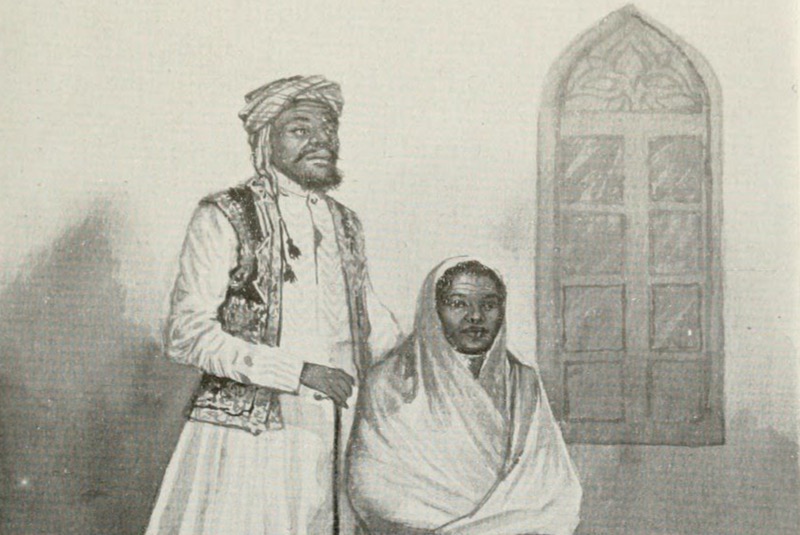
Representational Image: Public domain.
The Siddis, scattered across villages, cities, and political histories, remain emblematic of a relationship between South Asia and Africa

June Jackie Harnodkar Siddi has grown accustomed to being stared at when he walks through the dense Mumbai streets, his long dreadlocks swaying as he threads through the crowds. The looks are rarely hostile; they are more often puzzled, as if people are trying to reconcile his appearance with his fluent Hindi, which in turn invites the inevitable question: “Are you Indian?”

June answers it with the same steady patience every time, though one imagines the repetition has worn grooves in his temper. He is Indian in every imaginable way—by birth, by language, by the rhythms of his upbringing in a small Siddi settlement in the Kanwar district of Karnataka, and by the long, complicated history that braided Africa and India together long before either of them resembled their present selves.

That history winds unexpectedly through the story of the Indian nation-state itself. When India gained independence in 1947, the formidable Sardar Vallabhbhai Patel—its first Home Minister and the architect of political integration—began the meticulous process of persuading, cajoling, and at times pressuring hundreds of princely states to accede to the new Union.

Some states are remembered only as entries in the bureaucratic ledgers of the time; others contained peculiar chapters that revealed just how elastic the notion of “Indian” could be. Among these was the princely state of Sachin, perched at the southern edge of what is now Gujarat, ruled by a family whose lineage could be traced not to Rajput clans or Mughal courts, but to the highlands of Ethiopia and Eritrea.

The Siddi dynasty of Sachin had taken root in India through a dramatic turn of eighteenth-century politics. In 1784, Siddi Abdul Karim Mohammed Yakut Khan, heir to the rulers of Rajapore and Janjira, fled to Poona after being stripped of his inheritance by Siddi Jauhar. Jauhar himself had risen from enslavement under a Bijapur noble, Malik Abdur Wahah, to proclaim mastery over Kurnool and Bijapur after his patron’s death.

Abdul Karim, seeking refuge and support, made his way to the court of the Peshwas, where he negotiated an agreement that altered the trajectory of his life and also the political landscape of the region. In exchange for relinquishing his claim over Janjira, he was granted the small yet strategically significant state of Sachin and its dependencies. Thus emerged a princely domain in which a predominantly Hindu population was ruled by a Muslim dynasty whose origins lay in East Africa. The state, perhaps unexpectedly, settled into a steady rhythm of governance and retained its peace through the centuries that followed.

The dynasty, of Habesha descent, adapted with remarkable fluidity to the shifting cultural and political demands of the subcontinent. They formed marital alliances with aristocratic families in Hyderabad and other princely states, and embraced European education with notable enthusiasm.

Several members studied abroad, venturing into disciplines such as law that were reshaping India’s social landscape. Among the more distinguished of these was Nawab Siddi Ibrahim Mohammed Yakut III, who served in the East African Campaign during the First World War—a chapter of history in which Indian troops fought not only for the British Empire but also, unwittingly, in lands that echoed their own ancestral origins.

The family’s history folds further into the cultural life of India through its link to Indian cinema. Fatima Begum, recognised today as the first female director in Indian film, was associated with the dynasty through her marriage to Siddi Ibrahim Yakut III, though the royal family later maintained that no formal contract survives.

Begum had emerged from Gujarati and Urdu theatre, entered the fledgling film industry and made her debut in Ardeshir Irani’s 1922 silent film Veer Abhimanyu. With Siddi Ibrahim, she had three daughters—Zubeida, Sultana, and Shehzadi—who carried her artistic legacy into the next generation. Sultana became one of early Indian cinema’s leading actresses, while Zubeida won a place in film history by starring in Alam Ara (1931), India’s first talkie.

Partition scattered many families, but the sisters chose different paths: Zubeida remained in India, while Sultana moved to Pakistan. Through their lives, the story of the Siddi dynasty continued to ripple outward, threading African heritage into the cultural, political, and artistic facets of South Asian life.

Yet the Siddis of princely blood form only one branch of a much broader and older story. Across the subcontinent, communities of African origin—referred to as Siddi or Seedhi—had lived, worked, and worshipped for centuries. The earliest among them are believed to have arrived on Indian shores in 628 AD, as merchants, sailors, or members of trading networks that wound across the Indian Ocean. Others came later as indentured servants or as enslaved people brought by Arab traders and, in significant numbers, by the Portuguese, who transported men and women from Bantu-speaking regions of East and Central Africa.

In the vast, unruly churn of medieval India, some Siddis escaped bondage and established independent settlements in forested regions. A few even rose to prominence, as in the case of Jamal-ud-Din Yaqut. Once a slave, he later became a nobleman closely associated with Razia Sultana, the thirteenth-century ruler of the Delhi Sultanate. Some Siddi groups built small but resilient principalities such as Janjira, whose naval strength made it the rare coastal fort that even the Marathas could not conquer.

Centuries later, the modern Siddi communities of India remain scattered across Gujarat, Karnataka, Maharashtra, and parts of Hyderabad. Their cultural assimilation into local societies has been deep and enduring, yet it has not erased the fragments of memory that tie them to Africa. Gujarati Siddis, for instance, celebrate dhamal, a traditional music and dance form that carries unmistakable echoes of East African rhythms. In Karnataka—home to the largest Siddi population—most members of the community follow Hinduism today, evidence of a long process of adaptation that has blurred but not dissolved their ancestral past.

That past also stretches beyond India’s borders. After Partition, many Siddi families migrated from western India to Pakistan, settling primarily in Karachi. Led by Mohammed Qasim, they found themselves drawn to the Makran coastal region of Balochistan, where the windswept, stony, and open landscape seemed to offer a kind of continuity with the histories of travel and displacement embedded in their community. Over time, they became an integral part of Karachi’s cultural tapestry, remembered most vividly through the annual Siddi mela held in the Manghopir neighbourhood of Gadap Town.

The Manghopir festival, which lasts four days, has become both a pilgrimage site and an anthropological curiosity, renowned for the sacred crocodiles that inhabit the shrine’s pond. Devotees approach the reptiles with offerings of fresh meat and petitions for good fortune, believing the creatures to be guardians of the shrine. The bond between the community and the crocodiles is so intimate that when one of the animals dies, it is buried with ceremony, as though a respected elder had passed.

The most striking ritual is the garlanding of the chief crocodile—called Mor Sahib—by the gaddi nasheen, or holy successor. That these predators have never attacked pilgrims is an article of faith, yet it also seems to belong to that realm of cultural truth where reverence renders coexistence possible. During the festival, Siddi participants dance and chant in Swahili, a language long faded from daily use and now recited more like a whispered remembrance than a mode of communication.

For people like June, who field questions about their belonging, the Siddi story is not an exotic anomaly but a living testament to the subcontinent’s intricate history of movement, migration, and cultural entanglement. The presence of African-origin communities in India and Pakistan is not the residue of a distant world but part of the region’s history—a reminder that long before modern citizenships were drawn and redrawn, the Indian Ocean stitched societies together with currents stronger than borders.

The Siddis, scattered across villages, cities, and political histories, remain emblematic of a relationship between South Asia and Africa that was once commonplace and is now only faintly remembered. Yet their survival, adaptation, and cultural distinctiveness offer a quiet counterpoint to the assumption that identity must be simple or singular. In their lives, and in the stories carried through families, festivals, and fading languages, one finds a map not just of origins but of the astonishing elasticity of what it has meant—and continues to mean—to call oneself Indian or Pakistani.

-30-

Copyright©Madras Courier, All Rights Reserved. You may share using our article tools. Please don't cut articles from madrascourier.com and redistribute by email, post to the web, mobile phone or social media.
Please send in your feed back and comments to [email protected]

0 replies on “The Indian Ocean’s Children: The Long Journey Of The Siddis Across South Asia”