Man Singh Tomar & The Palaces Of Memory

Man-singh-tomar-madras-courier
Representational image; public domain/wikimedia
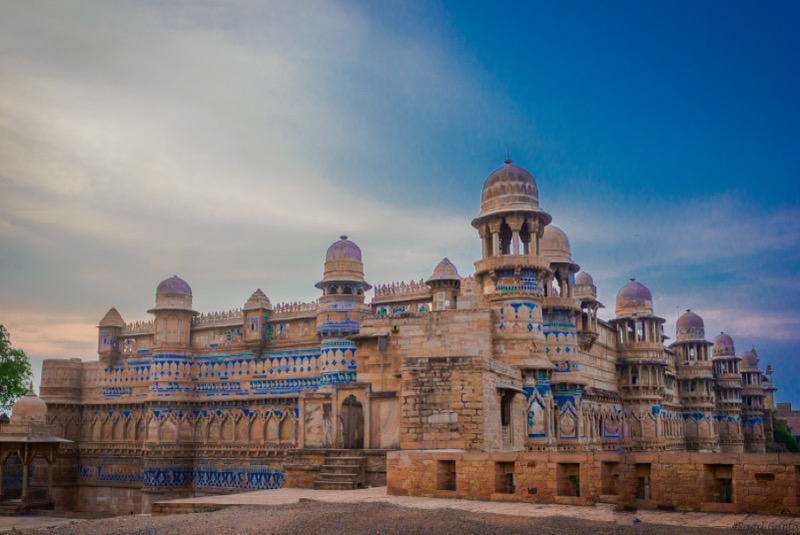
The Man Singh Palace, a testament to Raja Man Singh Tomar's artistic and political vision, whispers stories of love, legacy, and survival.

High above the plains of northern Madhya Pradesh, where the land rolls out in long, ochre swells and the air carries the faint scent of dust and jasmine, the Gwalior Fort rises like a sandstone ark. For a thousand years, traders, invaders, and kings have passed beneath its imposing ramparts, each leaving behind an imprint—a fragment of stone, an anecdote, a legend. Yet few stories cling to its walls as tenaciously as that of the Man Singh Palace, a confection of blue tiles and honeycombed chambers that still whispers the ambitions and anxieties of the man who built it. If the fort is the spine of Gwalior, then the palace built by Raja Man Singh Tomar is unmistakably its beating heart, a testament to an age when aesthetics and politics moved in step like dancers in a courtly hall.

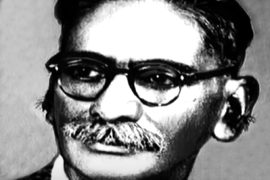
Raja Man Singh Tomar, whose reign in the late fifteenth and early sixteenth centuries marked one of Gwalior’s most luminous periods, was a man who found himself situated at a crossroads in Indian history. His lineage connected him to the legendary Prithviraj Chauhan, the last Hindu ruler of Delhi before the tide of Turkic invasions swept across North India. In the Ain-i-Akbari, the Mughal chronicler Abu’l Fazl recounts, with characteristic flourish, the tale of Prithviraj’s battles with Sultan Muhammad Ghuri. “The Hindu chronicles narrate,” he writes, “that the Raja engaged and defeated the Sultan in seven pitched battles.” Only in the eighth, fought near Thanesar in 1192, did the tide turn decisively, resulting—depending on which historian one chooses to believe—in Prithviraj’s capture or death on the battlefield. The Tomars, who had long served as the custodians of the Delhi region before being pushed southward, carried this memory like an heirloom, a reminder of past grandeur and inexhaustible obligation.

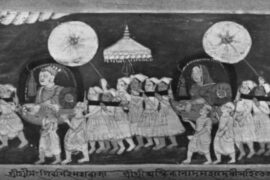
It was from this legacy that Man Singh Tomar drew both pride and purpose. His most celebrated military act—his defeat of Sikander Lodi, the formidable Sultan of Delhi—was not merely a triumph of arms but a gesture of defiance, a reclamation of Tomar dignity. But unlike many rulers whose reputations rest solely on conquest, Man Singh distinguished himself as a patron of the arts. The Gwalior court under his reign became one of the great nurseries of Hindustani classical music. It was here, in chambers softened by latticed stone screens, that musicians refined the Dhrupad style, and where the young Tansen—who would later dazzle the court of Akbar—first honed the voice that would enter Indian cultural mythology. Music, architecture, and poetry were the building blocks of Man Singh’s kingdom, as essential to its identity as swords or citadels.

But the Man Singh Palace remains his most visible legacy. Entering the palace today, one is met first by the remnants of its famed blue tiles—once so abundant that contemporary accounts describe the palace as shimmering like a lake in sunlight. Only fragments survive now, clinging to the entrance like the final, stubborn strokes of paint on an ageing fresco. Yet even in ruin, the structure retains a kind of majesty, its symmetrical courtyards and tall façades evoking the disciplined elegance of Rajput architecture. The palace interiors, with their jali screens and recessed niches, were designed not merely for defence or governance but for the cultivation of beauty. Through these screens, musicians once played into the open courtyards, allowing their compositions to float upward toward the sky and across the fort’s expanse.

As with most Indian monuments, the palace’s glory was followed by centuries of turbulence. After Man Singh’s death, Gwalior fell into Mughal hands, becoming a strategic outpost in an empire that stretched from Kabul to Bengal. Emperor Aurangzeb, with his austere temperament and suspicion of rival claimants, repurposed many of the palace chambers as prison cells. His own brother, Murad, was imprisoned here before being executed—a reminder that even the most beautiful structures can be repurposed for the grimmest of statecraft.

Close by lies Jauharkhand, the site where it is believed that Rajput women, facing the prospect of falling into the hands of Alauddin Khilji’s advancing forces more than a century before the Tomars’ arrival, committed mass self-immolation. The ground is quiet now, but the memory of that tragedy hovers like a veil, giving the fort an atmosphere of solemnity that stands in stark contrast to the celebratory tenor of Man Singh’s reign.

If the Man Singh Palace reflects the king’s aesthetic sensibilities and political ambitions, then the Gujari Mahal speaks of his private longings and contradictions. Unlike the Man Singh Palace—which stands proudly within the main fort complex—the Gujari Mahal sits slightly apart, its foundations anchored in a story as improbable as it is romantic.

According to tradition, Man Singh, who had no heirs despite eight royal marriages, fell in love with a woman named “Naani,” the daughter of a local milkman. She possessed, it is said, eyes so arresting that the king renamed her Mrignayani—“deer-eyed.” The king, smitten and perhaps determined to carve out a space for a love that defied the rigid caste hierarchies of his age, built her a palace of her own.

One of her conditions was that its water should flow directly from the River Ria, and so channels were constructed, their pathways engineered to fulfil her request. It is tempting to imagine this as an act of devotion, though local lore insists otherwise: that had water flowed into the earth in proportion to the king’s affection for his queen, the entire world would have drowned. These stories—half history, half fable—linger like the fragrance of an extinguished lamp, offering glimpses of a world where love, politics, and legend were constantly intertwined.

The Gujari Mahal, unlike its counterpart, has survived the centuries with grace. Today it houses a museum that shelters a remarkable collection of Hindu and Jain sculptures, many of them exquisitely carved relics from the region’s ancient past. The most famous among them is the Salabhanjika, sometimes called the “Mona Lisa of India,” a sculpture whose enigmatic smile and delicate posture capture an idealised feminine beauty that has entranced viewers for generations. The museum’s curated spaces, in contrast to the romantic decay of the Man Singh Palace, are clean and well-maintained, offering an experience of tranquillity and reflection.

Walking between the two palaces, one senses not only the geographical distance between them but the emotional and architectural spectrum they represent: one a monument to power and political legacy, the other to love and artistic intimacy. Yet both have, over the centuries, contributed to Gwalior’s cultural tapestry, enriching the city in ways that continue to define its identity. They are reminders of a period when rulers devoted immense resources to creating beauty—not merely as ornamentation, but as an expression of civilisation itself.

In the end, the twin palaces stand as complementary testaments to Man Singh Tomar’s vision—one public, one private; one echoing with the clang of courtly decisions, the other with the soft rhythms of love and lyricism. Their stones, worn by time, continue to narrate stories of lineage, conquest, music, devotion, and survival. Together, they elevate Gwalior from a fortified hilltop city into a living archive of India’s layered past, where myth mingles with history and architecture becomes a form of remembrance.

-30-

Copyright©Madras Courier, All Rights Reserved. You may share using our article tools. Please don't cut articles from madrascourier.com and redistribute by email, post to the web, mobile phone or social media.
Please send in your feed back and comments to [email protected]

0 replies on “Man Singh Tomar & The Palaces Of Memory”