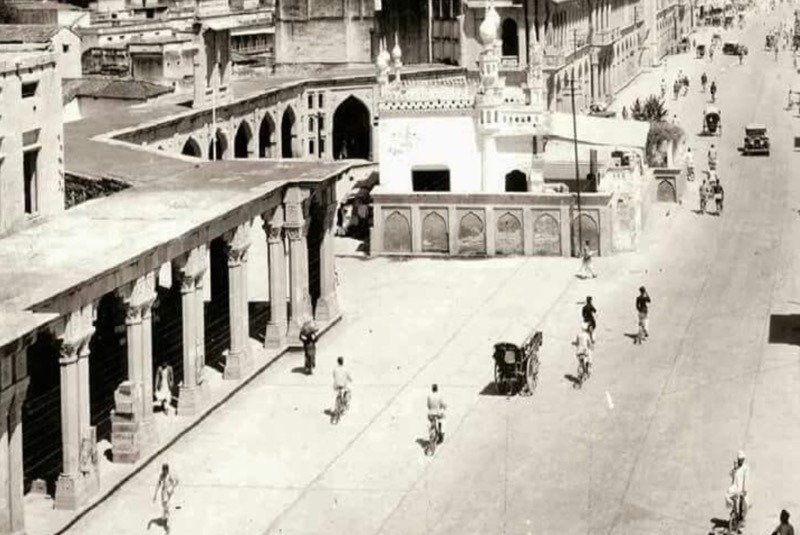
In the early twentieth century, Hyderabad faced an extraordinary series of challenges—plague, floods, and famine—that tested the limits of governance and urban planning. For most cities, such a combination of calamities would have been catastrophic. But Hyderabad, a princely state ruled by the Nizam, stood apart in its response.
Its leaders, particularly Mir Osman Ali Khan, recognised that crises like these were not simply matters of immediate survival but opportunities to reshape the city for the future. In the wake of devastation, they built infrastructure to safeguard their people and reimagine the urban landscape.
In 1896, an Indian physician, A.G. Viegas, reported the first official case of bubonic plague in India, a disease that had ravaged Europe and parts of Asia for centuries. The patient, from the Mandvi district of Bombay Presidency, displayed the symptoms: high fever, swollen lymph glands, and gangrene, a grotesque and inevitable progression.
Without modern antibiotics, the disease spread rapidly, leaving death and fear in its wake. But Hyderabad, though far from the epicentre of this outbreak, had learned from previous misfortunes. The city had already confronted disaster in several forms—none more severe than the 1908 flood.
The Musi River, which had flowed through Hyderabad for centuries, became an unexpected agent of death that year. A deluge of rain caused the river to burst its banks, inundating the city. Thousands perished, and vast swathes of the city were flattened. Entire neighbourhoods, especially those along the river, were swept away in an unrelenting tide.
The city was left in ruins, and as recovery efforts began, it became clear that rebuilding would require more than repair work. It would require foresight—an understanding that nature and disease could strike at any moment, and that the city’s infrastructure was woefully inadequate to handle such catastrophes.
When the plague arrived in Hyderabad in 1911, it did so with terrifying swiftness. On August 25 that year, a local man named Hafiz Syed Abdul Qadir alerted the municipal commissioner to a case of the deadly disease. Within two days, more cases were discovered.
The city’s administration, already battle-hardened from the flood, responded decisively. They established plague camps, where the infected could be quarantined and monitored, and healthy residents could be segregated from potential carriers of disease. These camps were part of a broader strategy that involved strict border controls, with inspections set up at key railway stations to detain travellers from infected areas.
The response was methodical, even surgical in its execution. An entry in the Imperial Gazetteer of India’s Provincial Series from 1909 recalls the existence of “plague camps” at the frontier railway stations, where passengers arriving from high-risk areas were placed under observation. This early attempt at disease management, though rudimentary by modern standards, was a sign that the city understood the power of containment. The camps continued to play a crucial role in the battle against the disease throughout the 1920s, helping to isolate outbreaks before they could spiral out of control.
Despite these efforts, the toll was severe. Over the course of the epidemic, around 20 per cent of Hyderabad’s population perished from the plague. Families were uprooted, their lives disrupted, and the social fabric of the city was torn apart.
In the face of this catastrophe, the Nizam, Mir Osman Ali Khan, made a decision that transformed the city’s future. His response was not merely to contain the plague but to overhaul the infrastructure of Hyderabad itself. He understood that the city’s survival would depend on long-term planning and development, not just the ability to weather individual storms.
Having attended the 1911 Delhi Durbar to meet with King George V, the Nizam returned to Hyderabad with a renewed sense of urgency. He recognised that Hyderabad’s existing infrastructure was not just ill-equipped to handle a disaster of this scale, but that the way the city was organised made it vulnerable to every form of calamity.
Working with Sir M. Visvesvaraya, a renowned engineer, the Nizam embarked on an ambitious plan to modernise Hyderabad. This effort was not only about rebuilding after disaster but creating a city that could better withstand future challenges—floods, diseases, and everything else that seemed to threaten urban life perpetually.
Central to this vision was the creation of two major dams—Osman Sagar and Himayat Sagar—which would ensure a steady, clean water supply for the growing city. In addition to these waterworks, a comprehensive sewage system was put in place, which would go a long way in curbing the unsanitary conditions that had exacerbated the spread of disease.
But the Nizam’s vision went beyond just water and waste. He understood that public health depended on improving the fabric of urban life. And so he set about creating a more organised, planned city.
In 1911, he established the City Improvement Board (CIB) to enhance the “social, moral, and physical conditions of the people.” The CIB’s mandate was broad: to transform Hyderabad from a city prone to disease and disaster into one of urban harmony and resilience.
Under the CIB’s watch, public parks, hospitals, schools, and residential complexes began to emerge. In particular, the development of planned residential colonies allowed for the systematic redistribution of the population away from the densely packed, high-risk areas near the Musi River.
Perhaps the most symbolic of these new institutions was the Osmania Hospital, completed in 1925. It became a model of medical care accessible to all, regardless of social status. Alongside it, a Unani hospital was set up to explore the benefits of traditional Indian medicine in parallel with Western practices. These hospitals were more than just medical centres; they were symbols of the Nizam’s commitment to creating an inclusive, modern, and forward-thinking health care system.
By the time the plague subsided, Hyderabad’s death rate had plummeted. Between 1897 and 1906, the city had endured a mortality rate of five deaths per 10,000 people from the plague. By the 1920s, that rate had dropped to less than one death per 10,000. The transformation in public health was not just statistical—it was deeply felt in the people’s lives. The city had become healthier, and the spectre of disease, while still present, had been effectively contained.
In addition to health care, the Nizam’s administration made essential strides in social cohesion. In the aftermath of the plague, two multi-religious graveyards were established, where people of different faiths—Hindus, Muslims, Parsis, and Christians—could be buried together. This was not just a practical move to conserve space and reduce unnecessary movement in the city but a gesture toward social unity in a time of great uncertainty.
In the Nizam’s eyes, the city needed to be rebuilt not only physically but also morally, as a place where people of all backgrounds could come together and share in the burdens of life.
In many ways, Hyderabad’s early experience in the twentieth century is a striking case study in the power of urban planning, public health, and social policy to turn the tide of disaster. While the technological advances we have today would have seemed unimaginable to the Nizam and his administrators, the underlying principles they followed remain as relevant now as they were then. Their focus on infrastructure—providing a clean water supply, a reliable sewage system, and accessible health care—laid the foundation for a city that could endure and flourish in the face of challenges.
Hyderabad’s transformation was not just a result of good luck or isolated ingenuity. It was the product of a carefully crafted, forward-looking vision that understood the value of infrastructure, social cohesion, and long-term planning. It is a legacy that resonates to this day and offers a powerful reminder of how decisive leadership and thoughtful governance can carve a path toward a better future in the face of uncertainty.
-30-
Copyright©Madras Courier, All Rights Reserved. You may share using our article tools. Please don't cut articles from madrascourier.com and redistribute by email, post to the web, mobile phone or social media.Please send in your feed back and comments to [email protected]