Did Human Innovation Begin In India, Not Africa?

India_Archarology_Madras-Courier
Representational image: Public domain.
Stone tools from India are challenging long-held beliefs about human origins, migration, and where innovation truly began.

In the world of prehistoric archaeology, few discoveries have sparked as much intrigue as the revelations from Attirampakkam, a site near Chennai, India. For decades, the Levallois technique—the method by which prehistoric humans carved stones to create tools—has been synonymous with the rise of Homo sapiens. It was once considered the hallmark of human innovation, a technique that marked the transition from the Lower to the Middle Palaeolithic Age in Africa.

Yet, a controversial discovery in 2018, when a team of archaeologists unearthed Levallois tools dating back some 385,000 years, has cast doubt on this long-standing narrative. The tools, far from Africa’s cradle, were found in the Indian subcontinent—85,000 years before similar tools emerged in Africa. This discovery presents not only a geological mystery but also a profound challenge to our understanding of early human migration and cultural development.

Historically, the Levallois technique had been firmly rooted in Africa. The first known example was found in Paris in the mid-nineteenth century, and for over a century, the archaeological consensus held that it was a product of African ingenuity, spreading slowly to other parts of the world over millennia. Africa was, after all, where Homo sapiens had emerged and where early humans had pioneered a slew of technological innovations that would shape the course of evolution.

The technique was integral to the development of sophisticated tools during the Middle Palaeolithic period, providing our ancestors with the means to hunt, process food, and protect themselves. The tools found at Attirampakkam, however, rewrite this narrative in unexpected ways, placing the birthplace of the Levallois technique much farther from Africa than previously believed.

The implications of this find extend far beyond the mere chronology of stone tool development. The discovery complicates the established understanding of the Toba catastrophe, a massive volcanic eruption that occurred in Indonesia around 74,000 years ago.

According to the anthropologist Stanley Ambrose, the eruption was so catastrophic that it caused a genetic bottleneck, wiping out much of the human population across Europe and Asia, while leaving Africa largely unscathed. Ambrose’s theory suggested that humanity’s ancestors survived and eventually repopulated the Earth from this African refuge. But the presence of Levallois tools in India, predating the eruption by tens of thousands of years, raises critical questions about this theory.

Could human populations in the subcontinent have been immune to the eruption’s effects? Were they already dispersed across Asia long before the disaster reshaped the genetic landscape of the species? These questions not only challenge Ambrose’s theory but also suggest that human migration patterns were far more complex and widespread than we have ever imagined.

The implications of the Attirampakkam find are further complicated by the historical narrative that Africa was the undisputed birthplace of human civilisation. Before this discovery, it was assumed that the Levallois technique had originated in Africa and then gradually spread across the globe, with humans migrating to places like India around 70,000 years ago.

But now, some scholars are suggesting that the reverse may be true. The Indian subcontinent could have been the site of the first Levallois innovations, with the technique later spreading westward into Africa. This would upend the conventional understanding of the spread of culture and technology in the prehistoric world. It is, of course, a speculative hypothesis, and there is no concrete evidence to support it. But the possibility raises profound questions about the origins of human technological creativity and the routes by which it spread.

The evidence from Attirampakkam has led some to reconsider the nature of human technological innovation itself. Could the Levallois technique have been developed independently in different regions, reflecting similar environmental pressures and survival needs? After all, the basic challenges faced by early humans—finding food, shelter, and protection from predators—were essentially universal.

As such, it is plausible that distinct groups of humans, separated by vast distances, might have independently developed similar technological solutions. This theory of independent innovation, known as parallel evolution, could help explain why we find identical tools across different parts of the world at roughly the same time. It suggests that rather than a simple linear progression of ideas migrating from one place to another, early humans may have been innovating in parallel, responding to similar environmental and social pressures.

Yet, as intriguing as this possibility is, it does little to explain the presence of Homo heidelbergensis in the Indian subcontinent during this period. Homo heidelbergensis, a species of human that lived between 600,000 and 200,000 years ago, is believed to have used tools made with the Levallois technique.

Excavations in the region have revealed evidence that these early humans, whose fossils are closely related to Homo sapiens, once lived in the subcontinent. However, the archaeological record remains insufficient to prove that Homo heidelbergensis or other archaic humans were responsible for the Levallois tools found at Attirampakkam.

The absence of human fossils alongside the tools adds a layer of uncertainty to the interpretation of these findings. It is possible that the people who made these tools were Homo heidelbergensis, but without direct fossil evidence, this remains speculative.

Compounding this mystery is the broader context of human migration during the Palaeolithic period. For much of the twentieth century, it was assumed that early humans spread out of Africa in a slow, steady migration, taking their technologies and cultural innovations with them. But recent discoveries, such as those from Attirampakkam, suggest that human movement in the Stone Age may have been far more dynamic and unpredictable than we once thought.

If Homo sapiens or Homo heidelbergensis were already present in India and other parts of Asia long before the eruption of Mount Toba, it would imply that human migration was far more complex, with multiple waves of movement across continents rather than a single exodus from Africa.

But what if the tools found at Attirampakkam were not the product of Homo sapiens or Homo heidelbergensis at all? Another possibility, albeit more controversial, is that an entirely different species of human—one whose existence is yet to be fully understood—might have been responsible for the tools.

In this scenario, the Levallois technique would not be an invention of our own species but that of an early human group that has since disappeared from the archaeological record. The presence of such tools in India would suggest that this group had achieved a level of sophistication comparable to Homo sapiens or Homo heidelbergensis, but the lack of fossil evidence makes it difficult to draw any definitive conclusions.

The discovery of Levallois tools in Attirampakkam also raises the question of whether we need to rethink our assumptions about what constitutes the Middle Palaeolithic. Traditionally, this period has been defined by the advent of sophisticated tools, such as the Levallois technique, and the development of social and cultural practices.

However, as archaeologists continue to uncover new evidence from places like Attirampakkam, it becomes increasingly clear that the boundaries between different phases of the Palaeolithic are far more fluid than we once thought. Perhaps the transition from the Acheulean to the Middle Palaeolithic was not a sudden or dramatic shift but rather a gradual evolution in which various human populations developed similar technologies at different times and in different places.

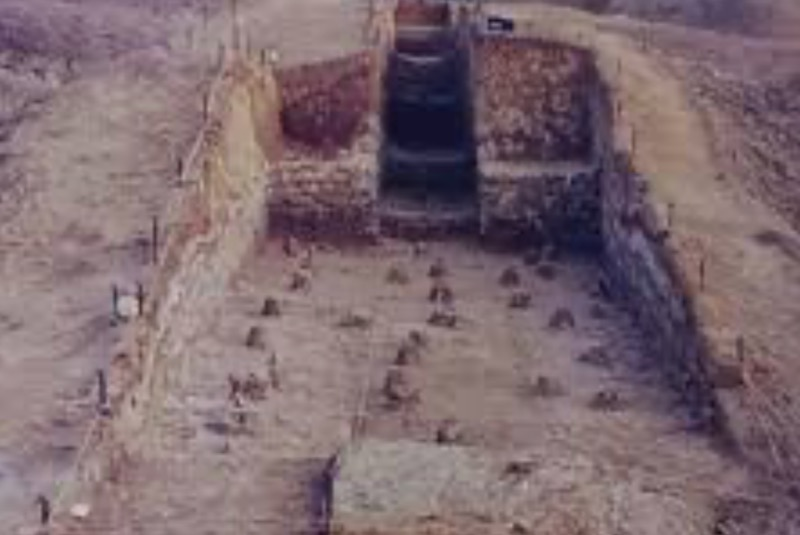
Attirampakkam, with its long history of excavations dating back to the nineteenth century, has always been a site of great significance. From its discovery by Robert Bruce Foote in 1843 to the latest findings, the site has yielded a wealth of information about early human life in the Indian subcontinent.

As researchers continue to study the tools found there, they are not only piecing together the technological history of the region but also reconsidering what we know about the movement and development of early humans. The questions raised by these findings are not merely academic—they touch on the very nature of our origins as a species.

If the Levallois tools found in India were made by Homo sapiens, Homo heidelbergensis, or an entirely different human species, it would force us to rewrite the story of human evolution itself. In the end, the mystery of the Levallois tools is not just a question of where they came from—it is a question of who we are.

-30-

Copyright©Madras Courier, All Rights Reserved. You may share using our article tools. Please don't cut articles from madrascourier.com and redistribute by email, post to the web, mobile phone or social media.
Please send in your feed back and comments to [email protected]

0 replies on “Did Human Innovation Begin In India, Not Africa?”