
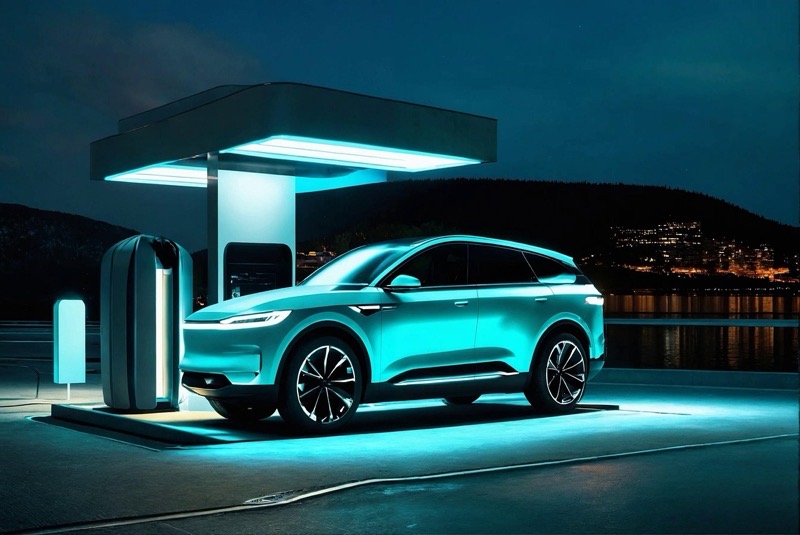
Electric cars have become the defining symbols of contemporary climate policy. Across Europe, North America and Asia, governments have committed vast sums to accelerating the transition away from internal-combustion engines. At the same time, manufacturers have invested heavily in new electric platforms and battery technologies.
The prevailing narrative is straightforward: replace petrol and diesel vehicles with electric alternatives, and transport emissions will fall accordingly. However, beneath the headlines, there is an uncomfortable reality. The vehicles dominating the electric transition are increasingly not the compact, efficient cars imagined by environmental planners. Instead, they are large sports utility vehicles whose size and resource intensity raise awkward questions about genuinely sustainable mobility.
SUVs, which began as a niche category two decades ago, have evolved into the industry’s most profitable and commercially important segment. Far from reversing this trend, electrification has reinforced it. Recent data from the International Energy Agency suggest that larger electric models now command a substantial share of sales across major markets.
In China, electric SUVs accounted for over three-fifths of electric vehicle purchases in 2025. In Europe, nearly three-quarters of electric cars sold were SUVs. In America, where automotive preferences have long favoured larger vehicles, the proportion exceeded four-fifths. The future of the car may be electric, but it is increasingly also oversized.
This scenario complicates the environmental case for electrification. Much attention understandably focuses on tailpipe emissions, and here electric vehicles offer a clear advantage. An electric SUV produces no direct exhaust pollution during operation. And, depending on the electricity mix used to charge, it can generate substantially lower lifetime carbon emissions than a comparable petrol-powered model.
However, concentrating exclusively on what emerges from the exhaust pipe risks obscuring broader environmental costs. Size matters. Heavier vehicles require larger batteries, consume more materials during manufacture and demand more energy throughout their operational lives. As electric vehicles become bigger, some of the efficiency gains associated with electrification are eroded.
The issue is not merely theoretical. Battery production requires significant quantities of lithium, nickel, cobalt and other critical minerals. A larger vehicle necessitates a larger battery, increasing demand for resource extraction and industrial processing. Manufacturing emissions, therefore, rise alongside vehicle size.
Although electric SUVs generally remain cleaner than conventional SUVs, they represent a less efficient use of finite resources than smaller electric vehicles that can deliver similar transport services for many everyday journeys. Decarbonisation achieved through ever-larger vehicles risks becoming more expensive and resource-intensive than necessary.
The environmental consequences extend beyond greenhouse gases. Vehicle weight contributes to forms of pollution that receive comparatively little public attention. Even in a fully electrified transport system, tyres abrade against road surfaces and release microscopic particles into the environment. Brake systems generate particulate matter, though regenerative braking reduces this to some extent. Road surfaces themselves wear more quickly under heavier loads. These sources of non-exhaust pollution are increasingly recognised as significant contributors to deteriorating air quality. Fine particles generated through tyre and road wear have been linked to respiratory and cardiovascular illnesses, suggesting that electrification alone cannot eliminate many of transport’s public-health burdens.
The physical dimensions of larger vehicles also affect road safety. Advances in crash protection have made modern cars remarkably safe for occupants, but safety outcomes are not distributed equally among all road users. Research using British collision data has found that people struck by SUVs face substantially greater risks of fatal injury than those hit by conventional passenger cars.
The elevated front profiles and increased mass of larger vehicles can produce severe impacts, particularly for younger pedestrians. For children under the age of nine, the difference in risk appears particularly pronounced. As vehicle fleets become heavier and taller, improvements in occupant protection may be accompanied by worsening outcomes for those outside the vehicle.
These concerns intersect with a broader question about the kind of transport systems societies are creating. The environmental debate often treats emissions reduction as the sole objective of transport policy. Yet transport networks influence public health, urban form, social inclusion and economic opportunity.
Streets dominated by large private vehicles can discourage walking and cycling, particularly among children, older people and those less confident navigating traffic. Even where journeys are short enough to be completed on foot or by bicycle, perceptions of danger can encourage continued reliance on cars. The result is a feedback loop in which car dependence reinforces itself, making alternative modes less attractive and less politically salient.
The consequences are not evenly shared. Ownership of new electric vehicles remains concentrated among wealthier households, reflecting their relatively high purchase prices despite falling battery costs. Lower-income households are less likely to benefit directly from subsidies, tax incentives or access to new electric models.
Nevertheless, they continue to experience many of the external costs associated with vehicle-centred transport systems, including traffic congestion, road danger, noise and environmental pollution. A transition measured solely by the number of electric vehicles sold may therefore overlook important questions of equity. Cleaner technology does not automatically produce fairer outcomes.
These tensions help explain the growing interest among transport researchers in frameworks that extend beyond technological substitution. One influential approach is known as “avoid, shift, improve”. Rather than treating vehicle electrification as the starting point of decarbonisation, the framework places it as the final stage of a broader hierarchy.
The first objective is to avoid unnecessary travel demand wherever possible through better land-use planning, digital connectivity and improved access to local services. The second is to shift journeys towards lower-carbon modes such as public transport, cycling, walking and shared mobility. Only after these opportunities have been pursued does the third stage—improving vehicle technology through electrification and efficiency gains—emerge.
The sequencing is important because each stage influences the effectiveness of those that follow. Policies focused exclusively on cleaner vehicles can reduce emissions per kilometre travelled while leaving the underlying structure of transport systems largely unchanged.
A city filled with electric SUVs may generate less carbon than one dominated by petrol-powered equivalents. Yet it can still suffer from congestion, sedentary lifestyles, unequal access to mobility, and public spaces designed primarily for vehicle movement. Decarbonisation achieved without addressing these wider issues risks delivering only a partial solution.
From this perspective, the continuing expansion of the SUV market appears particularly problematic. Larger vehicles represent a movement away from the principles of efficiency that underpin many climate strategies. Their popularity is not simply the result of consumer preference emerging in a vacuum.
Manufacturers earn higher margins on larger models and have devoted enormous marketing budgets to promoting them. Advertising frequently presents SUVs as symbols of security, family responsibility, adventure and personal success. Such messages shape perceptions of what constitutes a normal or desirable vehicle, often regardless of whether the additional size or capability is genuinely required.
This commercial dynamic creates a subtle contradiction at the heart of transport policy. Governments seek to reduce emissions, improve public health and encourage more sustainable travel behaviour, while automotive markets increasingly reward larger, heavier and more resource-intensive vehicles.
Electrification reconciles these objectives only partially. Replacing a petrol SUV with an electric SUV represents environmental progress in some respects, but it leaves many structural challenges intact. It reduces direct emissions without necessarily reducing dependence on private cars, reclaiming urban space or encouraging healthier forms of mobility.
None of this implies that electric vehicles are undesirable. In many circumstances, they represent an essential component of decarbonisation, particularly in rural areas and regions where alternatives remain limited. Cars will continue to play a vital role in modern economies.
The difficult question concerns what kinds of cars should be encouraged and how transport systems should evolve around them. Policymakers possess a range of instruments capable of influencing these outcomes, from supporting smaller and more affordable electric vehicles to investing in reliable public transport, protected cycling infrastructure and pedestrian-friendly urban design. Pricing mechanisms that reflect the space consumption, weight and environmental impacts of larger vehicles may also help align private choices with public objectives.
The challenge, ultimately, is conceptual as much as technological. Climate policy has often framed electrification as a simple replacement exercise: substitute one powertrain for another, and the problem is solved. Yet transport is not merely a question of propulsion. It concerns how cities function, how people move, how public space is allocated and who bears the costs and benefits of mobility systems.
A successful transition will require more than replacing petrol engines with batteries. It will require reconsidering the assumption that ever-larger vehicles represent progress. The most sustainable transport future may indeed be electric. But it is also likely to be lighter, more space-efficient and less dependent on the private automobile than current trends suggest.
-30-
Copyright©Madras Courier, All Rights Reserved. You may share using our article tools. Please don't cut articles from madrascourier.com and redistribute by email, post to the web, mobile phone or social media.Please send in your feed back and comments to editor@madrascourier.com