
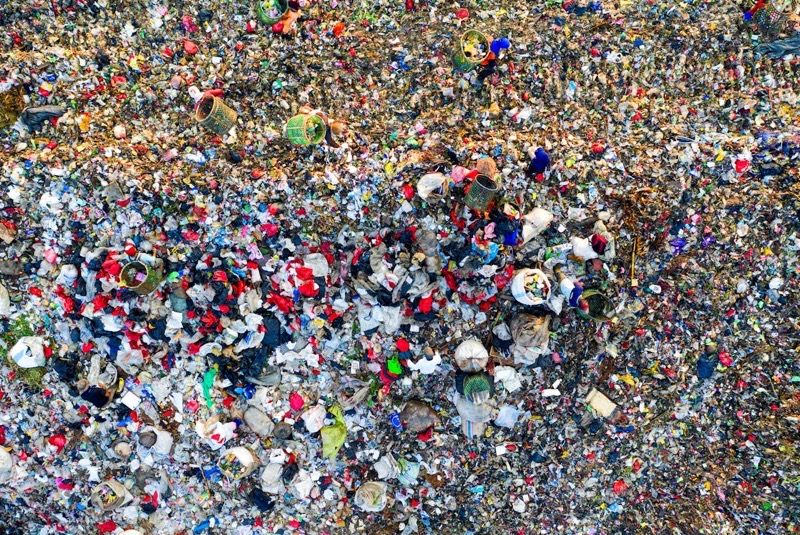
The modern human diet contains an unwanted, unhealthy ingredient: microplastics. Invisible to the naked eye but pervasive, microplastics have become an inescapable feature of daily life. They drift through the air, seep into soil and water, and ultimately enter our bodies.
Whether inhaled or ingested, these particles are widespread; avoiding them entirely is impossible. Their presence in human tissues makes it a public health issue, raising questions about long-term biological consequences.
Fragments of plastic smaller than 5 millimetres are generally defined as microplastics. Some particles measure just a thousandth of a millimetre. Their origins are varied. Some are manufactured at microscopic sizes, as in the case of glitter or industrial abrasives. Others emerge from the gradual degradation of larger plastic items, worn down by sunlight, friction and environmental exposure.
As plastics fragment over time, they generate a steady stream of tiny particles that disperse widely through the air, water and food systems. This dual origin—intentional production and environmental breakdown—ensures their persistence, even in the face of regulatory efforts targeting primary microplastics.
Human exposure is therefore constant. Estimates suggest that individuals may consume up to five grams of microplastics each week, roughly equivalent to the weight of a credit card. These particles have been detected in drinking water, processed foods and even kitchen environments, where everyday items such as plastic chopping boards can shed microscopic debris.
Airborne particles provide another route of entry, making inhalation an additional unavoidable source. Despite this ubiquity, quantifying the precise burden within the human body remains a challenge. Analytical techniques struggle to distinguish microplastics from other similarly sized biological or chemical fragments, such as lipids, leading to uncertainty about actual concentrations.
Even so, evidence of their presence in the body is mounting. Microplastics have been identified in organs and tissues once thought to be protected, including the lungs, the placenta and the vascular system. Such findings have prompted investigations into potential health effects; some studies suggest associations between microplastic exposure and cardiovascular disease. While causality remains difficult to establish, the mere detection of these particles in critical biological systems underscores the need for closer scrutiny.
Among the most plausible sites of interaction is the gut, home to the human microbiome. This vast and intricate community of microorganisms plays a central role in digestion, immunity and metabolic regulation. Comprising hundreds of species and trillions of individual microbes, the microbiome functions as a biochemical engine, breaking down dietary components into metabolites that support overall health.
Disruptions to this system have been linked to a range of conditions, including inflammatory bowel disease (IBD), an increasingly common disorder. Characterised by symptoms such as abdominal pain, diarrhoea, weight loss and fatigue, IBD represents a significant and growing burden on healthcare systems.
Central to the microbiome’s beneficial role is its production of short-chain fatty acids, a group of metabolites generated through the fermentation of dietary fibre. Among these, butyrate has attracted particular attention. Produced by specific gut bacteria, butyrate serves as a key energy source for intestinal cells, strengthens the gut barrier and modulates immune responses. Its importance became widely recognised about a decade ago, when research demonstrated its protective role against inflammatory conditions such as IBD. A healthy microbiome, rich in butyrate-producing bacteria, is therefore considered essential for maintaining intestinal integrity.
The intrusion of microplastics into this finely balanced system raises troubling possibilities. Although direct evidence in humans remains limited, largely due to the aforementioned measurement challenges, experimental studies offer some insight. Research using animal models has shown that exposure to microplastics can alter the composition of the gut microbiome.
In a study published in the Journal of Hazardous Materials, mice exposed to polystyrene microplastics of varying sizes showed reduced levels of key microbial populations. This shift was accompanied by a decline in butyrate production and an increase in inflammatory responses, effectively making the gut more susceptible to conditions resembling IBD.
These findings suggest that microplastics disrupt vital microbial ecosystems. By diminishing populations of beneficial bacteria, these particles indirectly impair metabolic processes and weaken the gut’s mechanisms.
The resulting imbalance, or dysbiosis, contributes to inflammation and disease. However, translating these findings from animal models to humans is far from straightforward. The doses and exposure conditions used in laboratory settings may not accurately reflect real-world scenarios, and the complexity of the human microbiome adds further uncertainty.
Moreover, the mechanisms by which microplastics interact with biological systems remain poorly understood. It is unclear whether their effects stem from their physical presence, their chemical composition, or the pollutants they may carry on their surfaces. Microplastics can act as vectors for other contaminants, including heavy metals and persistent organic pollutants, potentially amplifying their impact. Untangling these factors will require advances in both analytical techniques and experimental design.
Regulatory responses have so far focused on reducing the production of primary microplastics, with bans on certain products such as microbeads in cosmetics. While these measures are a step in the right direction, they address only part of the problem. The majority of microplastics originate from the degradation of larger plastic items, a process that continues unabated as long as plastic waste accumulates in the environment. Tackling this secondary source will require broader changes in production, consumption and waste management practices.
Amid these challenges, there are hints of an unconventional solution. Some studies have identified bacteria capable of degrading certain types of plastic, suggesting that the microbiome itself could help mitigate microplastic exposure. Preliminary evidence suggests that microbes in the human gut may possess similar capabilities, although it remains unclear whether these processes occur in vivo and what their consequences might be. If harnessed effectively, these microbial pathways could offer a novel means of breaking down microplastics, both within the body and in the wider environment.
Such prospects remain speculative, but they illustrate the potential of emerging technologies to address complex environmental health issues. Advances in microbiome research, coupled with improved detection methods, may eventually provide clearer answers about the extent and impact of microplastic exposure. In the meantime, the available evidence points to a sobering conclusion: the boundaries between the natural and the synthetic have become increasingly blurred, with consequences that are only beginning to be understood.
The story of microplastics is, in many ways, a reflection of the broader plastic age. Materials once celebrated for their durability and versatility have revealed an insidious legacy that permeates ecosystems and infiltrates biological systems. As research continues to uncover the pathways and effects of microplastic exposure, it becomes clear that this is not merely an environmental issue but a systemic one, affecting health, industry, and policy alike.
For now, the scale of the problem outpaces the available solutions. But as scientific understanding deepens, so too does the possibility of more effective interventions. Whether through improved regulation, technological innovation or even the unlikely assistance of the microbiome itself, the effort to address microplastics will require a coordinated and sustained response. In the meantime, the particles continue their silent journey through air, water and body, a reminder that the smallest pollutants can pose some of the most complex challenges.
-30-
Copyright©Madras Courier, All Rights Reserved. You may share using our article tools. Please don't cut articles from madrascourier.com and redistribute by email, post to the web, mobile phone or social media.Please send in your feed back and comments to editor@madrascourier.com