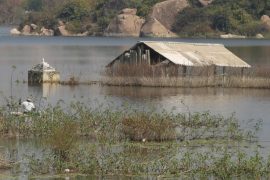
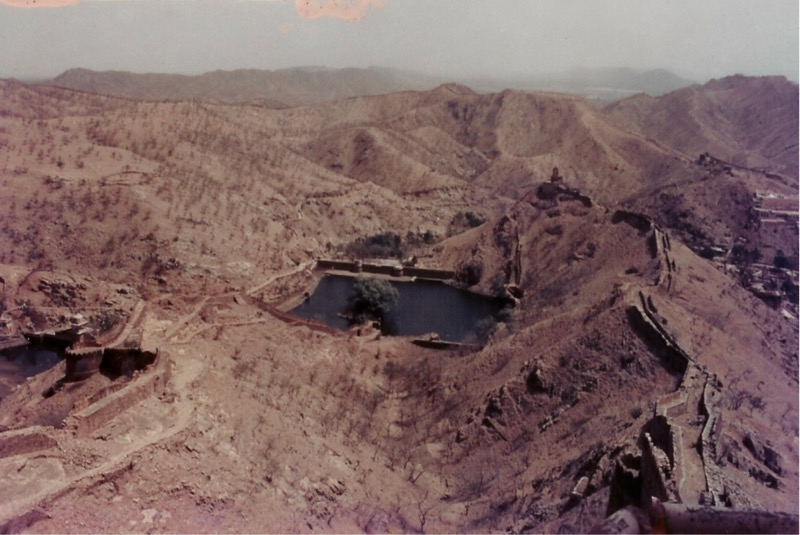
The slow erosion of the Aravalli mountain range, one of the oldest fold mountains in the world, is no longer an environmental issue; it has become a stark indicator of broader systemic failures in land-use and ecological planning across North India.
Stretching from Gujarat to Delhi, the Aravallis have long served as a critical ecological barrier. They have replenished groundwater, regulated microclimates, and prevented the eastward encroachment of the Thar Desert. However, decades of unregulated mining, rampant deforestation, and unchecked urban sprawl have eroded this natural shield, leaving it vulnerable to desertification.
The effects of the Aravallis’ degradation, while severe, are often understated. Framed as a localised environmental problem, the erosion of this ancient mountain range is now triggering regional transformations that threaten to change the face of North India.
The National Capital Region, Haryana, and Rajasthan are witnessing desertification. A phenomenon once thought to be confined to the arid west, is now inching eastward, due in large part to the weakening of the Aravalli range.
Large-scale illegal mining operations for marble, quartz, and other minerals have ravaged ridge lines, stripping the landscape of its vegetation and leaving vast stretches of bare rock. In many locations, hills that once rose proudly above the plains have been levelled, leaving their once-forested slopes barren.
Over the past four decades, approximately eight per cent of the Aravalli hills have been destroyed. Southern Haryana alone has seen over 25,000 hectares of hilly terrain impacted by encroachment, dumping, and quarrying.
This devastation is not due to a lack of scientific knowledge or inadequate legal protections. It results from weak enforcement, poor governance, and fragmented political oversight across the states that comprise the Aravalli region. Despite multiple court decisions and conservation orders, extraction activities continue largely unchecked, driven by corruption, neglect, and a lack of accountability. The result has been the disintegration of what was once a continuous and formidable ecological spine, severely impairing the Aravalli’s ability to serve as an environmental buffer.
The decline of the Aravallis is intricately linked to the desertification of surrounding regions. The mountain range acts as a critical wind barrier, slowing the movement of desert sands from western Rajasthan and helping to stabilise the soil of nearby agricultural plains.
In addition, its forests function as organic sponges, absorbing rainwater and replenishing vital aquifers. With the loss of these protective functions, the winds have grown stronger, and the once-stable soil is now more susceptible to erosion. Wind speeds have increased, particularly in the surrounding districts, due to the removal of forest cover and the levelling of the hills.
Scientists studying Aeolian processes—the movement of sand and dust by wind— have noted a marked increase in sandstorms, particularly during the summer months. This suggests that the mobility of sand, once confined to western Rajasthan, has spread eastward into Haryana, signalling a shift in the region’s land dynamics and microclimates.
According to India’s national Desertification and Land Degradation Atlas, the area of degraded land in the country has increased from 94.5 million hectares between 2003 and 2005 to 97.8 million hectares in 2018-19, indicating that eastern areas once thought immune to desertification are now beginning to feel its effects.
The consequences of this degradation are being felt by the people living at the foothills of the Aravallis. Farmers are reporting a steady decline in productivity, particularly of crops such as bajra, wheat, and mustard, due to rising soil erosion and declining soil organic carbon.
Dust storms, once rare, are now more frequent in the months leading up to the monsoon, damaging crops and contributing to the rise in respiratory diseases among the local population. But perhaps the most concerning issue is the depletion of groundwater—a resource that the Aravallis have long replenished.
Over sixty per cent of Haryana’s groundwater assessment blocks are currently classified as “overexploited,” with bore wells that once produced water at depths of 80-120 feet now requiring drilling deeper than 250-300 feet. This not only increases irrigation costs but also threatens the basic livelihoods of rural communities, who are now facing an increasingly uncertain future.
Despite these pressing issues, efforts to reverse the damage remain largely symbolic unless they address the deeper political and economic causes driving the Aravalli’s destruction. One such initiative is the Aravalli Green Wall Project (AGWP), a government-proposed ecological restoration and afforestation program aimed at reviving the degraded forest areas along the entire 700-kilometre stretch of the Aravalli range. However, for this project to succeed, it must move beyond public relations and confront the real forces systematically destroying the range.
The AGWP envisions several key strategies, beginning with afforestation with drought-resistant native species such as Khejri, Babool, Neem, and Ber, along with native grasses well-suited to the region’s semi-arid and arid conditions. These species not only reduce wind erosion but also stabilise the soil, improve groundwater recharge, and restore the natural vegetation vital to the Aravalli ecosystem.
In addition to planting trees, the project proposes creating buffer zones or green corridors along the range. These buffer zones, extending up to five kilometres in width, would serve as protective shields against desert winds and further land degradation.
However, creating these green corridors will be effective only if they are supported by long-term ecological and legal protections to prevent further encroachment. To complement these efforts, water management initiatives such as the construction of trenches, ponds, and check dams are also part of the restoration agenda.
These structures are designed to preserve soil moisture and replenish aquifers, but their success depends on careful attention to local soil conditions and the land’s natural topography. Without these considerations, many restoration efforts risk yielding only temporary, short-term gains.
Sustainable land-use practices are another essential component of the restoration plan. Agroforestry, regulated grazing, and crop rotation could all play a crucial role in preserving soil fertility and maintaining vegetation cover. However, these practices remain underutilised due to insufficient community involvement and weak enforcement of environmental regulations.
Similarly, sand and dune stabilisation programs that use drought-tolerant grasses and shrubs to reduce wind erosion have shown promise. Research indicates that such plantations have a survival rate of over 85 per cent after two years, significantly reducing wind speed and improving soil moisture. Yet these efforts remain limited in scale and impact without broader systemic changes.
At its core, the ongoing destruction of the Aravallis serves as a dire warning. The gradual dismantling of this crucial ecological barrier is not just a conservation issue but a clear signal that North India’s ecological balance is shifting. Desertification is no longer a distant threat; it is a reality that will become a permanent aspect of the region’s future if the Aravallis are viewed as disposable rather than vital climatic infrastructure. The arid conditions of the Thar Desert will continue to spread eastward, impacting people’s access to water, agriculture, and stable climate conditions.
Policymakers and environmental experts agree that urgent, comprehensive action is needed to reverse the damage and protect the region’s fragile ecosystems. As desertification takes hold, the need for proactive measures becomes ever more pressing.
The Aravallis, once a symbol of India’s natural heritage, now stand as a poignant reminder of how quickly ecological degradation can transform into a full-scale environmental crisis. If North India is to maintain its agricultural and ecological integrity, the forces eroding the Aravallis — both natural and artificial — must be addressed with the urgency they demand.
In the end, the fate of the Aravalli mountain range holds profound implications for the future of North India. Without swift, coordinated action, the region’s ability to withstand the forces of desertification and maintain its agricultural viability will diminish, and the lives of millions who depend on the land will be forever altered. The time to act is now, before the sands of time erase what remains of this vital ecological spine.
-30-
Copyright©Madras Courier, All Rights Reserved. You may share using our article tools. Please don't cut articles from madrascourier.com and redistribute by email, post to the web, mobile phone or social media.Please send in your feed back and comments to [email protected]