South Asia’s Water Crisis Begins with the Ganges

Ganga-madras-courier
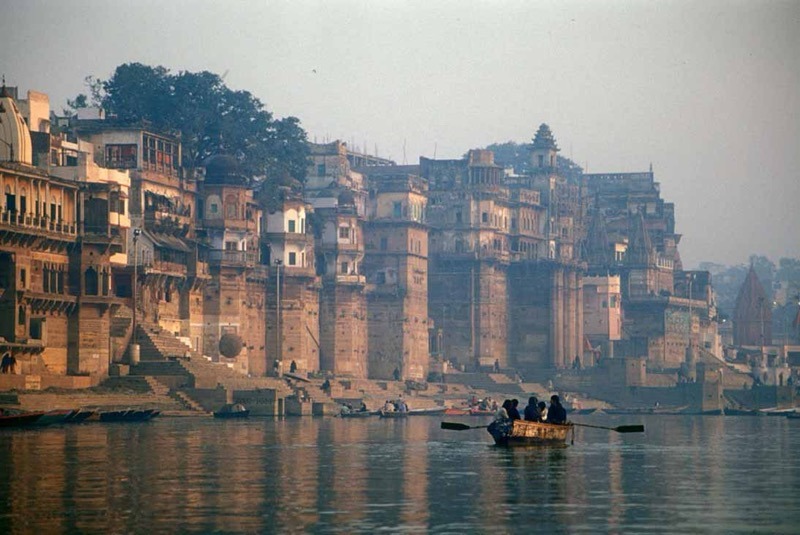
Representational image
Ganga is warning us. We must listen carefully.

In the cool shadow of the Himalayas, where myth and geography intertwine, a river begins its descent through the heart of South Asia. For thousands of years, the Ganges has been a source of life, of spiritual renewal, of stories passed from generation to generation. Its waters, revered as sacred, have sustained the cities, farms, and forests of India and Bangladesh, supporting more people than any other river system on Earth. But now, something once unthinkable is happening: the river is drying.

This isn’t a subtle change, nor is it a seasonal quirk. The Ganges is shrinking in ways that scientists describe as without precedent in recorded history. Its tributaries are thinning, its beds are cracking, and the rhythm of the monsoon that has long replenished it is faltering. Across the basin—home to over 650 million people—the consequences are already visible in fields gone fallow, in empty canals, and in the deepening silence where boats once creaked and traders called across busy ports.

New research offers a sobering glimpse into the scale of this unraveling. By reconstructing streamflow data going back thirteen centuries, hydrologists have confirmed that the region has experienced its most extreme droughts not in ancient history, but in just the past few decades. These are not fluctuations within the expected bounds of climate variability; they are breaks with historical precedent, anomalies that point to deeper systemic shifts. Despite the countless ways in which humanity has shaped and reshaped the river, this current decline defies prediction, and even the most advanced climate models have failed to capture its speed.

It is tempting to imagine rivers as timeless entities, immune to the dramas of human activity. But the Ganges is a river under siege—from all directions. Upstream, at its Himalayan source, the Gangotri Glacier has retreated by nearly a kilometer in two decades. Once a reliable source of meltwater during the dry months, the glacier is now melting more rapidly, a response to rising global temperatures. The initial effect is deceptive: floods from glacial lakes may give the illusion of abundance. But in the long term, the decline of these high-altitude “water towers” means less meltwater feeding the river when it is needed most.

This slow-motion collapse is not merely the result of distant, atmospheric changes. It is also the product of deliberate choices—millions of them—made along the river’s banks. Across the plains of northern India and Bangladesh, groundwater is being extracted at astonishing rates. The aquifers beneath the Ganges-Brahmaputra basin are among the fastest depleting in the world, shrinking by 15 to 20 millimeters each year. In some areas, the very water that once buffered communities against droughts is now contaminated with arsenic and fluoride. Taps and hand pumps yield not refreshment, but risk.

Meanwhile, the physical structure of the river has been radically altered. More than a thousand dams and barrages now shape its flow, diverting water into irrigation canals and hydropower projects. While these interventions were built in the name of progress and development, they have also fragmented the river, severing it from its own ecology. Navigation routes that once supported vibrant inland economies are now unnavigable during the dry months. Boats that journeyed from Bengal through Bihar to Varanasi must now contend with sandbanks where water once flowed waist-deep.

One of the most politically contentious examples of this intervention is the Farakka Barrage in India. Constructed in the 1970s to divert water into the Hooghly River and keep Kolkata’s port viable, it has had lasting downstream consequences. During the dry season, Bangladesh now receives a fraction of the flow it once did, leading to increased salinity in coastal lands and placing the Sundarbans—the world’s largest mangrove forest—at growing risk. In the name of national interest, regional interdependence has frayed.

The monsoon, long the dependable engine of the South Asian hydrological cycle, is also shifting. Warmer air holds more moisture, and the seasonal rains have grown more erratic—arriving later, dumping more water in shorter periods, and then disappearing sooner than expected. This volatility further undermines the river’s ability to recover. Farmers no longer know when to plant. Reservoirs overflow in some years, then lie empty in others. And the Ganges, reliant on the timing of snowmelt and rain, becomes less a stable source of life and more a barometer of crisis.

Across northern Bangladesh and West Bengal, smaller tributaries are vanishing in the summer. Where rivers once gurgled between paddy fields, there are now dry beds littered with stones and memories. Villagers speak of water in the past tense. Crops have failed, and livestock are being sold off. These fading waterways are more than environmental loss—they are omens. The Ganges may still appear mighty in its middle reaches, but its retreat has already begun at the edges.

None of this is happening in isolation. The pressures acting on the Ganges are compounded by population growth, urban sprawl, industrial effluents, and a governance structure that often prioritizes short-term gains over long-term sustainability. Water management in South Asia remains highly fragmented. National policies rarely align with ecological realities, and cooperation between India, Nepal, and Bangladesh—essential for effective basin-wide stewardship—remains mired in suspicion and bureaucracy.

What’s needed is not another technical solution, or a one-time pledge at a regional summit, but a reimagining of how we relate to rivers—particularly one as foundational as the Ganges. It will mean enforcing environmental flow requirements, ensuring that enough water remains in the river not just for people but for the ecosystems that depend on it. It will mean developing climate models that account for the full complexity of human interference—dams, canals, irrigation, and changing land use. And it will mean placing local communities at the center of decision-making, recognizing that those who live with the river know it best.

International funding mechanisms must adapt as well. Rivers like the Ganges are not just local or national resources; they are global assets, with value beyond immediate economic returns. Their preservation should be a planetary priority. That includes funding transboundary water governance initiatives, supporting data-sharing platforms, and elevating river protection within global climate finance frameworks.

To speak of the Ganges is to speak not just of a river, but of a living thread that binds together culture, faith, agriculture, and survival for over a billion people. Its decline is not a matter for future generations to worry about; it is already happening, quietly and with consequences that reach far beyond its banks. The mysticism often associated with the river may seem at odds with the cold arithmetic of hydrological loss, but both are expressions of reverence—for what the Ganges has been, and for what it still might be.

There is still time to act, but the window is closing. The river’s warnings are no longer metaphorical. They are tangible in every cracked well, every failed harvest, every boat stuck in the silt where there was once a channel. To allow the Ganges to fade would not just be an ecological tragedy; it would be a civilizational one. And if we are to avoid that fate, we must begin by listening—not just to scientists or governments, but to the river itself.

-30-

Copyright©Madras Courier, All Rights Reserved. You may share using our article tools. Please don't cut articles from madrascourier.com and redistribute by email, post to the web, mobile phone or social media.
Please send in your feed back and comments to [email protected]

0 replies on “South Asia’s Water Crisis Begins with the Ganges”