In the annals of natural history, the study of birds has long been dominated by the visible: their brilliant feathers, their distinct calls, their dramatic displays of flight. Naturalists in the nineteenth century—from Audubon to Darwin—marvelled at the many ways in which birds interacted with their environment through sight and sound.
Audubon’s famous observations of turkey vultures, for instance, led him to conclude that these scavengers used their vision to locate carrion—an assumption that would dominate scientific thinking for much of the century. In one experiment, he presented vultures with paintings of dead sheep, which they eagerly pecked at, and then covered real carrion with plant material. The vultures, he noted, ignored the hidden food, prompting him to dismiss the possibility that the birds used scent to locate their meals. But this assumption, as it turned out, was fundamentally flawed.
In the decades that followed, studies would reveal a startling truth: vultures, along with many other bird species, rely heavily on their sense of smell. It was not until later work, after Audubon’s time, that it became clear that vultures prefer fresh meat and use scent to locate it, even when it is was obscured from view. The extent of their olfactory powers—once dismissed as a secondary sense—became apparent, and researchers began to realise that smell was not just a secondary tool in the bird’s sensory arsenal but an integral part of how birds interact with the world around them.
One of the more curious chapters in this discovery occurred in California during the 1930s, when engineers working for a natural gas company began to notice something unusual. While struggling to detect leaks along a 42-mile-long pipeline, they observed that turkey vultures often gathered around certain sections of the line. The birds seemed to be attracted to specific areas, but the engineers were puzzled: natural gas, the substance leaking from the pipeline, is odourless. What were the vultures responding to?
They soon learned that the gas company added a chemical called ethyl mercaptan to the gas to give it a detectable odour, one that resembled the smell of decomposing meat—a scent the vultures were uniquely attuned to. In a flash of insight, the engineers began deliberately pumping large quantities of ethyl mercaptan through the pipeline, using the vultures to pinpoint the location of the leaks. The engineers’ clever use of the vultures’ olfactory skills highlighted just how finely tuned the birds’ sense of smell had become in the pursuit of food.
As scientific inquiry advanced, it became clear that vultures were not an isolated case. Birds across the globe were found to rely on their sense of smell in ways that were once unimaginable. Long-tailed tits, small and unassuming birds, for example, are being studied for their potential use of scent to recognise family members.
In much the same way that humans help close relatives with childcare, long-tailed tits feed the chicks of their siblings, parents, or offspring. How these birds determine who belongs to their family has remained something of a mystery, but recent research suggests that scent may hold the key to their social relationships. The idea that scent could be used to recognise kin is not only fascinating—it also challenges our assumptions about the complexity of avian social structures.
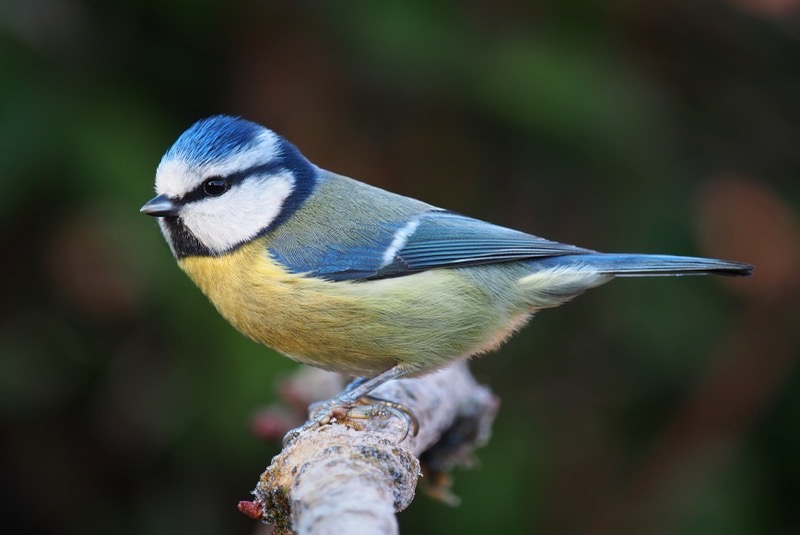
Starlings and blue tits have also demonstrated an unexpected use of smell. These birds, like many other species, seek out specific aromatic plants—yarrow, elder, and hogweed—when building their nests. The plants contain strong-smelling compounds that act as natural insecticides, protecting the birds’ young from parasites. This instinct to select plants with particular chemical properties mirrors our own use of repellents like citronella to ward off pests, showing just how deeply intertwined scent is with survival in the avian world.
For the hoopoe, a bird known for its vivid orange crest and long, curved bill, scent plays a similarly protective role. Young hoopoes produce a foul-smelling substance called preen oil, which they apply to their feathers. This oil contains bacteria that break down into chemicals, forming a natural defence against germs and parasites. The discovery that birds use their sense of smell in ways similar to our own—whether in selecting food, warding off disease, or protecting their young—helps us to rethink the role of scent in animal behaviour.
Perhaps one of the most striking examples of birds using smell in the wild comes from New Zealand, where the kiwi—a flightless, nocturnal bird—relies entirely on its sense of smell to forage for food. The kiwi’s long bill is equipped with highly sensitive nostrils at the tip, allowing it to sniff out worms and insects buried deep in the earth. Unlike other birds, which rely primarily on sight to locate food, the kiwi’s reliance on smell is essential for survival. In the dark, subterranean world in which it lives, the kiwi’s olfactory abilities are as crucial as the eagle’s sharp vision or the nightingale’s exquisite song.
Meanwhile, on the far-flung shores of the North Pacific, the crested auklet—a small seabird with a striking orange crest—relies on scent for social interaction. The auklet’s feathers emit a distinctive fragrance, reminiscent of tangerines, which is used in mate selection. Both male and female auklets will rub their bills against one another’s necks, inhaling deeply to assess the strength of the scent.
This olfactory behaviour is a key part of the birds’ reproductive strategy, as a stronger, more pleasing scent likely indicates a healthier or more desirable mate. The auklets’ reliance on scent for such a critical aspect of their lives underscores just how important smell can be, even in birds whose visual or auditory traits might seem more prominent at first glance.
Seabirds in particular—petrels, shearwaters, and albatrosses—use their sense of smell in ways that have profound implications for their survival. These birds are capable of detecting dimethyl sulfide (DMS), a chemical produced by phytoplankton, which signals the presence of rich feeding grounds. The smell of DMS, often likened to boiled cabbage, guides these seabirds across hundreds of kilometres of open ocean, helping them locate food.
Their ability to track the changing intensity of this chemical in the atmosphere also enables them to navigate their way back to their nesting sites. The role of DMS in seabird navigation is so integral that the birds have developed mental maps of the oceans, using the scent as a kind of olfactory GPS.
But this remarkable skill, honed over millennia, has also made seabirds vulnerable to environmental changes. Rising levels of oceanic plastic pollution are disrupting the balance of the ocean’s ecosystems, leading to phytoplankton blooms that produce abnormal amounts of DMS.
Seabirds, which rely on this chemical to find food, are increasingly confused by the oversaturation of DMS in the air. In their hunger, they often mistake plastic debris for prey, ingesting it in large quantities. For these DMS-sensitive birds, this has led to a tragic consequence: they are far more likely than other species to consume plastic, a deadly mistake that threatens their populations.
In many ways, humans have long shared the fate of these seabirds, historically underestimating the importance of our own sense of smell. In the nineteenth century, scientists dismissed the human sense of olfaction, preferring to focus on sight and hearing as more refined and important faculties. But, as modern research has shown, humans have an incredibly acute sense of smell, one that we often take for granted.
In one experiment, participants blindfolded and placed in a field were able to track the scent of chocolate, revealing how sensitive our noses really are. We use our sense of smell daily, whether we are avoiding danger—such as the scent of smoke or gas—or choosing food that is ripe or safe to eat. Scent even plays a role in human attraction, with some studies suggesting that we are drawn to the smell of people whose immune systems are genetically different from our own.
Like birds, humans too have been slow to recognise the importance of smell in our lives. But as we come to understand the ways in which birds use their olfactory abilities, we gain a deeper appreciation for how scent shapes the world of animals, including our own. From the kiwi’s ability to sniff out its food in the dark to the auklet’s use of scent to select a mate, birds demonstrate that olfaction is not a secondary sense but one as essential as vision or hearing.
Our growing understanding of the role of smell in both avian and human behaviour reminds us that the world we experience is far more complex and nuanced than we once believed—shaped not just by what we see or hear, but by what we smell.
-30-
Copyright©Madras Courier, All Rights Reserved. You may share using our article tools. Please don't cut articles from madrascourier.com and redistribute by email, post to the web, mobile phone or social media.Please send in your feed back and comments to [email protected]