In 1931, the British statesman Winston Churchill wrote an essay in which he imagined a world where humanity would abandon the inefficiency of raising animals for a few favoured cuts. “We shall escape the absurdity”, he suggested, “of growing a whole chicken in order to eat the breast or wing, by growing these parts separately under a suitable medium.”
For decades, the remark lingered as a curiosity: a clever extrapolation from industrial modernity, filed somewhere between speculative fiction and the optimism of early twentieth-century science. However, nearly a century later, Churchill’s conjecture has taken on the peculiar solidity of fact. What once seemed like a rhetorical flourish has become an emerging industry that is not only reshaping how meat is produced but also recalibrating humanity’s relationship with animals, land, and appetite.
The technology now known as cultivated meat—often called “lab-grown meat”—rests on a deceptively simple premise. Meat, after all, is not a mystical substance; it is muscle tissue, composed of cells that grow and multiply according to biological rules. If those rules are reproduced outside the body of an animal, then the animal itself, at least in theory, becomes optional.
Scientists take a small sample of cells, typically taken from a living animal, in a process that does not require slaughter. These cells, selected for their capacity to proliferate, are placed in a carefully formulated growth medium that is rich in amino acids, sugars, vitamins, and other nutrients. In the right conditions, they divide and divide again, accumulating into tissue that is biologically indistinguishable from the muscle found on a farm.
The setting for this multiplication is the bioreactor, equipment commonly associated with pharmaceuticals than with dinner. Within its sealed environment, temperature, oxygen, and pH are meticulously controlled, creating a habitat in which cells can flourish without the unpredictability of weather, disease, or the vagaries of animal metabolism.
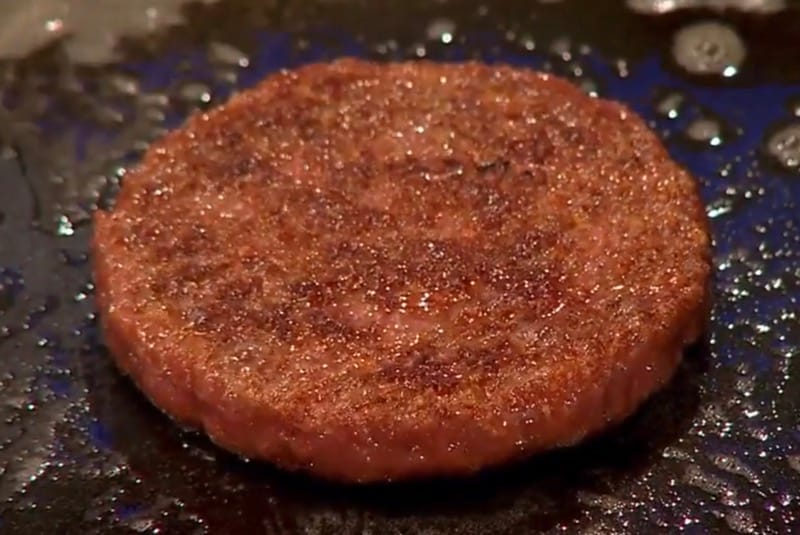
Over time, the cells are guided—sometimes with the help of scaffolds made from plant-based or biodegradable materials—into structures that approximate the texture of meat. Without such scaffolding, the result would resemble an undifferentiated mass; with it, the tissue begins to acquire the fibrous qualities that consumers recognise as flesh. The finished product is then processed into familiar forms: nuggets, sausages, burgers, foods that carry the cultural imprint of meat even as their origins diverge from the pasture.
This is no longer an experiment confined to academic journals. Companies have moved from laboratory prototypes to commercial production, navigating regulatory pathways that remain, in many countries, uncertain terrain. In Singapore, regulators granted early approval for cultivated chicken, and restaurants there became the first in the world to serve meat grown without the raising and slaughter of animals. The servings are, for now, limited—novelties as much as staples—but they mark a threshold. What was once hypothetical has entered the marketplace, however tentatively, and with it comes a cascade of questions that extend beyond the plate.
The most frequently cited argument in favour of cultivated meat is environmental. The global livestock sector, according to the Food and Agriculture Organisation, accounts for roughly 14.5 per cent of greenhouse gas emissions, a figure that places it alongside transportation as a significant driver of climate change. Cattle, in particular, require vast tracts of land for grazing and feed production, as well as substantial quantities of water.
The inefficiency is structural: animals consume calories to grow, and much of that energy is expended on processes other than the production of edible tissue. Cultivated meat, by contrast, proposes a more direct route from input to output. Early studies suggest that it could require significantly less land and water. However, the precise environmental footprint remains a matter of ongoing research, contingent on how the technology scales and how its energy demands are met.
If the environmental case is compelling, it is also entangled with the question of scale. The global population is projected to reach 9.8 billion by 2050. With rising incomes in many parts of the world, demand for meat is expected to increase substantially—by some estimates, by as much as 70 per cent.
Meeting that demand through conventional livestock farming would intensify pressures on land, water, and ecosystems already under strain. Cultivated meat presents itself as a potential release valve, a way to decouple meat production from the ecological costs that have historically accompanied it. However, the industry must still overcome formidable challenges: reducing the cost of production, replacing expensive growth media components, and building facilities capable of producing meat at a scale that approaches that of industrial agriculture.
For entrepreneurs, these challenges are not deterrents but invitations. The cultivated-meat sector is not a single innovation but an ecosystem of interdependent technologies and services. Startups are developing new formulations for growth media, seeking plant-based or synthetic alternatives to ingredients traditionally derived from animal sources.
Manufacturers are designing bioreactors tailored to the specific needs of muscle-cell cultivation, balancing sterility, scalability, and cost. Others are experimenting with scaffold materials, exploring how different structures influence the texture and composition of the final product. Beyond the laboratory, there are opportunities in logistics, cold storage, packaging, and marketing—fields that must adapt to a product that is at once familiar and unprecedented.
The unfamiliarity is not trivial. Meat, for many people, is not merely a source of protein but a cultural artefact, embedded in traditions, rituals, and identities. The idea of meat grown in a lab can provoke unease, even revulsion, a reaction that has less to do with the product than with the meanings attached to it.
The rise of cultivated meat casts a long shadow over traditional livestock farming, a sector that supports the livelihoods of hundreds of millions worldwide. The prospect of displacement is real and provokes anxiety among farmers, particularly in regions where agriculture is both an economic necessity and a cultural inheritance. But the relationship between the old and the new may prove more complex than a simple substitution.
Some analysts suggest that cultivated meat will complement rather than replace conventional production, occupying niches where its advantages—environmental, ethical, or logistical—are most pronounced. Others envision an integrated system, in which farmers supply the raw materials for growth media or participate in hybrid models that combine agriculture with biotechnology.
Such scenarios depend, to a significant extent, on policy. Governments will play a decisive role in shaping how the transition unfolds, through subsidies, regulations, and investment in research and training. Programs that enable farmers to diversify—whether by growing crops used in nutrient media or by participating in decentralised production systems—could mitigate the risk of economic disruption. Without such support, the benefits of cultivated meat may accrue unevenly, concentrated among companies and regions with the resources to capitalise on a capital-intensive technology.
For all its promise, cultivated meat remains a work in progress, an industry defined as much by its aspirations as by its current capabilities. The cost of production, though falling, is still high compared to conventional meat. Regulatory frameworks are evolving cautiously, as authorities weigh safety, labelling, and public acceptance. And the environmental advantages, while plausible, are not yet fully realised, dependent as they are on the sources of energy that power the bioreactors and the efficiency of the processes within them.
Still, the trajectory is unmistakable. What began as a speculative aside in an essay by Winston Churchill has become a focal point for scientists, entrepreneurs, and policymakers grappling with the future of food. Cultivated meat does not merely offer a new product; it shifts the locus of meat-making from field to facility, from animal to cell. Whether this reorganisation will fulfil its promise—alleviating environmental pressures, enhancing food security, and reshaping ethical considerations around animal welfare—remains to be seen. But the idea has moved, decisively, from the realm of conjecture to that of experiment, and from experiment, increasingly, to experience.
-30-
Copyright©Madras Courier, All Rights Reserved. You may share using our article tools. Please don't cut articles from madrascourier.com and redistribute by email, post to the web, mobile phone or social media.Please send in your feed back and comments to [email protected]