Why I Write & Other Such Musings

why-i-write-madrascourier
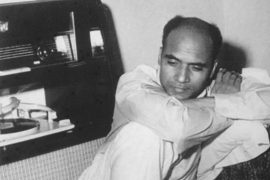
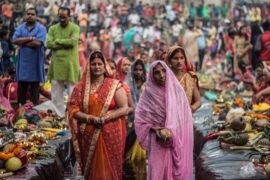
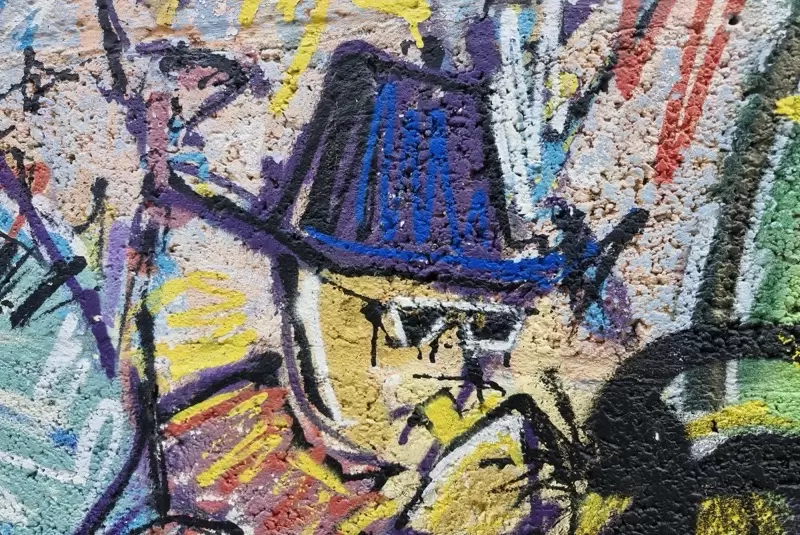
Representational illustration: From the photography collection of Mr Shrenik Rao
Where does a poem live & where does it go when it has no more readers?

I write to stay alive. Surely, this is an exaggeration—for I can live without writing. Or can I? Perhaps I will survive like a cockroach or Kafka’s gigantic insect, or even like a stodgy caterpillar about to turn into a butterfly. But it won’t be the same. Writing gives me meaning and helps me weather the day.

I also write to find myself. Where did I wander off in the past? Was that (really) me? Where am I going in the future? What exactly is the future? When I am writing poetry, is that the same person who is asking these questions?

The person writing this piece, reflecting like an old sage, is surely not the person writing those poems. If I reflected this much about writing, I wouldn’t get a single line written.

I write to understand what’s going on—around the world and across inner realms where borders often cross. Realism is not what I find when I write about hard realities. I look at reality in the eye, and reality stares back with so many eyes. I find dreams and magic floating around. This is just as hard, just as ordinary, just as fantastic.

This is a realm that goes beyond thinking and feeling. What exactly is it? Writing is no ordinary realm—it transcends the world it inhabits.

I also write to read better. Without reading, there can be no writing. This is a symbiotic relationship built on synergy and trust. Good reading inspires good writing.

One can read just about anything—from posters on smeared pillars to smudges on the new glass building in town; from a profound philosophical tract to an inspired essay; from a poem about chess players by Philip Gross to a short story about high heels by Banu Mushtaq.

If reading has no limits, why should writing have any? Anything can become the trigger for a poem, an urge for a tale, the starting point for an essay. Where does it all begin—in language or in feeling?

My writing is as precious and as ordinary as a cup of tea, brewed early in the morning. I cannot do without it—the writing—but sometimes the tea is also good. A sip goes a long way, they say. I can do without coffee during the day, but can I live without reading a single word? Perhaps life wouldn’t have that spark then.

My thoughts are best expressed on a page. When one plumbs deeper, words turn up like a new dress bought for Bihu, or during Durga Puja, or a Christmas gift that brings a different feeling. It is an uncanny feeling—of being there and not quite being there.

When the writing is in fourth gear, words take on a life of their own, outside the commands of finger, beyond the instructions of mind. The free mind roams on a highway of time. You wave at those standing by. You see Heaney, Pavese, Drummond de Andrade, Zagajewski, Walcott, Kolatkar, Szymborska, Ibaragi, Mahon, Pessoa, Manto, Kawabata, and Bolaño—but you also see Borges, and you almost stop the car to let Kalidasa in, before reason takes over and asks you:

What are you doing?

Hmm, you reply. This isn’t easy, this list of names reeling off like cinema credits. You move on, knowing one day you too will also be waving at the next passenger, asking for a lift.

Will the car stop for you? Hard to say.

When I first started with poetry, I didn’t ask many questions. I simply wrote what came to my mind. The lyric was a thought that flew out of the window and gently offered a hand. Soon, the lyric became about the moment—Kairos—that Henri Cartier-Bresson so wonderfully captured in his photograph: the father holding the smiling baby in his palm.

Soon, the lyric brought home the value of the decisive moment—for it is the only one, and it will not come again.

Then I was assailed by other questions: How did the moment come to be there? What brought the moment to where it is now? Where is time in all this? Does history—or what behaves like history, strutting around like a peacock—have anything to do with it?

A bell rings. Thought pauses. You wonder what you were thinking. History is a many-armed messenger telling various stories. Which are the ones you will listen to? And your friends—are they listening too? Or have they decided to get on with it?

This brought me to an apparent contradiction: whether the lyric and the narrative can go together. Earlier, my mentors were clear—no. The twain never meet, they said. Hence, the distrust of the lyric.

As time passed, I thought differently. Why not let words fly? Why not let them breathe and spread themselves on the page—like passengers without tickets inside an Indian train, who need to get to the next destination before getting caught? Why not allow words to breathe and tell their own stories? Who knows what they will come up with?

This insistence on the poem—or the tale—sparks a different story. It moves beyond clutches of theory taught in weary classrooms. It asks the eager reader to listen to something else—beyond what seems to be going on. Even the classical turns ordinary. And when the ordinary turns numinous, it finds shades of the classic.

We all speak in different languages. I don’t mean Tamil and Kannada, English and Hindi, Assamese and Bangla. I don’t mean translation theories. I mean common speak, everyday tongue, officialese, jargon-filled academic talk, slang text, street word—and I also speak of verse meeting prose. Where legal precedent eavesdrops on the hammering world of a construction worker and the wedge of a potter. Language is where these many worlds collide—and speech is all we have. Something does filter through.

Then there is poetry. Silent, mostly. At a remove. Wondering from a distance while the actor plunges into the moment, not thinking a word about poetry. Life is all there is, even as it speaks in many tongues. Poetry comes later, when she wants to.

A Different Story, my new book of poetry, was born of such contradictions. It tells a different story, dressed as poetry. Perhaps it is a poem in a story—or maybe the other way around. I knew I was telling tall tales. I know I am weaving a plot, finding my way around an argument to show what the book really is, like a parable of the six blind men and the elephant.

Tales can also become poems. And poems do not need to have a point.

A Different Story turned out to be the longest of them all—two hundred and fifty pages long—like a river flowing into the sea, but not before skirting troughs and eddies. There are many stories here, just as there are so many poems still to be read and written.

One way of looking at a poem is to ask what it means. Another way is to ask what a poem is. My way is a different one: What did the poem make you feel? Did it stir thought in you? Why did that line work its way inside you, making you uncomfortable? Where was that line born—is it still alive, now that it nestles inside a page, or outside the borders of your mind?

Where does a poem live, and where does it go when it has no more readers? Does it disappear where it came from—somewhere in ether, or inside the deepest recesses of the soul?

It is difficult—and it is also very easy—to write poetry. It is as easy as a glass of water: clear and lucid. It is as difficult as climbing a mountain. In winter, you need to wear good shoes to climb in the snow. In summer, you need loose-fitting clothes that let the light in.

Thoughts are like that too. Feelings cannot be contained when they meet thoughts, and something sparks. Something falls like an apple. Something suddenly flutters, like a breeze. Something flames and reaches the sky. Then the blank page arrives, asking for a zen koan. One can’t be sure about blank pages and koans, why they stay and where they fly away.

-30-

Copyright©Madras Courier, All Rights Reserved. You may share using our article tools. Please don't cut articles from madrascourier.com and redistribute by email, post to the web, mobile phone or social media.
Please send in your feed back and comments to [email protected]
0 replies on “Why I Write & Other Such Musings”