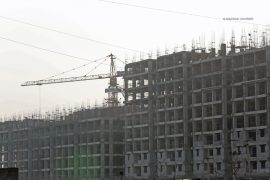
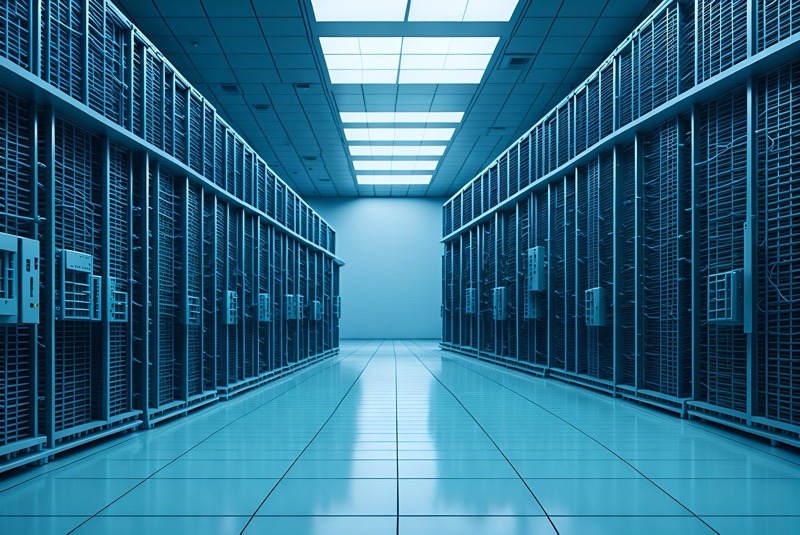
On a humid June night in 2026, the residents of Southaven, Mississippi, counted the seconds between vibrations. More than fifty unpermitted methane gas turbines whirred beside their predominantly Black, low-income neighbourhood, powering Elon Musk’s “Colossus 2,” the xAI supercomputer complex running Grok across the state line in Memphis. Within weeks, thousands of neighbours filed a nuisance lawsuit, while the NAACP pursued a separate Clean Air Act case. Residents reported sleepless nights, tinnitus, and near-constant jet-engine-like noise. It unravelled how a trillion-dollar race to build artificial intelligence is colliding with a neighbourhood whose residents have no seats at the table of American capitalism.
Across Virginia, New Jersey, Arizona, Santiago, and Montevideo, the episode belongs to an infrastructure boom of unusual scale. Server-farm investment exceeds the military expenditure of many nations, even as industry titans acknowledge the wager’s uncertainty—IBM’s Arvind Krishna questions whether the committed trillions can earn adequate returns, while OpenAI’s Sam Altman concedes the AI boom bears the hallmarks of a bubble.
The pattern is global: China’s AI expansion strains a coal-heavy grid; India’s adds power and cooling loads to water-stressed cities; and Irish data centres consume an extraordinary share of national electricity. Geographies and institutions differ, but the trillion-dollar question does not: who captures the computational value, and who bears the material burden?
The costs begin with water. Evaporative cooling surrenders millions of gallons of potable water. In drought-stricken Santiago, Google’s Quilicura data centre holds rights to extract 50 litres per second from aquifers connected to a shrinking wetland; a proposed Cerrillos facility was planned to extract 169 litres per second before community opposition forced a redesign. A 2026 Virginia study found that a hyperscale facility requiring 3 million gallons of water daily would be unlikely to find reliable groundwater anywhere in the eastern Coastal Plain.
During Uruguay’s worst drought in seventy-four years, when Montevideo’s tap water turned brackish, Google’s original proposal contemplated 7.6 million litres of potable water daily. Protesters answered: “No es sequía, es saqueo.” It is not drought; it is pillage. Google redesigned the facility around air cooling. Apparently, the cloud could survive without drinking quite so much water.
The industry calls its appetite Water Usage Effectiveness, or WUE; “drinking” might be less reassuring. Karl Polanyi described labour, land — and by extension water — as “fictitious commodities”: never produced for sale, yet relentlessly priced and extracted until exploitation provokes society’s defensive reflex. In Chile’s Atacama, lithium brine extraction draws scarce water from Indigenous Lickanantay territories; near the Maricunga salt flat, Colla communities face similar degradation. The bofedales—wetlands sustaining llama herding, wildlife, and livelihoods—depend on a fragile hydrological balance, while flamingo declines have been linked to mining. Data centres are not Chile’s primary lithium buyer, but battery storage demand adds another extractive pressure on an already strained landscape. “Data colonialism” is an accounting method: ecological costs remain local while economic value flows to San Francisco, Seattle, and Redmond.
Other harms accumulate consistently. A 2026 satellite study estimated a 2°C data “heat island effect.” Cooling towers, chillers, HVAC units, fans, and transformers generate persistent low-frequency noise that can penetrate walls.
In Northern Virginia, home to the world’s highest concentration of data centres, state auditors found facilities may satisfy legacy limits while troubling residents with continuous low-frequency sound. Medical literature links chronic noise to sleep disruption, hypertension, stress, and impaired concentration in children. The rulebook anticipated barking dogs, not machines that never sleep.
Many plants rely on improvised power because grid interconnection queues can last for years—an eternity in a race against obsolescence. In August 2026, a thermal-drone investigation in Vineland, New Jersey, found at least 45 of 62 natural-gas generators operating at DataOne, the AI facility developed for Nebius and linked to a $17 billion Microsoft computing agreement. Two schools sit a mile away. New Jersey’s environmental regulator confirmed that none had an air permit; a former EPA air-enforcement chief called their operation a straightforward violation of federal law. The generators kept running. Artificial intelligence moves faster than environmental permitting. This slow violence falls on communities with little political capital, making technological destiny look increasingly like another fiasco and kindling a political storm.
AI clusters complicate a grid designed for predictable demand and sudden generator failures. During grid disturbances, facilities may switch to internal power—rational for tenants, destabilising upstream. In July 2026, a transmission failure caused Northern Virginia data centres to shed more than 3 gigawatts nearly simultaneously, disrupting the PJM grid from Washington to Chicago; an earlier incident in Virginia removed about 1,500 megawatts. NERC warns that the system was built for power stations dropping offline, not digital cities vanishing from demand within milliseconds.
Then comes the electricity bill. Amazon, Google, Meta, and Microsoft buy vast amounts of renewable capacity. Yet, annual accounting can label a data centre “100% renewable” even as it draws power from fossil-heavy grids on an hourly basis. By mid-2026, American utility plans had added 8 GW of gas, cut 8 GW of wind and solar, and reduced planned coal retirements by 4 GW. A shift to nuclear energy does not eliminate the costs of substations, transmission, and generation; when regulators spread them across the rate base, households subsidise infrastructure for the world’s wealthiest companies. The cloud has rediscovered socialism—for itself.
A second clock ticks. GPUs and TPUs last three to five years, creating circuit-board waste containing hazardous metals. Hyperscalers such as Google reuse, resell, and recycle equipment. Nevertheless, one study estimates generative AI could produce 1.2 million to 5 million tonnes of cumulative electronic waste by 2030.
These costs might be easier to justify if the financial architecture inspired confidence. IBM’s chief executive Arvind Krishna questions the economics of an eight-trillion-dollar gamble. At $60–80 billion per gigawatt, commitments exceeding 100 gigawatts imply a $6–8 trillion build-out. At Krishna’s upper estimate, the cost of capital alone approaches $800 billion in annual profit; a five-to-seven-year payback at 20–30 per cent margins would require another $1–2 trillion in new annual revenue. His verdict: “That much incremental revenue I don’t believe is there.”
Depreciation compounds the economics: AI accelerators may need to be replaced every three to five years; it’s a perpetually refinanced treadmill. Then there is circular financing. In January 2026, Nvidia invested $2 billion in CoreWeave. CoreWeave buys Nvidia hardware. Nvidia owns a substantial stake, and under a $6.3 billionagreement, Nvidia will buy unsold CoreWeave capacity through 2032. The chipmaker is supplier, financier, and customer. The arrangement is not improper, but it complicates Krishna’s question: how much demand rests on durable customer revenue, and how much on capital circulating within AI?
Consumer subscriptions and APIs have found demand, but enterprise deployment must justify trillions in value. McKinsey finds that 80 per cent report productivity gains, yet only 37 per cent report any enterprise-level EBIT impact. The technology is useful, but trillion-dollar infrastructure struggles when those it built the cathedral for decline to fill the pews.
Neoclouds increasingly borrow against GPU infrastructure and the customer contracts it serves. In March 2026, CoreWeave closed an $8.5 billion investment-grade facility backed by computing infrastructure and a customer contract. As AI infrastructure becomes an institutional debt asset, its downside risks can migrate beyond technology companies and their shareholders to banks, private credit funds, insurers, and, ultimately, the savings they manage.
The Bank of England identifies an emerging financial fragility: long-duration debt finances infrastructure with a much shorter technological life. If AI revenues disappoint or assets are sharply repriced, lenders could retrench, investors absorb losses, and credit tighten beyond Silicon Valley. The exposure could reach people who never hear a turbine hum but whose savings own part of it. And if the AI investment bubble bursts, taxpayers may discover that private risk has an inconvenient habit of becoming public liability.
Communities have not remained passive. Polling in 2026 found seven in ten Americans opposed to an AI data center near home. In August, Donald Trump warned that communities rejecting them risk becoming “backwards and poor,” calling the facilities a “golden goose” bringing jobs, lower taxes, and infrastructure needed to beat China in AI. Yet months earlier, he had launched a Ratepayer Protection Pledge after insisting Americans should never pay higher electricity bills because of data centers.
Construction creates temporary jobs, yet automated facilities provide few permanent jobs relative to their land, power, water and tax demands. The public return may scarcely justify the concessions, let alone the fanfare.
Resistance is spreading from communities to institutions. San Marcos became the first Texas city to ban data centres; Governor Greg Abbott, after courting the industry, ordered developers to bear the costs of their grid infrastructure. Between January 2024 and May 2026, opposition blocked, withdrew, or stalled 46 projects across 20 states, representing more than $170 billion in announced investment. Grievances included nondisclosure agreements, shell companies, and undisclosed water and power requirements. Legislatures, including New York’s, have debated restrictions and scrutiny on electricity rates, water security, and air quality. Nuisance and Clean Air Act cases, alongside environmental protests, now accompany the boom from New Jersey to Tennessee and Mississippi.
These disputes reveal a pattern rooted less in technology than in power. Zygmunt Bauman explained how complex systems divide responsibility until people can perform their part without confronting the moral consequences of the whole. Ulrich Beck called the result “organised irresponsibility”: collectively produced risks with elusive responsibility. No Memphis engineer intended to give a neighborhood tinnitus; no financier backing lithium extraction intended to diminish Lickanantay or Colla water security. As work fragments, so does accountability. The traceability matrix records who delivered what, but has no column for who owns the cumulative harm.
Walter Lippmann would recognise the manufacture of consent: AI infrastructure framed as inevitable, patriotic, and essential to defeating rivals, turning a community opposed to a turbine into a Luddite rather than an impacted stakeholder. Walter Rodney supplied the corollary—prosperity at the centre can depend on extraction at the margins. From the Atacama Desert to the Maipo aquifer, the old script is re-enacted: resources flow from the margins, wealth accumulates at the centre, and what the Lickanantay and Colla surrender is booked as the inevitable price of somebody else’s progress.
The strongest case for the build-out is not frivolous. AI could accelerate scientific discovery and medicine: Google DeepMind’s AlphaFold cracked the decades-old protein-folding problem and helped researchers advance a malaria vaccine by overcoming a bottleneck in resolving a crucial protein structure. AI may also improve logistics, education, and public administration, while new grids, clean power, and e-waste recycling could outlast the investment cycle. None of this erases the externalities. Dostoevsky’s Karamazov dilemma still haunts the bargain: can a better future be justified if its foundations require the involuntary suffering of those who may never share in its rewards?
The tragedy is not that artificial intelligence may disappoint; technologies overpromise, and civilization absorbs the consequences. The tragedy is who pays. If the gamble succeeds, profits accrue to a few hyperscalers and shareholders. But if few winners emerge from a hundred gigawatts of depreciating infrastructure, stranded assets could leave behind drained aquifers, hollowed-out neighbourhoods, degraded grids, obsolete silicon, burdened municipal budgets, and a financial hangover indifferent to the distance between server farms and pension funds. Either way, people who never asked for a supercomputer next door pay first—in water, sleep, air, and blood pressure—while sanctimoniously being asked to be grateful for the jobs and the glow of standing near the future.
Somewhere between Ulrich Beck’s “organised irresponsibility” and Polanyi’s countermovement lies the basis for a new social contract. This transformative technology earns no exemption from bearing its true costs. Cost causation should require developers to fund the infrastructure their projects demand, disclose facility-level water use and emissions, and secure meaningful consent from communities that will live beside the hum. Until responsibility is written into policy, the data centre will remain what it has already become in Southaven, Cerrillos, and the Atacama: a monument not to intelligence, artificial or human, but to how easily a civilisation can be persuaded to hand its water, its rest, and its future to the ledgers of a handful of corporations—and call it progress.
-30-
Copyright©Madras Courier, All Rights Reserved. You may share using our article tools. Please don't cut articles from madrascourier.com and redistribute by email, post to the web, mobile phone or social media.Please send in your feed back and comments to [email protected]