One Man, One Message, One Very Large Algorithm: The Politics Of Permanent Promotion

Modi-Madras-Courier1
Representational Image: Public Domain
In this attention economy, Modi, Trump and Netanyahu made themselves into brands—concentrating credit, outsourcing blame and making institutions increasingly vulnerable.

Politics has always required a little theatre. Kings commissioned portraits, presidents kissed babies, and candidates promised that prosperity is just around the corner. What has changed is the scale, speed and intimacy of the performance.

The modern politician can now enter millions of homes, appear on every phone and explain the day’s events before anyone has had time to discover what actually happened. Narendra Modi in India, Donald Trump in America and Benjamin Netanyahu in Israel offer three different versions of the same political tendency: the conversion of politics into personal brand.

Their ideologies, institutions, and circumstances are very different, but each has understood that, in the attention economy, the leader who controls the story often controls the argument. The danger is that political marketing can become so aggressive that the man becomes larger than the institution, while the institution becomes little more than a backdrop.

However, it does not mean that everything these politicians say is imaginary. Such a claim would be unfair and easy to disprove. Modi has won repeated elections; Trump has won the American presidency twice; Netanyahu has been one of Israel’s most controversial political figures.

The problem lies elsewhere. Increasingly, political communication treats collective achievements as personal accomplishments and complicated failures as somebody else’s responsibility. A government builds a road, and the leader receives the applause. An economy grows, and the leader appears to have personally persuaded every factory to switch on its machines. But when a policy fails, the responsibility suddenly becomes a committee matter. Political marketing has discovered a useful accounting principle: profits belong to the politician, losses belong to the organisation.

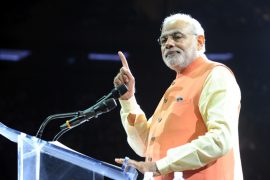
Modi’s political communication illustrates the sophistication of this model. His public image has long been built around decisiveness and national pride, reinforced by an enormous digital presence. But the strategy is evolving as India’s younger voters become more important and more sceptical.

Reuters reported in August 2026 that Modi had begun using selfie-style videos, humour and pop-culture references on Instagram as he sought to reconnect with younger Indians following protests over jobs, education and examination leaks.

There is an important point to note: political communication is increasingly designed around the audience’s habits rather than the government’s. A speech can be forgotten, but a 20-second video can be replayed, shared and argued about before breakfast.

India’s governing machinery is adapting accordingly. The Indian Express has reported that ministers have been assessed on their social-media activity and reach, turning digital engagement into a departmental performance indicator. There is nothing inherently sinister about governments communicating effectively online. Indeed, a government that cannot explain its policies clearly deserves criticism. The difficulty begins when visibility becomes a substitute for performance.

A minister may accumulate millions of views without improving bureaucratic performance. Unfortunately, none of these achievements comes with a soundtrack. There is no viral video of a procurement officer quietly preventing a three-year delay.

The same logic reaches its most exuberant form in Trump’s politics. Trump has always understood that attention is political capital and that repetition can be more valuable than precision. His claims of being responsible for extraordinary economic achievements, historic victories or uniquely successful policies are often constructed as personal scorecards.

In August 2026, FactCheck.org examined one particularly revealing example: Trump posted a chart claiming that his administration had achieved the lowest inflation of the previous ten presidents. The comparison was misleading because it measured only the first 18 months of his administration against the full four-year inflation periods of his predecessors. It was a useful reminder that numbers do not have to be fabricated to mislead. Sometimes all that is required is to arrange perfectly genuine numbers in a sufficiently enthusiastic order.

Trump’s continuing promotion of unsupported claims about the 2020 election demonstrates the more serious side of the same phenomenon. The Washington Post reported in August 2026 that he had again revived claims involving non-citizen voting and the 2020 result without providing evidence that such voting had materially changed the election.

The political usefulness of such claims is obvious even when their evidential basis is not. They reinforce the idea that the leader is the rightful winner, deprived of victory by an illegitimate system. Once that story is accepted, political defeat becomes difficult to interpret as defeat. It becomes persecution, and persecution has the useful property of making the politician appear important even when out of office.

Social media is particularly well suited to this form of politics because it rewards confidence, conflict and repetition. A complicated explanation of inflation requires context, definitions and perhaps a graph. “We have the greatest economy in history” requires considerably less.

A claim repeated often can acquire the familiarity of a fact, particularly when it accompanies an image of the leader looking presidential, victorious, or mildly annoyed. The algorithm does not ask whether a statement is true; it asks whether people are likely to react to it. Democracy has therefore acquired a new middleman whose business model is outrage.

Netanyahu’s political communication provides another variation. He has spent decades building a highly recognisable political identity. But his approach to social media also illustrates how modern politicians view online communication as a strategic weapon.

Netanyahu has explicitly described social media in those terms when discussing the battle for public opinion, particularly in the United States. He has also argued that the deterioration of support for Israel in parts of the American public is closely connected to the rise of social media. The paradox is hard to miss. Social media is treated as an essential instrument of political influence while simultaneously being blamed for making political influence harder.

The personalisation of political competition becomes stark when opponents are presented as existential threats. A recent Likud campaign in Israel used a billboard depicting New York mayor Zohran Mamdani alongside political figures, including Iran’s Supreme Leader, Mojtaba Khamenei; Turkish President, Recep Tayyip Erdoğan; and Hezbollah leader, Naim Qassem, suggesting that these figures would benefit from a Netanyahu defeat.

Such campaigning is not unusual. Political parties have warned voters about the consequences of choosing the other side. What has changed is the degree to which the choice is framed as a referendum on one individual’s capacity to protect the nation. The election ceases to be an argument about competing programmes and becomes a recurring audition for national saviour.

This is where personalised political marketing becomes institutionally dangerous. In a functioning democracy, responsibility is supposed to be distributed. Ministers answer for departments. Civil servants implement policy. Courts constrain governments. Parliaments scrutinise decisions. Journalists test claims. Voters ultimately decide whether the governing party deserves another term.

The political brand of the indispensable leader works in the opposite direction. It concentrates credit around one person while allowing responsibility to escape through the cracks. The leader becomes the face of success and, paradoxically, the least convenient person to hold accountable for failure.

The industrial production of political misinformation compounds the problem. Politicians do not control all of it. Supporters, opponents, influencers, foreign actors and anonymous accounts manufacture and circulate false material with equal enthusiasm. Synthetic political media is making verification harder. When citizens cannot tell whether a politician actually said something, the information environment becomes a political battlefield.

There is an economic cost to the politics of permanent promotion. Governments have limited attention and limited money. Officials who spend increasing amounts of time managing online narratives are not necessarily spending more time improving public services.

Ministers who measure success through engagement can become tempted to announce policies that photograph well rather than policies that work well. The incentives are subtle. A bridge that takes five years to design safely is politically inferior to a foundation stone that can be photographed tomorrow. A reform that produces modest benefits over a decade is harder to market than a slogan promising transformation by next Tuesday.

Ironically, leaders who build their reputations on personal greatness eventually imprison themselves inside the brand. A politician who claims to be uniquely competent finds it difficult to admit mistakes. A leader who promises unprecedented success must continually deliver it.

Political language consequently inflates until adjectives do the work once performed by evidence. Everything becomes ‘historic,’ ‘extraordinary,’ ‘unprecedented’ or the ‘greatest in history.’

The greatest strength of a democracy lies in its smooth functioning. Institutions that work well should be capable of surviving an ordinary leader, an unpopular leader and even an incompetent leader. A country does not function on the charisma of whoever occupies its highest office.

Modi, Trump and Netanyahu have demonstrated the extraordinary political power of personal branding. They have understood their audiences, mastered new forms of communication and made themselves difficult to ignore.

However, when political success depends on one man remaining the centre of attention, the government begins to serve the brand rather than the country. The leader becomes the message, the message becomes the evidence, and the evidence becomes whatever performs best on a screen.

That may be an excellent way to win an election. But it is no way to run a state. Democracies were designed to make leaders replaceable. Political marketing, left unchecked, tries to make them indispensable. The former is a constitutional principle. The latter is a successful advertising campaign.

-30-

Copyright©Madras Courier, All Rights Reserved. You may share using our article tools. Please don't cut articles from madrascourier.com and redistribute by email, post to the web, mobile phone or social media.
Please send in your feed back and comments to [email protected]

0 replies on “One Man, One Message, One Very Large Algorithm: The Politics Of Permanent Promotion”