Is Washington rewriting the rules of world trade to suit itself, and calling it enforcement? That is the critical question behind the White House’s newest trade report, the Senate’s push to punish countries buying Russian oil, and months of stalled talks between India and the United States.
Behind the language of ‘scams’ and ‘shadow networks’ is a common trend: a dominant economy sets the terms for everyone else and ignores its own contradictions in the process.
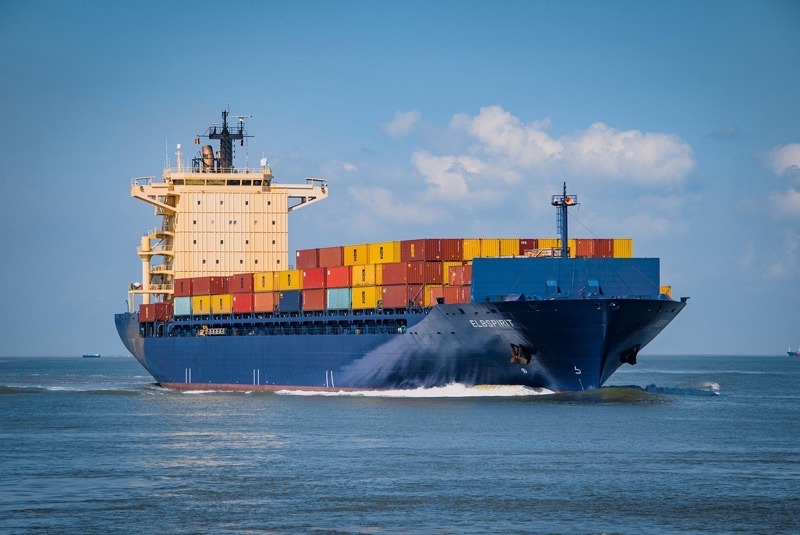
The immediate context is a document from the White House Office of Trade and Manufacturing Policy titled The Great Transshipment Scam. It names more than 40 countries and territories it suspects of allowing Chinese goods to pass through their ports on the way to the American market, thereby avoiding the tariffs those goods would otherwise face.
India is placed in the top bracket, Tier 1, alongside Canada, the European Union, Israel, Japan, Mexico, South Korea and Taiwan—economies large and diversified enough, the report argues, for questionable shipments to hide within genuine trade.
The numbers change depending on who is doing the counting. The White House’s estimate for global transshipment ranges wildly—from $40 billion to $303 billion a year—settling on a ‘central’ figure near $75 billion, with tariff losses estimated at $19 to $26 billion.
A separate Commerce Department calculation, narrower in scope, puts goods routed through Mexico, India and Vietnam specifically at $67 billion, with $28 billion in lost revenue. Plausibly, the report does not isolate how much of that figure is attributable to India alone. A number that swings by a factor of seven depending on the method used is evidence that the US government is building a case first and filling in the arithmetic afterwards.
On India specifically, the report points to the Pune-Gujarat-Chennai industrial belt and to pumps and compressors as a suspect category, claiming knock-on effects for manufacturing towns like Cincinnati, Dayton and Columbus. However, trade data undercuts the alarm: India’s exports of pumps and compressors to the US were worth around $750 million in 2025-26, less than 1 per cent of everything India ships to America.
Compare that to India’s own imports of the same goods from China, close to $2 billion. The more obvious narrative is that Indian factories buy Chinese parts and assemble products domestically, which is exactly what decades of global supply chains were built to do.
New Delhi’s response, delivered by the Ministry of External Affairs, has been restrained rather than defensive. It says it wants to examine the report’s methodology before reacting, and points out that India already runs its own customs and rules-of-origin enforcement.
The calculated tone should not obscure what is being proposed. The report calls for an AI surveillance system, dubbed “Detective Border,” that would flag shipments by comparing export volumes to a country’s estimated production capacity.
In practice, this hands an algorithm the power to treat ordinary manufacturing as suspicious before any wrongdoing is proven, and to trigger inspections, delays and retroactive penalties on that basis.
Global Trade Research Initiative analysts have already warned of the risk – a system built to catch fraud can just as easily punish legitimate participation in Asian supply chains, simply because it looks unfamiliar from Washington.
This report is not the only pressure India is facing. Indian exports already face an additional 10 per cent tariff under a Section 301 finding on forced labour. A second Section 301 investigation into “excess capacity” is still open.
In early August, the US Senate voted to allow tariffs of up to 100 per cent on countries buying significant volumes of Russian energy—a measure aimed squarely at India, China, and a handful of others. Layer the transhipment report on top of that, and it stops looking like a customs exercise. It looks like leverage, timed for maximum effect on a trade negotiation that has already dragged on since a framework was announced on February 6.
This is where Washington’s position becomes hard to defend. The same government demanding that India and China stop buying Russian oil has not stopped buying from Russia itself. American crude purchases from Moscow ended, but imports of Russian fertiliser, palladium and uranium have grown since 2021, and together the three now make up nearly 90 per cent of what the US still buys from Russia.
When Iran-Israel tensions threatened the Strait of Hormuz, Washington eased its own restrictions on Russian oil already at sea. Sanctions turn whenever they inconvenience the country imposing them. They stay strict only for everyone else.
For India, walking away from discounted Russian crude is a bill. Estimates put the added cost of switching to pricier alternatives, including American oil, at $9 to $ 12 billion a year, on top of an estimated $17 billion in savings already banked during the period when Russia supplied roughly 35 to 40 per cent of India’s crude.
Pass that cost to consumers, and inflation rises. Absorb it through subsidies and the fiscal deficit widens. Defend the rupee through the Reserve Bank’s reserves and the relief is temporary, at best.
There is no painless option here, and there is no painless option here, and Washington’s tariff threat makes that clear. This is why the phrase “rules-based trade” starts to sound meaningless. A country that changes its own sanctions when its economy needs Russian palladium, yet insists that other countries pay a 100 per cent tariff penalty for buying Russian oil, is using power dressed up as principle.
India’s Commerce Secretary Rajesh Agrawal has said both sides remain committed to the February framework, and a safeguard clause reportedly survives in the draft—letting India revise its own concessions if American tariffs shift again. That clause is one of the few protections India has against agreeing to terms today that Washington redefines tomorrow.
The real question goes beyond pumps, compressors or even oil. It is whether trade rules apply equally or twist depending on who is enforcing them. Countries of the global South have heard the language of free markets for decades, only to see market access used as a bargaining chip whenever it suits the global North.
India’s manufacturers deserve the chance to show, with better documentation and stronger customs verification, that Chinese components become genuinely Indian products, and to make that case on the evidence. Instead, they are being asked to make it under threat, from a tariff regime built on numbers that don’t even agree with each other, and from a government unwilling to hold itself to the standard it wants to impose on everyone else.
-30-
Copyright©Madras Courier, All Rights Reserved. You may share using our article tools. Please don't cut articles from madrascourier.com and redistribute by email, post to the web, mobile phone or social media.Please send in your feed back and comments to [email protected]