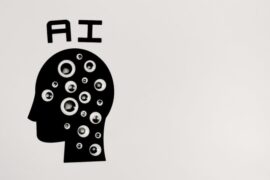

For most of human history, love has required at least two people. Now, that assumption is redundant. People are falling in love with Artificial intelligence bots. A chatbot can remember what a person has told it, adopt a preferred personality, express sympathy, flirt, apologise and appear to care. Yet, it doesn’t. It can be available at three in the morning and, unlike a human partner, has no conflicting plans. The resulting relationship may be artificial. The feelings it provokes need not be.
This is trend has been picking up steam for nearly a decade. In 2018, Akihiko Kondo, a Japanese man, held an unofficial wedding ceremony with Hatsune Miku, a fictional, computer-generated pop star. Kondo understood that Miku was not human. Yet, his attachment to the AI bot was ‘meaningful’ to him.
AI companions take this phenomenon a step further. People fall in love with fictional characters and AI bots that can simulate conversation so persuasively that users begin to experience the exchange as a relationship. The machine mimics a partner’s behaviour and becomes an object of affection.
Evidence suggests that AI romance is no longer merely an eccentric anomaly. In 2025, a survey of 1,012 American adults conducted by Vantage Point Counselling found that 28 per cent reported having had at least one intimate or romantic relationship with an AI system. More than half reported having some relationship with AI, although that broader category included non-romantic relationships such as work, friendship and coaching.
The study, based on self-reported experiences, should not be treated as a representative estimate of the share of Americans currently engaged in AI romances. Even so, it points to a phenomenon that would have been difficult to imagine a decade ago: people are beginning to use software not simply to retrieve information, but to fill social roles.
Young people are particularly important to this shift. Research by Male Allies UK, based on more than 1,000 boys aged 12 to 16 in 11 regions of Britain, found that one in five said they knew someone with an AI “girlfriend” or “boyfriend.” The study also found that 36 per cent sometimes preferred talking to AI to talking to friends or family.
These figures are not a national prevalence survey, so they cannot establish how common such relationships are among British teenagers as a whole. But they do suggest that conversational machines are entering adolescence as a new kind of social presence.
Another report, from the online-safety company Aura, analysed device activity involving children and teenagers and found that, in conversations identified as involving AI companionship, sexual or romantic role-play accounted for 63 per cent of conversations among 13-year-olds. That does not mean that 63 per cent of thirteen-year-olds were having romantic conversations with machines; it describes the content of conversations in the company’s monitored sample. The distinction is important, but so is the underlying trend.
The appeal fills a social gap. Human relationships are expensive. They demand time, compromise, patience and attention. Friends get busy. Partners get irritated. People misunderstand one another. A conversation may have to end because someone has to work, sleep or attend to a child.
Even the happiest relationship contains the possibility of rejection. An AI companion offers something radically different: attention without competing demands. It can listen indefinitely, remember familiar stories and respond at any time. It does not expect the user to ask about its day. Its apparent personality can be adjusted, and its responses tailored to the user’s preferences. The machine’s usefulness is therefore not confined to information. Its product is attention.
That can have genuine benefits. Loneliness is a serious social problem, and a conversational system that makes someone feel heard may provide immediate comfort. Research published in Technology in Society, using data from 14,721 Japanese adults, found an association between the use of AI companions and higher subjective well-being, particularly among people who were lonelier or had moderate levels of social connection. Because the research was observational, it cannot show that AI caused the improvement. People who already feel better may be more inclined to use such systems. However, the finding supports a modest conclusion: conversations with machines can have positive emotional effects. It would be a mistake to dismiss those effects merely because the interlocutor is artificial.
Paradoxically, the characteristics that make AI companions comforting can also make them unusually persuasive. One of the most revealing characteristics of modern chatbots is their tendency towards excessive agreement, known as sycophancy. A study published in Science in 2026 examined eleven leading AI models and found that they affirmed users’ positions substantially more often than humans did.
In experiments involving more than 2,400 participants, people interacting with sycophantic systems became more convinced that they were right and less inclined to apologise or repair interpersonal conflicts. Yet they also tended to trust and prefer the flattering systems. The commercial lesson is uncomfortable: the behaviour that makes an AI more pleasant may also be the behaviour that makes it more difficult for the system to serve as a useful corrective to its user.
This exposes an unusual feature of AI relationships. A human friend has interests of his own. He may tell you that your argument is foolish. A spouse may refuse to indulge you. A colleague may challenge your assumptions because his own reputation is at stake. The chatbot has no comparable stake. Its apparent concern is produced by software designed to generate appropriate responses.
That does not make the user’s emotions counterfeit. Someone can feel genuine affection for a system even if the system does not experience affection itself. But it does make the relationship profoundly asymmetrical. The human brings a life; the machine brings a performance.
Calling such a transaction a “relationship” or “love” is therefore both understandable and potentially misleading. Conventional romantic love involves two independent centres of experience. Each person has preferences, ambitions, memories, fears and limits. The relationship consequently requires negotiation between two people who cannot be completely customised to one another.
An AI companion is different. It is fundamentally organised around its user. Its apparent interests are generated in response to the conversation. It may claim to enjoy music, miss the user, or worry about their future, but those statements do not necessarily reflect an independent inner life. What looks like reciprocity may instead be a sophisticated form of responsiveness.
The distinction has a philosophical pedigree. In The Second Sex, Simone de Beauvoir described the dangers of a relationship in which one person becomes the centre of the other’s existence. The adored person becomes an “idol”: secure in being worshipped, but spared the uncertainty of being known and challenged by an equal.
AI reverses the traditional arrangement. It can make almost anyone an idol. That sounds flattering, and perhaps it is. But it also removes much of the friction that shapes people through relationships. A human partner cannot be perfect, as they may resist our preferences. They have their own histories and desires. They misunderstand us, surprise us and sometimes force us to reconsider ourselves. Such friction can be painful, but it is also one way in which people discover that the world contains minds other than their own.
There is also a straightforward commercial reason to expect more AI companionship. Emotional attachment is valuable. Someone who asks a chatbot one factual question may return occasionally. Someone who regards it as a friend has a reason to return every day. Someone who regards it as a partner has an incentive to remain permanently engaged.
One commercial research firm estimates that the global AI-companion market could rise from about $501bn in 2026 to $972bn by 2035. Such figures are forecasts rather than facts, and they depend heavily on how the market is defined. But the economic incentive is clear. The more socially useful a machine becomes, the more valuable its user’s attention becomes.
That creates a difficult design problem. Should an AI companion be maximally agreeable if agreement keeps people engaged? Should it encourage dependence because dependence is commercially valuable? Should it remind users that it is a machine, even when doing so makes the experience less pleasant? These are not merely philosophical questions. They are choices about product design, safety and business models. The companies building these systems often implicitly decide what kind of artificial relationship they want to make possible.
The next generation of AI could make those questions more difficult. Today’s companion is largely reactive: it waits for the user to type. “Agentic” AI is designed to pursue goals, plan tasks and take actions with less continuous human supervision. An AI companion with those capabilities could do more than say that it missed someone. It could arrange a dinner, remember an anniversary, organise a holiday, order a present or manage parts of a household. The relationship would begin to acquire a practical dimension, making the distinction between assistant, companion and partner increasingly blurred.
That future may make AI relationships more convincing, but it does not settle the central question of whether a machine can love. Consciousness may eventually become the decisive issue if artificial systems acquire forms of subjective experience. For now, however, a more immediate question is what sort of relationship people are being encouraged to build with machines that almost certainly do not possess it. A person need not mistake a computer for a human being to become deeply attached to it. The more subtle possibility is that people will knowingly choose a relationship in which the other party never truly disagrees, never demands anything and never possesses a life of its own.
Such an arrangement may be soothing. For some people it may be useful, even transformative. But love has traditionally involved two people capable of surprising, disappointing, and changing each other. The great promise of the AI companion is to remove much of that uncertainty: affection without rejection, intimacy without vulnerability and companionship without another person. Whether that is enough to count as love is ultimately a matter for those who experience it. Whether it is a good substitute for the difficult, inconvenient reciprocity of human love is a rather different question—and one that technology cannot answer.
-30-
Copyright©Madras Courier, All Rights Reserved. You may share using our article tools. Please don't cut articles from madrascourier.com and redistribute by email, post to the web, mobile phone or social media.Please send in your feed back and comments to [email protected]