The Normalisation Of Violence Against Christians In India

Christian-violence-Madras-Courier
Representational image: Public domain
Violence against Christians in India has been, slowly and steadily, normalised. It is now an accepted reality. Now, prejudice and the corresponding violence is built into policy.

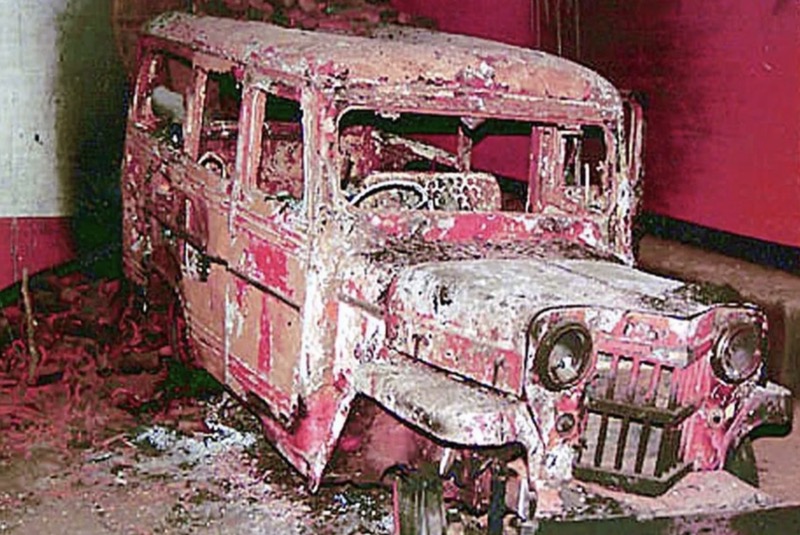
The murder of Australian missionary Graham Staines and his two young sons in Odisha in January 1999 remains one of the darkest moments in independent India’s history. Burnt alive in their vehicle by a mob led by Dara Singh, the killings shocked the nation and the world.

Then Prime Minister Atal Bihari Vajpayee condemned the murders, and the Supreme Court would later uphold Dara Singh’s conviction. However, more than a quarter of a century later, the question raised by the Staines murders has not disappeared: what happens to a democracy when violence against a minority becomes normalised?

India’s Constitution guarantees every citizen the freedom to profess, practise and propagate religion. It envisions a secular republic where the state protects every community equally. But for many Christians across India today, constitutional promises often collide with lived realities marked by intimidation, vandalism, police complaints, arrests under anti-conversion laws, and periodic mob violence.

The issue is not merely isolated attacks on churches or individuals. It concerns whether an atmosphere of suspicion has become embedded in public life.

Christians constitute roughly 2.3 per cent of India’s population. They are one of the country’s smallest religious minorities. However, they have historically played an outsized role in education, healthcare and social welfare. Thousands of schools, hospitals, orphanages and charitable institutions run by Christian organisations serve people of every faith, particularly in remote tribal and rural regions where state services remain inadequate.

However, these institutions increasingly find themselves portrayed not as partners in nation-building but as objects of suspicion. The accusation most frequently levelled is that Christian organisations engage in ‘forced’ or ‘fraudulent’ religious conversions. But allegations do not substitute for evidence. In many reported incidents, accusations of ‘forced conversion’ have preceded mob attacks long before any judicial determination has taken place.

This pattern has become increasingly familiar. Prayer meetings are disrupted. Churches are vandalised. Pastors are assaulted. Congregations are accused of illegal conversions, sometimes based on anonymous complaints or ideological campaigns. Police investigations frequently begin after pressure from local groups rather than independent evidence. Even where prosecutions ultimately fail, the process itself becomes a form of punishment.

Independent monitoring organisations have documented hundreds of reported incidents of violence, intimidation and harassment directed at Christians over recent years. While methodologies differ and the figures remain contested, there is broad agreement among human rights observers that attacks and allegations against Christian communities have risen significantly compared to earlier decades. The concern is not simply the number of incidents but the apparent climate of impunity surrounding them.

The legacy of Graham Staines illustrates this danger precisely. Justice Wadhwa’s commission found no evidence of a wider conspiracy behind the murders, and the courts held those directly responsible accountable. But accountability after one horrific crime does not eliminate the broader social currents that make such violence possible.

Staines had spent decades working with leprosy patients—among the most marginalised members of Indian society. His killers portrayed him not as a humanitarian but as an existential threat because of his faith. That inversion—where service itself becomes suspect—continues to echo today.

Recent debates surrounding the proposed Foreign Contribution (Regulation) Amendment Bill, 2026 have intensified these anxieties. The government argues that the amendments are intended to prevent misuse of foreign funding and protect national security.

Critics, however, argue that the proposed amendments go much further. They warn that provisions allow government-appointed authorities to confiscate and dispose of assets of an organisation whose FCRA registration ceases. Such sweeping executive powers affect schools, hospitals, charities, and places of worship established through decades of lawful charitable work. Christian organisations, civil society groups and several opposition parties have expressed concern that these provisions could disproportionately affect minority-run institutions.

The political context matters. Over the past decade, numerous Christian charities and NGOs have faced FCRA cancellations or non-renewals under existing law. The government has consistently argued that such actions are based on regulatory compliance rather than religious identity.

Critics say that the cumulative impact has fallen heavily on organisations working in education, healthcare and social development, including many Christian institutions. The proposed amendments, therefore, arrive not in isolation but against a backdrop of growing distrust between minority organisations and the state. This is where violence and legislation intersect.

Violence is not limited to physical attacks. It also operates through sustained delegitimisation. When churches are repeatedly accused of criminality, when charitable organisations are portrayed as a national security risk, and when regulatory powers expand alongside an atmosphere of public hostility, the combined effect can be corrosive. Physical violence becomes only one manifestation of a broader process of exclusion.

This does not mean that religious organisations should be exempt from financial scrutiny. Every institution receiving public funds should comply with transparent legal standards. Accountability is an essential component of democratic governance. But accountability loses legitimacy when it appears selective, disproportionate, or intertwined with narratives that portray an entire minority as inherently suspect.

The strength of India’s constitutional democracy has always rested on its pluralism. Christians, Muslims, Sikhs, Buddhists, Jains, Hindus and countless indigenous traditions have shaped the republic together. The Constitution does not merely tolerate religious diversity; it protects it as a foundational principle.

History demonstrates the consequences when majoritarian politics begins redefining citizenship according to religious identity. The danger is rarely immediate. It emerges gradually through normalisation. A church attack becomes a local dispute. A pastor’s arrest becomes routine. A charitable organisation loses its licence. Another prayer meeting is disrupted. Another allegation circulates online. Individually, each incident may appear isolated. Collectively, they reshape the boundaries of who belongs and who feels secure.

The question facing India today is larger than a minority of Christians. It concerns whether constitutional rights remain equally meaningful for every citizen regardless of numerical strength. Democracies are judged not by how they treat majorities but by how they protect minorities whose rights may be politically inconvenient.

Graham Staines once wrote that forgiveness was central to his faith. After his murder, his widow Gladys Staines publicly forgave those responsible—a gesture that earned admiration across the world. Her forgiveness, however, should never become an excuse for public forgetfulness.

Remembering Staines requires more than commemorating one terrible crime. It requires vigilance whenever prejudice becomes normalised, whenever violence is rationalised, and whenever the institutions protecting vulnerable communities are weakened rather than strengthened.

India’s future will not be secured by treating minority institutions as permanent objects of suspicion. It will be secured by reaffirming the constitutional promise that every citizen—regardless of faith—enjoys equal dignity, equal protection under the law, and equal freedom to serve society without fear. That promise remains the republic’s greatest strength. Preserving it is not a concession to minorities; it is a defence of India itself.

-30-

Copyright©Madras Courier, All Rights Reserved. You may share using our article tools. Please don't cut articles from madrascourier.com and redistribute by email, post to the web, mobile phone or social media.
Please send in your feed back and comments to [email protected]

0 replies on “The Normalisation Of Violence Against Christians In India”