
Why History Suggests The Dollar’s Reign Won’t Last

Dollar-Madras-Courier
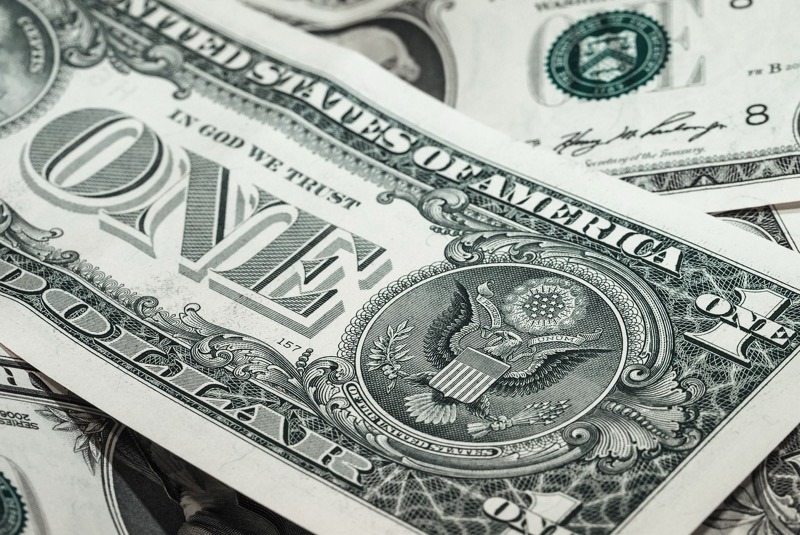
Representational image: Public domain.
History shows reserve currencies endure for centuries, but none remains dominant (not even the dollar) once economic power begins shifting.

The U.S. dollar is treated as a permanent feature of the modern world. When markets panic, investors buy dollars. Governments overwhelmingly hold their reserves in dollar-denominated assets.

Around 90 per cent of foreign exchange transactions involve the dollar, while roughly 40 per cent of global trade is invoiced in it. Oil is priced in dollars, debts are settled in dollars, and financial crises are measured against the dollar. The currency has become so deeply embedded in the global economy that imagining a world beyond it feels almost impossible.

History, however, has little patience for claims of permanence. Every great power believes its institutions are exceptional. Yet the history of international money tells a remarkably consistent story: Reserve currencies do not last forever. They endure for generations, and gradually give way to a new monetary order.

The dollar is not the first currency to appear indispensable. It is merely the latest. Long before New York became the centre of global finance, Athens, Rome, Florence, Amsterdam and London occupied similar positions in the world economy. Their currencies travelled across borders, became trusted stores of value and facilitated international commerce. To those living through their ascendancy, each seemed destined to remain at the centre of global finance indefinitely. None did.

The reasons were strikingly similar. The Athenian silver owl gained acceptance because merchants trusted its consistent weight and purity, while Athens dominated Mediterranean trade through the Delian League. Rome’s denarius spread with the empire’s commercial reach before giving way to the Byzantine solidus, which facilitated trade from Britain to India.

During the Renaissance, Florence’s gold florin became Europe’s preferred trading currency, its reliability reinforcing the city’s position as the continent’s banking centre. Spain’s silver real—better known as the “piece of eight”—became the first truly global currency, circulating across Europe, Asia and the Americas. The Dutch guilder eventually eclipsed it as Amsterdam emerged as the world’s financial hub, before Britain’s pound sterling inherited the mantle alongside London’s rise as the capital of global finance.

The names changed, but the foundations hardly did. Successful reserve currencies emerged from economies that dominated international commerce, maintained deep and liquid financial markets and inspired confidence in their political and legal institutions. Military power certainly mattered, but trust mattered more. A reserve currency succeeds because millions of businesses, investors and governments independently conclude that it is the safest and most efficient way to conduct international commerce.

The dollar followed the same historical pattern. America’s industrial expansion had already transformed it into the world’s largest economy before the First World War. The creation of the Federal Reserve in 1913 supplied the institutional framework needed for a modern international currency, while two world wars weakened Europe’s financial position. By the time the Bretton Woods conference met in 1944, economic leadership had already crossed the Atlantic. Making the dollar the anchor of the post-war monetary system recognised a shift that had already taken place.

The institutions created after the Second World War gave the dollar extraordinary momentum. Businesses invoiced trade in dollars because their customers did the same. Banks lent in dollars because borrowers demanded them. Governments accumulated dollar reserves because they remained the safest and most liquid assets available.

Economists describe this as a network effect: every additional participant makes the system more valuable for everyone else. Once such a system reaches critical mass, it becomes extraordinarily difficult to replace.

That momentum has bestowed what economists have long described as America’s “exorbitant privilege.” Persistent global demand for dollar-denominated assets enables the United States government to borrow at lower interest rates than would otherwise be possible, while American financial markets enjoy unparalleled liquidity.

Consumers benefit from a strong currency that makes imports cheaper and overseas travel more affordable, even if exporters bear the cost of reduced international competitiveness. The advantages of issuing the world’s reserve currency are considerable, and they help explain why the dollar has remained dominant for so long.

However, history suggests that reserve currencies often survive beyond the period of unquestioned economic supremacy that created them. Britain remained the world’s financial centre well into the twentieth century despite America’s larger economy. Monetary leadership changes more slowly than economic leadership because confidence has enormous inertia. Investors rarely abandon familiar institutions until credible alternatives emerge.

This helps explain one of the apparent contradictions of the present moment. By some measures, China has already overtaken the United States as the world’s largest economy, yet the renminbi remains a relatively minor international currency. Capital controls, restrictions on financial openness and concerns about institutional independence continue to limit its appeal.

The euro has become the world’s second most important reserve currency. However, fragmented bond markets and the absence of a unified fiscal authority prevent it from matching the scale and liquidity of U.S. financial markets. Meanwhile, cryptocurrencies have failed to evolve into practical instruments for mainstream commerce. None currently offers the combination of trust, liquidity and institutional depth that underpins the dollar.

For many observers, that appears to settle the question. If no obvious successor exists, then the dollar’s supremacy must be secure. But that conclusion misunderstands how monetary history unfolds. Reserve currencies rarely disappear because a flawless replacement suddenly arrives. More often, economic power gradually disperses, financial relationships become more regional, and governments slowly reduce their dependence on a single dominant system—monetary orders fragment before they are replaced.

There are already signs that such a process has begun. The financial sanctions imposed on Russia after its invasion of Ukraine demonstrated the extraordinary reach of the dollar-based financial system. They also reminded governments around the world that access to that system depends, at least in part, on political relationships with Washington.

Even countries with no expectation of conflict with the United States have begun exploring ways to diversify their reserves, expand bilateral trade in local currencies and develop alternative payment systems. None of these initiatives threatens the dollar individually. Collectively, however, they point toward a world in which dependence on a single currency gradually becomes less attractive.

The next international monetary order is therefore unlikely to replace the dollar with the renminbi. History offers little support for such neat successions. Instead, the future is more likely to be characterised by a gradual diffusion of monetary influence, with several major currencies sharing functions once concentrated in a single one. Such a transition would not represent the collapse of American power so much as the continued redistribution of global economic activity that has been under way for decades.

The real lesson of monetary history is that reserve currencies emerge from commerce, trust and political stability, and they recede as those foundations evolve. For nearly a century, the dollar has occupied an extraordinary position at the centre of global finance. It may continue to do so for years to come. But every currency that once appeared indispensable—from the Athenian owl to sterling—eventually yielded to changing patterns of trade and power. The dollar is unlikely to prove the lone exception to one of history’s most enduring economic rhythms.

-30-

Copyright©Madras Courier, All Rights Reserved. You may share using our article tools. Please don't cut articles from madrascourier.com and redistribute by email, post to the web, mobile phone or social media.
Please send in your feed back and comments to [email protected]

0 replies on “Why History Suggests The Dollar’s Reign Won’t Last”