On a warm March morning in 1930, Mohandas Karamchand Gandhi left Sabarmati Ashram with seventy-eight followers and began walking towards the Arabian Sea. Their destination was Dandi, a small coastal village in Gujarat. Their purpose seemed almost absurd: to make salt.
The British Empire taxed salt, a basic necessity for every Indian, regardless of class or caste. Gandhi understood that by choosing something so ordinary, he could expose the extraordinary injustice of colonial rule. Twenty-four days later, when he bent down to pick up a handful of salt from the seashore, he did far more than break a law. He transformed protest into one of India’s most powerful political traditions.
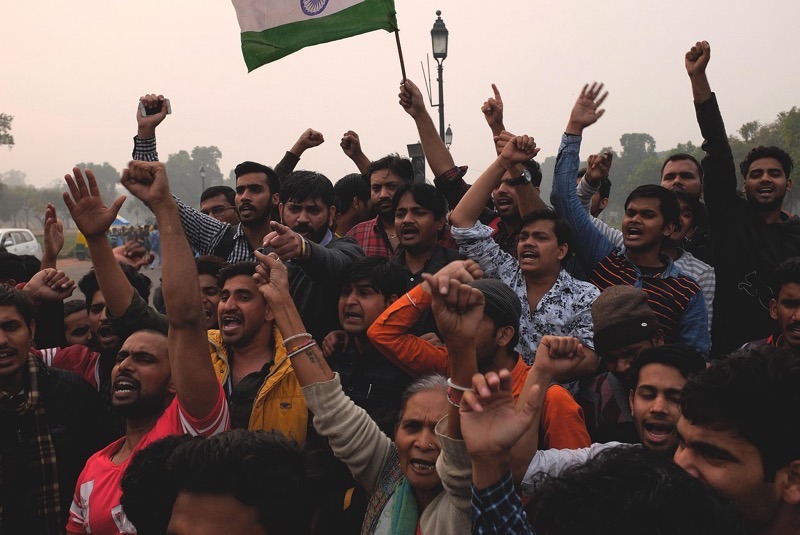
Nearly a century later, India remains a nation shaped by protest. Farmers have marched to Delhi, students have occupied university campuses, women have staged sit-ins, workers have organised strikes, and environmentalists have undertaken hunger fasts. The causes have changed, governments have changed, and the Constitution has replaced colonial rule, but one idea has endured: democracy is strongest when citizens retain the ability to challenge those who govern.
This is the context in which the hunger strikes of Sonam Wangchuk should be understood—not as isolated acts of resistance, nor as echoes of Gandhi that invite simplistic comparisons, but as part of a long Indian tradition of moral persuasion through non-violent dissent.
Gandhi did not invent protest, but he fundamentally reimagined it. His philosophy of satyagraha rejected violence while insisting that injustice must never be accepted. Protest, in Gandhi’s understanding, was not merely opposition. It was an appeal to conscience.
His campaigns in Champaran, Kheda and Ahmedabad demonstrated that organised, peaceful resistance could challenge entrenched power. The Salt March elevated civil disobedience into a global political language. By the time the Quit India Movement erupted in 1942, millions of Indians had come to believe that ordinary citizens possessed political agency, even against an empire.
Importantly, Gandhi’s methods rested on discipline. Protest demanded sacrifice from the protester rather than suffering on the opponent’s part. It sought legitimacy not through force but through moral credibility. That distinction continues to define the most influential movements in independent India.
When the Constitution came into force in 1950, the framers recognised this legacy. Article 19 guaranteed freedom of speech, peaceful assembly and association, while allowing reasonable restrictions in the interests of public order and security. Protest was never intended to exist outside constitutional democracy; it was built into it.
That principle would be tested most severely during the Emergency.
On 25 June 1975, Prime Minister Indira Gandhi advised the President to declare an Internal Emergency. Over the following twenty-one months, civil liberties were curtailed. Press censorship became routine. Opposition leaders, journalists, trade unionists and activists were detained without trial under preventive detention laws. Public demonstrations became virtually impossible.
The Emergency remains one of independent India’s defining constitutional crises because it revealed how fragile democratic freedoms can become when dissent is treated as a threat rather than a democratic necessity.
Resistance nevertheless continued. Networks of activists operated underground. Families of detainees campaigned for their release. The ideas articulated earlier by Jayaprakash Narayan’s movement—calling for accountability, constitutional morality and democratic renewal—survived imprisonment.
When elections were finally held in 1977, Indian voters delivered a historic verdict. The government that had suspended civil liberties was voted out of office. Democracy had corrected itself, but only because citizens insisted that constitutional rights mattered.
The lesson of the Emergency extends beyond that moment in history. Elections are indispensable, but they are not sufficient. Democracies require independent institutions, a free press, an active civil society and the ability of citizens to express disagreement peacefully between elections.
That is why protest occupies such an unusual place in India’s public life. It is neither exceptional nor inherently anti-national. It is one of the constitutional mechanisms through which society communicates with the state.
Independent India offers countless examples.
The Chipko movement drew villagers, particularly women, into protecting Himalayan forests by embracing trees threatened by commercial logging. The Narmada Bachao Andolan forced uncomfortable national conversations about development, displacement and rehabilitation. The Right to Information campaign fundamentally altered the relationship between citizens and government by making transparency a legal right. More recently, farmers’ protests demonstrated how sustained, peaceful mobilisation can shape public debate even amid deep political polarisation.
Not every protest succeeds. Not every demand is accepted. Nor should every movement be immune from criticism. Democracies require scrutiny of the government. What matters is the continued availability of peaceful constitutional space in which disagreements can be expressed.
Few methods of protest illustrate this more starkly than the hunger strike.
Fasting occupies a distinctive place in India’s political vocabulary because it asks the protester to bear the cost personally. Its power lies in moral witness, not physical force.
Sonam Wangchuk’s public campaigns draw upon this tradition while addressing contemporary concerns. Best known as an engineer, education reformer and environmental advocate from Ladakh, Wangchuk has become a prominent voice on issues ranging from ecological protection in the fragile Himalayan region to constitutional safeguards and democratic representation for Ladakh. More recently, he has also linked these concerns to broader questions of accountability in public institutions, including education.
Whether one agrees with all his demands is, in many ways, beside the point. Democracies do not require consensus before citizens are permitted to dissent. The legitimacy of peaceful protest does not depend upon universal agreement with its objectives. It depends upon constitutional freedoms that allow competing visions of the public good to be debated openly.
Indeed, governments have no obligation to concede every demand made by protesters. They do, however, bear the responsibility for protecting the democratic space in which peaceful disagreement can occur. Likewise, protesters bear responsibilities of their own—to remain peaceful, respect the rights of others and operate within constitutional limits.
This reciprocal relationship distinguishes democratic protest from disorder.
India’s political history demonstrates that many reforms once considered disruptive later came to be recognised as necessary. Women’s movements reshaped laws governing violence and inheritance. Environmental campaigns influenced judicial thinking on ecological protection. Anti-corruption movements altered public expectations of transparency. Even when protests fail, they often change the questions that governments are eventually compelled to answer.
The ability to protest peacefully is therefore not simply another civil liberty. It is one of democracy’s early warning systems. It signals discontent before frustration hardens into alienation. It enables marginalised voices to enter national conversations. It reminds governments that electoral victory is not a licence to stop listening.
The journey from Gandhi’s handful of salt to the hunger fasts of contemporary India is neither linear nor identical. Colonial resistance, opposition to the Emergency and present-day movements arise from different political contexts. Yet they are connected by a shared conviction that citizenship is an active practice rather than a passive status.
India’s democratic success has never rested solely on the ballot box. It has also depended on the willingness of ordinary people to assemble peacefully, speak freely and insist that those who exercise power remain accountable.
That tradition deserves to be protected—because a democracy in which peaceful protest becomes impossible is a democracy that has begun to lose confidence in itself.
-30-
Copyright©Madras Courier, All Rights Reserved. You may share using our article tools. Please don't cut articles from madrascourier.com and redistribute by email, post to the web, mobile phone or social media.Please send in your feed back and comments to [email protected]