The nuclear age has entered a complex and uncertain phase. For much of the Cold War, the world’s strategic balance rested on a rivalry between two superpowers. The United States and the Soviet Union accumulated arsenals capable of destroying civilisation many times over. However, the doctrine of mutual assured destruction imposed a peculiar form of stability.
Each side recognised that a nuclear exchange would produce no victor, creating incentives to manage competition through deterrence, diplomacy and arms control. That uneasy equilibrium is now giving way to a far less predictable order, with important implications for countries navigating an increasingly fragmented security environment.
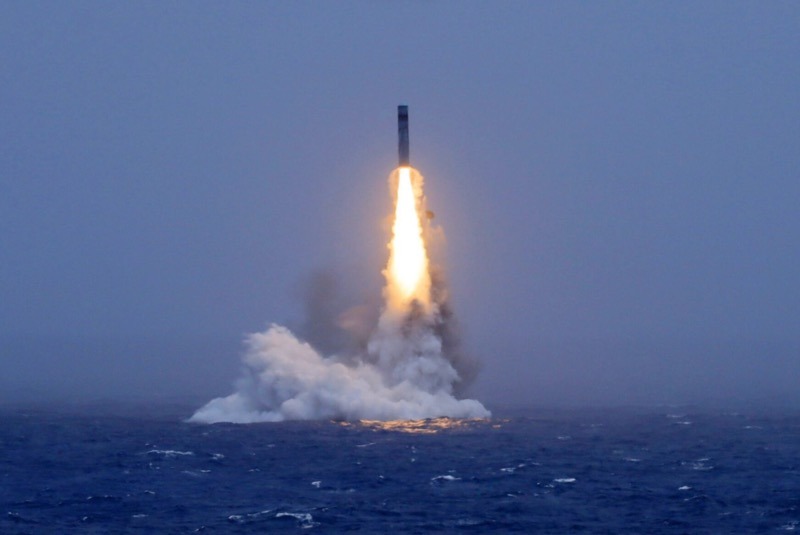
China’s recent test of a submarine-launched ballistic missile over the Pacific offers another indication that this transformation is underway. Although Beijing has conducted only a handful of long-range launches, the significance of the exercise reveals much about China’s strategic ambitions.
For decades, China’s nuclear doctrine rested on the principle of maintaining a modest deterrent capable of ensuring retaliation, rather than achieving numerical parity with Washington or Moscow. That posture is changing. China is expanding its nuclear arsenal, modernising delivery systems and developing a fully operational nuclear triad comprising land-based missiles, strategic bombers and ballistic missile submarines. The ability to launch from its own coastline while retaining the capacity to strike targets across the Pacific strengthens the credibility of its deterrent.
Beijing’s nuclear expansion reflects broader geopolitical ambitions. As China seeks recognition as a global military power equal to that of the United States, nuclear capability has become an essential component of its national prestige and strategic influence. But the acceleration of its programme cannot be understood in isolation. It has unfolded against the gradual erosion of the international arms control architecture that helped moderate competition after the Cold War.
The effective collapse of the New START framework, which limited deployed strategic nuclear warheads in the United States and Russia, has removed one of the few remaining constraints on the world’s two largest nuclear arsenals. Equally important, Chinese policymakers argue that expanding American missile defence systems undermines the credibility of China’s smaller deterrent by threatening its ability to retaliate after a first strike. From Beijing’s perspective, increasing both the size and sophistication of its arsenal is therefore presented as a defensive necessity rather than an offensive choice.
The emergence of a triangular nuclear competition is inherently more unstable than the bipolar system that preceded it. Strategic calculations become considerably more complicated when each power must account for the capabilities and intentions of two rivals rather than one. The increasingly close political and military relationship between China and Russia further complicates the matter. Although Moscow and Beijing do not constitute a formal military alliance, their growing cooperation inevitably influences perceptions in Washington.
American defence planners increasingly assess Chinese and Russian capabilities in combination rather than separately, creating pressure to ensure that the United States retains sufficient nuclear forces to deter both simultaneously.
These dynamics risk setting in motion a familiar but dangerous cycle. China’s nuclear stockpile, estimated by independent analysts to exceed 600 warheads, is projected to continue expanding substantially over the coming decade, and has prompted debate within the United States over whether to deploy a greater proportion of its reserve warheads on existing delivery systems.
Russia, which possesses the world’s largest nuclear inventory, would almost certainly respond to American expansion with measures of its own. Once strategic competition begins to operate without mutually accepted limits, each country’s efforts to enhance security are interpreted by rivals as evidence of growing threat, encouraging further military investment. The result is an accelerating spiral in which deterrence becomes progressively more expensive while strategic stability becomes increasingly fragile.
The consequences of this competition extend well beyond the three principal nuclear powers. Throughout Europe and Asia, governments have become increasingly conscious of the limitations of extended nuclear deterrence. Russia’s repeated invocation of its nuclear arsenal during the war in Ukraine demonstrated how nuclear threats can be used to shape conventional conflicts without crossing the threshold into actual nuclear use.
Simultaneously, uncertainty surrounding long-term American security guarantees has encouraged allies and partners to reconsider assumptions that have underpinned regional security for decades. In such an environment, countries that once relied on the protection of established nuclear powers may begin to question whether their own deterrent capabilities deserve greater consideration.
India occupies a distinctive position within this evolving landscape. Unlike the established nuclear powers, New Delhi has consistently maintained a doctrine centred upon credible minimum deterrence while officially adhering to a policy of no first use, although debate over aspects of that doctrine has periodically emerged.
India’s nuclear posture has been shaped by the dual challenge posed by China and Pakistan rather than global strategic competition. Nevertheless, changes in China’s nuclear capabilities inevitably influence India’s own security calculations.
As Beijing strengthens its strategic forces and modernises delivery systems, New Delhi faces increasing pressure to ensure that its own deterrent remains credible. This does not necessarily imply an unconstrained expansion of India’s arsenal, but it does require continued investment in command-and-control systems, sea-based deterrence, and early-warning capabilities that preserve strategic stability.
The implications extend beyond India’s immediate neighbourhood. As one of the few major powers maintaining constructive relationships with Western democracies and parts of the developing world, India possesses an unusual diplomatic position. Its participation in forums ranging from the Quad to BRICS illustrates the balancing act that increasingly defines its foreign policy.
In an era when dialogue between Washington, Moscow and Beijing has become difficult, countries capable of engaging multiple competing centres of power acquire greater diplomatic relevance. While India cannot substitute for direct negotiations among the principal nuclear powers, it has a clear interest in advocating renewed arms control initiatives that reduce strategic uncertainty and discourage further proliferation across Asia.
Rebuilding meaningful arms control, however, will require political compromises that none of the major powers currently appears eager to make. The restoration of legally binding limits between the United States and Russia would represent an essential first step, even if broader negotiations remain elusive. However, a durable framework will ultimately need to accommodate China, whose expanding arsenal makes its exclusion increasingly untenable.
Beijing has long argued that its considerably smaller nuclear force justifies remaining outside formal limitation agreements, insisting that Washington and Moscow bear primary responsibility because of their vastly larger stockpiles. There is logic to this position, but it becomes progressively less persuasive as China’s own arsenal grows in both size and sophistication.
Equally, Washington cannot expect Beijing to accept arrangements that focus exclusively on warhead numbers while ignoring issues that China regards as strategically inseparable, including missile defence, advanced conventional strike capabilities and the militarisation of space.
The next generation of arms control is therefore unlikely to resemble the bilateral treaties that characterised the late Cold War. Future negotiations will almost certainly need to encompass a broader range of technologies, greater transparency regarding force structures and confidence-building measures designed to reduce the risk of miscalculation. Such agreements will be harder to negotiate than those between two superpowers operating within relatively stable strategic relationships.
The most immediate danger lies not in the expansion of nuclear arsenals but in the disappearance of the mechanisms that once allowed competitors to understand each other’s intentions. Verification regimes, mutual inspections, data exchanges and regular strategic dialogue helped reduce uncertainty even during periods of intense political confrontation. Their erosion leaves nuclear powers increasingly dependent on intelligence estimates, worst-case assumptions and military signalling. History suggests that misperception, rather than deliberate aggression, often poses the greatest risk during periods of strategic transition.
The world is therefore entering an era in which technological advances, geopolitical rivalry and institutional decline are reinforcing one another in unsettling ways. A three-cornered nuclear competition involving the United States, Russia and China will prove more difficult to manage than the bipolar rivalry. At the same time, regional powers such as India must adapt to a strategic environment that is becoming contested and less predictable.
The enduring lesson of the nuclear age remains unchanged. Deterrence may prevent conflict, but it cannot eliminate the possibility of error. As the number of weapons grows and the rules governing them weaken, the margin for catastrophe inevitably narrows.
-30-
Copyright©Madras Courier, All Rights Reserved. You may share using our article tools. Please don't cut articles from madrascourier.com and redistribute by email, post to the web, mobile phone or social media.Please send in your feed back and comments to [email protected]