In June 2019, an eight-year-old boy named Taha Shakouri was photographed playing in a corner of Mahak Children’s Hospital in Tehran, unaware that his doctors were running out of the chemotherapy medicine keeping his liver cancer at bay. When the Trump administration unilaterally withdrew from the Joint Comprehensive Plan of Action in May 2018 and reimposed sweeping sanctions on Iran, it severed Iran’s banking system from the international financial network.
Pharmaceutical companies and their distributors, apprehensive of secondary sanctions, stopped processing transactions with Iranian institutions, even for medicines technically exempt from sanctions. The Iranian rial collapsed by 70 per cent against the dollar. Import costs became prohibitive. By May 2019, Mahak hospital had run out of pegaspargase, mercaptopurine, and vinblastine — three chemotherapy medications on the WHO list of essential medicines — not because they were unavailable, but because the framework of American sanctions made it impossible to pay for them. Taha’s mother, Laya Taghizadeh, told the Associated Press that a single treatment would otherwise cost $1,380 — impossible in an economy where the average monthly salary had collapsed to $450. “My husband is a simple grocery worker, and this is a very costly disease,” she lamented.
Though diplomatic disputes unfold in the Oval Office and foreign ministries, their repercussions are felt in cancer wards, pharmacy shelves and in the lives of people who have no influence over the policies that shape their fate. Washington has never been held accountable for the consequences of its collective punishment, nor has it expressed remorse for it, while pontificating on human rights on the global stage.
The vocabulary of “sanctions” and “pressure campaigns” sanitises the calculated immiseration of civilian populations in the expectation that suffering will eventually produce political compliance. The violence is administrative rather than kinetic, exercised through financial networks, payment systems, and supply chains rather than armies. It is murder without weapons.
Economic coercion is as old as the state system. The British Empire was among its most accomplished practitioners, employing naval blockades, unequal treaties, monopolistic trading arrangements, and the systematic subordination of colonial economies to the interests of the metropole. The case of India remains one of history’s most consequential examples. In 1750, India accounted for roughly a quarter of global economic output. By the end of the British Raj, that share had fallen to four per cent. The decline was the product of colonial policies that engendered financial loot, suppressed indigenous industry, privileged British manufactures, and integrated India into the global economy on profoundly unequal terms. Military conquest initiated the subjugation; economic administration consolidated it.
The postwar order institutionalised this logic under American leadership. At Bretton Woods in 1944, John Maynard Keynes proposed the bancor, a supranational reserve currency that would have constrained the ability of any single state to dominate the international monetary system. The American delegation, led by Harry Dexter White, proposed a dollar-centred order instead. The United States was the world’s dominant creditor and industrial power. The dollar prevailed.
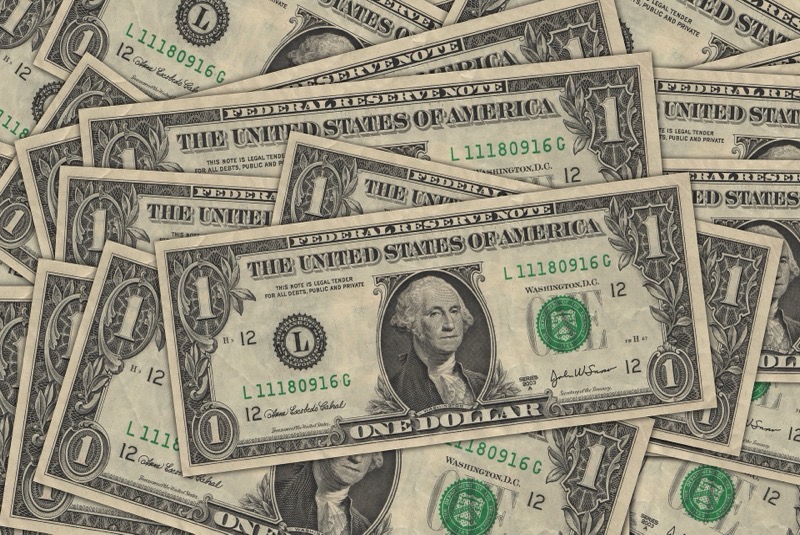
By anchoring global finance to the currency of a single nation, Bretton Woods granted the United States a privilege no previous great power had enjoyed: the ability to finance deficits in its own currency and shape the rules of international finance. The dollar system conceived as a postwar stability mechanism would become one of the most powerful instruments of geopolitical leverage in modern history.
Countries had to earn, attract, or borrow dollars. The United States alone issued them. When Nixon decoupled the dollar from gold in 1971 — unilaterally, without consulting allies — and the petrodollar arrangement locked global oil trade into dollar denomination, the architecture of dominance was complete. Every nation had to accumulate dollar reserves to trade oil. Nations holding dollars were politically exposed to American policies. This conferred what French President Valéry Giscard d’Estaing described as an “exorbitant privilege” — the power to run unlimited deficits because the world had no alternative reserve asset. Following the oil shocks of the 1970s, petrodollar recycling replaced the Gold Standard with the Treasury Standard, further entrenching dollar dominance.
The political economist Susan Strange called this “structural power”: the ability to shape the framework within which all actors must operate. SWIFT, the financial messaging network underpinning trillions in global transactions, is structural power made infrastructure. When Iran was cut from SWIFT in 2012, oil exports collapsed, and inflation surged, with ordinary citizens bearing the cost.
Russia’s partial exclusion in 2022 demonstrated both the power and the limits of financial coercion. Commodity leverage, diversified trade networks and shadow fleets enabled Moscow to absorb the shock, albeit at considerable cost. The Office of Foreign Assets Control (OFAC) extends this reach beyond American borders: any institution seeking access to the US financial system must comply with US sanctions law. A German company, a Singaporean bank, a Philippine ministry — all operate under the shadow of American financial jurisdiction enforced not through treaty but through the threat of exclusion.
IMF conditionality remains one of the most potent instruments of economic leverage. Nations facing balance-of-payments crises receive emergency financing in exchange for austerity, privatisation, and market liberalisation. The American economist Joseph Stiglitz argued this playbook deepened East Asia’s 1997 crisis rather than resolving it. The IMF itself later acknowledged neoliberal prescriptions had been “oversold” — a candid institutional admission, though one that arrived after several lost decades in sub-Saharan Africa and Latin America.
Aid can function as leverage as effectively as sanctions. The Trump administration’s dismantling of USAID in 2025 disrupted programmes on which millions depended. PEPFAR alone supported antiretroviral treatment for more than 20 million Africans, demonstrating how humanitarian assistance can become intertwined with geopolitical power.
The U. S. Secretary of State Marco Rubio’s assertion that no one died as a result sits uneasily alongside a 2025 Lancet study estimating that sustained reductions in USAID funding could contribute to more than 14 millionpreventable deaths globally by 2030, including approximately 4.5 million children under the age of five. The debate is not whether aid withdrawal carries human consequences, but how many lives it will ultimately devastate. As Albert Hirschman argued in 1945, asymmetric dependence enables political leverage. When essential services depend on a single donor’s political will, vulnerability becomes inescapable.
Digital infrastructure is the newest frontier of economic warfare. Amazon Web Services, Microsoft Azure, and Google Cloud underpin much of the world’s digital economy, including government systems across the developing world. Under the CLOUD Act of 2018, US authorities can compel technology companies subject to US jurisdiction to disclose data under their control, even when that data is stored outside the United States.
A Kenyan or Brazilian government ministry running systems on AWS operates on infrastructure subject to American jurisdiction. Visa and Mastercard demonstrated the coercive potential of payment networks when they cut off WikiLeaks in 2010 before any legal finding had been reached. Data generated in the Global South is collected, processed, and monetised in the Global North. It is then returned as products and services in a new form of extractive dependency.
The exercise of structural power is not uniquely American. China employs its own version of the same playbook. Deliberate yuan undervaluation exports deflationary pressure to economies competing with Chinese manufacturers, illustrating that geoeconomic power can also be exercised through trade and monetary policy, no less effectively than through sanctions or financial infrastructure.
China’s Belt and Road lending has generated new dependencies. The problem is not specifically American economic imperialism. It is the logic of hegemony, which any sufficiently dominant actor will exercise when the architecture permits it. The prescription cannot be to substitute Chinese hegemony for American hegemony.
The weaponisation of finance has also generated incentives for institutional alternatives. China’s Cross-Border Interbank Payment System (CIPS) supplants SWIFT for yuan-denominated transactions, processing roughly $24.5 trillion annually against SWIFT’s $150 trillion. The mBridge Project, a multi-central-bank digital currency platform developed jointly by China, Hong Kong, Thailand, UAE, and Saudi Arabia, would allow direct settlement between central banks in their own currencies, substantially reducing dollar correspondent banking leverage. Bilateral currency swap agreements have proliferated: China has established lines with over 40 central banks, allowing trade settlement without dollar intermediation.
The most radical countermeasure remains theoretical. Foreign governments collectively hold a staggering $9 trillion in US Treasury securities. Because foreign demand helps suppress US borrowing costs, a coordinated reduction in holdings in response to reserve freezes, SWIFT exclusions, or other forms of financial coercion could drive Treasury yields higher, the most consequential number in global finance. Higher Treasury yields would raise US borrowing costs and reverberate across the global financial system. This is essentially the financial “nuclear option.”
The emerging architecture of circumvention is taking shape across multiple fronts, from BRICS-led financial initiatives to African monetary integration. The latter is particularly promising. The African Continental Free Trade Area (AfCFTA), 55 nations, 1.4 billion people, and $3.4 trillion in combined GDP—is the nucleus of a transformative project.
Intra-African trade hovers around 15 to 17 per cent of the continent’s commerce, compared with 70 per cent within Europe. The gap reflects not a deficit in African enterprise but a legacy of colonial-era infrastructure designed to extract resources for metropolitan ports rather than to connect African economies.
Its longer-term ambition is a pan-African monetary framework that reduces dependence on dollar-denominated trade and the CFA franc, which still ties 14 West and Central African countries to a French-backed monetary system. The priority is clear: deepen AfCFTA, expand continental payment infrastructure, strengthen regional monetary cooperation, and move toward a common African reserve asset. The freezing of Russian reserves in 2022 underscored the strategic vulnerabilities inherent in excessive dependence on dollar-denominated reserve assets.
Sovereign digital infrastructure constitutes the second. The economist Mariana Mazzucato argues that in sectors characterised by strong network effects and strategic importance, state-led investment is not a distortion of markets but a precondition of innovation. This means public investment in sovereign cloud infrastructure outside foreign legal jurisdiction; domestic payment systems on the model of India’s UPI, which processed 228 billiontransactions in 2025 without reliance on Visa or Mastercard; and data governance frameworks that retain valuable data under national control.
China’s construction of alternatives such as WeChat Pay, Alipay, UnionPay, the BeiDou satellite system, the digital yuan, and Huawei’s technology ecosystem demonstrates that technological sovereignty is achievable, reducing vulnerability to digital coercion. For smaller economies, sovereignty is best pursued collectively. Regional infrastructure owned by many states is more resilient than dependence on any single patron.
The third pillar is reform of the international financial architecture. While Keynes’s vision remains politically distant, incremental reforms are possible: expanding the role of IMF Special Drawing Rights, reforming IMF governance to give the Global South proportional representation, and replacing austerity-driven conditionality with investment-oriented lending that expands rather than contracts fiscal space during crises.
Finally, the fourth requisite is the expansion of South-South development finance. The New Development Bank, the Asian Infrastructure Investment Bank, and Gulf sovereign wealth funds constitute the nucleus of an alternative development framework independent of Western donors. Their critical advantage should not merely be the provision of capital, but the absence of political conditions that link financing to developmental outcomes rather than to geopolitical alignment or donor preferences.
The African Development Bank’s High 5 framework offers a useful model that demonstrates how development finance can be anchored in locally defined priorities rather than externally imposed prescriptions akin to the Washington Consensus.
Defeated at Bretton Woods, Keynes believed the world had missed a historic opportunity to build a truly international monetary order. The objective is not to replace one hegemon with another, but to create a system in which prosperity does not depend on political submission and in which no single power can weaponise access to finance, trade, technology, and development.
The global order is not sacrosanct. Empires rise and fall. Monetary orders are made and remade. Institutions are not laws of nature.
The architecture of subjugation was built by human decisions. What humans have built, humans can change — only if they possess the imagination to see a better future and the will to create it.
-30-
Copyright©Madras Courier, All Rights Reserved. You may share using our article tools. Please don't cut articles from madrascourier.com and redistribute by email, post to the web, mobile phone or social media.Please send in your feed back and comments to [email protected]