After years of economic sanctions and months of military confrontation accompanied by diplomatic threats, the United States and Iran finally agreed on a Memorandum of Understanding (MoU). At the same time, negotiations over the uranium enrichment dispute — a key issue that had predated the conflict — will continue over the next sixty days.
Ironically, the most consequential feature of the high-stakes agreement lies not in what is being agreed upon, but in what has been left out of this deal. Washington’s pre-war goals of destroying Iran’s ballistic missile capability and dismantling its regional proxy network have faded from the negotiating table. However, these were the elements that gave Tehran the strategic posture to endure the most pivotal conflict in its history — pivotal enough to determine the fate of the Iranian regime.
Moreover, the world witnessed one of the biggest diplomatic mishaps in American foreign policy: during the war, Tehran was gifted with the opportunity to disrupt maritime traffic in the Strait of Hormuz, a vital maritime chokepoint responsible for nearly 20 per cent of the world’s energy supply — a significant strategic leverage both on the battlefield and at the negotiation table.
Although the latest agreement envisages the Strait being reopened within 30 days in exchange for Washington lifting its naval blockade of the Persian Gulf, the Iranian leadership has consistently been vocal that the status quo in the Strait of Hormuz will not be the same as it was before the war. Reports suggest that Iran and Oman may charge a management fee on ships transiting the Strait, a development that could impose new dynamics on West Asia, with Tehran potentially emerging with greater influence over one of the world’s most critical maritime trade arteries.
However, this pivotal breakthrough was not achieved simply through U.S. and Iranian consent. Behind the headlines, backchannel diplomacy, driven by Saudi and Qatari statecraft alongside the contributions of Türkiye and Pakistan, helped make the deal achievable. The mediation efforts of Riyadh and Ankara were acknowledged by Pakistani Prime Minister Shehbaz Sharif, who announced the deal on social media.
The quiet involvement of Saudi Arabia and other regional countries in the mediation process underscores the extent to which West Asia wanted to avoid a wider war. Their involvement is a testament to the new reality that, in a multipolar world, West Asia’s security dynamics will not be defined solely by Washington, Tehran or Tel Aviv, but also by regional stakeholders keen to avoid falling into the abyss of endless conflict and lead West Asia towards a new zenith of development and stability.
This unprecedented war, which has thrown the whole of West Asia into a chasm of uncertainty and put economies around the world—especially developing economies—on the road to paralysis, could have been avoided had diplomacy taken precedence over threats, performative politics, and reckless militarism.
In 2015, Tehran reached a nuclear deal with the United States, formally known as the Joint Comprehensive Plan of Action (JCPOA). The key clauses of the deal included Iran agreeing to limit its nuclear enrichment levels to 3.67 per cent and cap its total stockpiles, effectively preventing the production of highly enriched weapons-grade uranium. Other aspects involved dismantling the core of the Arak heavy-water reactor to prevent plutonium production and reducing the number of operational centrifuges. Iran also agreed to comply with international inspections conducted by the International Atomic Energy Agency (IAEA).
All of this was done in exchange for sweeping international sanctions relief. But in 2018, President Donald Trump, during his first term, withdrew from the deal and imposed crippling sanctions on Iran. What followed was obvious. Tehran abandoned its compliance and began pursuing advanced nuclear activities. From that point onward, it was only a question of when—not if—a major military confrontation between Washington and Tehran would emerge.
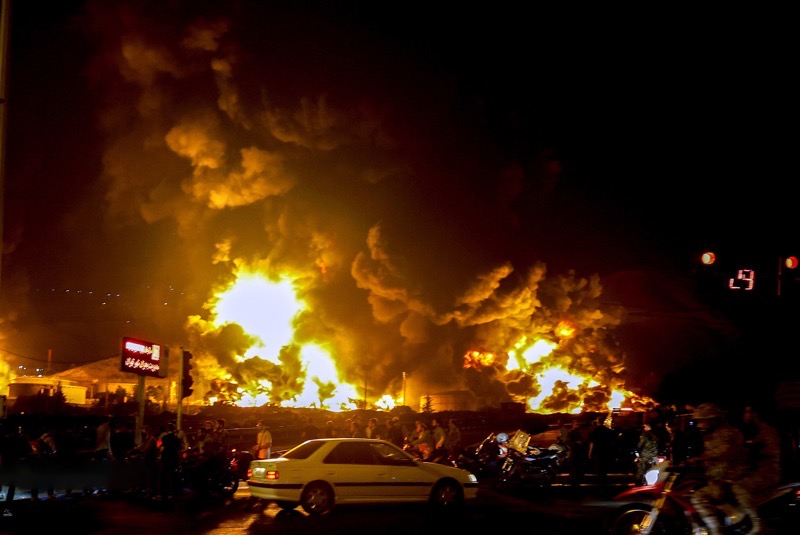
On February 28, 2026, the United States, jointly with Israel, launched Operation Epic Fury against Iran. The stated goals of the war sounded familiar to decades of American foreign policy in the Middle East: regime change, complete military surrender by the Iranians, and either the destruction or extraction of enriched uranium.
For the Iranians, however, this was a war of survival and the defence of national sovereignty. They wasted no time in expanding the conflict into the wider region by targeting Gulf nations and widening the battlefield, because otherwise they could not wage a war of attrition against the combined military power of Israel and the United States through conventional warfare. Asymmetric warfare was their only option.
On one hand, this method exposed the vulnerabilities of American power and added new dynamics to the conflict with each passing day. On the other hand, it gave Iran an unstoppable leverage: the ability to control and escalate disruption in a vital economic artery of global trade, effectively holding global energy security hostage.
Now, months into the conflict, Washington is forced to negotiate not only the nuclear issue but also the Strait of Hormuz, with Iran insisting from a position of strength that its influence over the strait will endure long after the guns have fallen silent and a deal is inked in Geneva.
Whether Iran actually closes the Strait in this conflict or in future confrontations is secondary. The strategic value Tehran has already gained lies in the possibility itself, either with a deal or without a deal.
For years, U.S. foreign policy — often viewed through the security lens of Tel Aviv —argued that Iran’s ballistic missile capability, its Axis of Resistance, and the activities of the Islamic Revolutionary Guard Corps were among the principal sources of instability and bloodshed across West Asia.
Surprisingly, these very elements now stand nowhere near the centre of the negotiating table, despite Washington having waged an unprecedented war to force Iranian capitulation, even as the conflict imposed substantial economic and logistical costs on the United States. Instead, Washington is negotiating over a factor that was never part of the original plan: Hormuz.
The uranium issue remains the core of this decades-old conflict. Despite the latest MoU offering 60 days of high-stakes negotiations to reach a final agreement on the Nuclear issue, no clear diplomatic outcome appears likely in the foreseeable future, as neither side has fundamentally altered its position. Washington remains adamant about preventing any pathway to nuclear weaponisation and seeks the transfer of enriched uranium. For Tehran, however, enrichment is an issue of sovereignty, national pride and domestic political legitimacy.
Even if a nuclear deal is somehow reached, it may ultimately be remembered as a testament to failed American foreign policy, with the possibility that Iran emerges with greater influence over the new status quo of the Strait of Hormuz and substantial economic gains. As the contours of the current MoU suggest, Washington may reach a nuclear agreement on terms reminiscent of the 2015 JCPOA, with sanctions relief and the release of frozen assets forming the basis of any upcoming nuclear deal.
The irony speaks volumes: President Trump may ultimately find himself embracing a deal strikingly similar to the one he once condemned and abandoned, all while remaining increasingly eager to exit this quagmire before it becomes another Iraq- or Afghanistan-style entanglement.
More than three months into this conflict, the global economy continues to pay a heavy price. Countries such as India have already begun to feel the consequences, with economic pressures mounting by the day.
The Strait of Hormuz is not only responsible for nearly 20 percent of global energy supplies; it is also one of the most critical and irreplaceable arteries of the global agricultural supply chain, with nearly one-third of all globally traded fertilisers passing through the Strait.
International agencies such as the United Nations (UN) have warned of a more consequential repercussion than an energy shock: an impending global food crisis. Nations such as India, whose economies remain deeply tied to agriculture, are particularly vulnerable. Disruptions to fertiliser supplies during monsoon periods risk devastating agricultural output if the crisis is not effectively mitigated.
The vulnerability of this gas-to-grain link laid bare by the crisis in the Strait of Hormuz has underscored the humanitarian costs of war—costs that are often overlooked amid the chaos of conflict, the photo-ops of diplomacy and, eventually, remembered only as casualty figures in history books.
Meanwhile, in an increasingly multipolar world, China is wielding its influence, and Russia is making its own case to counter the West on the geopolitical chessboard. Washington seeks to prevent a nuclear-threshold state, while Tehran seeks strategic autonomy and deterrence, even as the world’s energy supplies and critical economic needs remain hostage to uncertainty.
If the latest MoU evolves into a final agreement on terms broadly resembling the 2015 JCPOA, President Donald Trump risks losing domestic political legitimacy among his Make America Great Again (MAGA) supporters. The economic incentives for Tehran, already embedded in the current MoU draft, bear a striking resemblance to a deal President Trump once criticised as fundamentally flawed.
For Tehran, making major concessions while negotiating from a position of strength would be viewed as political suicide and strategic foolishness.
While the MoU marks a significant diplomatic breakthrough, the central dispute remains unresolved. As a result, West Asia—and indeed the wider world—continues to bear witness to the diplomatic saga, whose repercussions reverberate far beyond the region. And beneath the geopolitics lies the unmistakable unease of uncertainty, as the possibility of war continues to cast its shadow over an already fragile and shattered global order.
-30-
Copyright©Madras Courier, All Rights Reserved. You may share using our article tools. Please don't cut articles from madrascourier.com and redistribute by email, post to the web, mobile phone or social media.Please send in your feed back and comments to editor@madrascourier.com