Israel and Iran have been enemies for decades. However, they avoided direct military confrontation. They fought through proxies, covert operations, assassinations, cyberattacks, and carefully calibrated displays of force.
Behind that was the understanding that crossing certain thresholds risked unleashing a regional war that neither side could control. But those thresholds are disappearing.
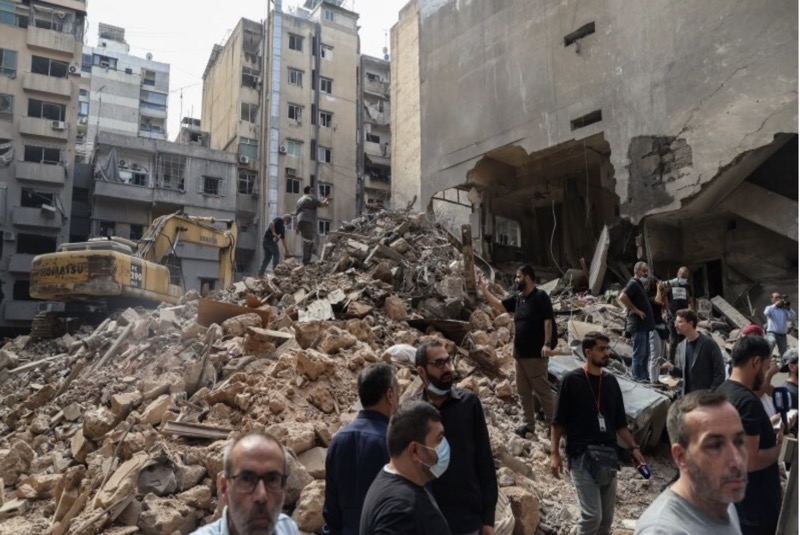
The latest exchange of fire between Israel and Iran began with an Israeli strike on Beirut. It quickly escalated into direct missile attacks and retaliatory strikes between Tehran and Jerusalem.
Within hours, President Trump publicly urged restraint and declared that both sides were seeking an immediate ceasefire. However, the events narrate a different story.
Iran felt compelled to respond to an attack on its most important regional ally. Israel felt compelled to respond to Iran’s response. Both governments acted in ways that suggested they were less concerned with de-escalation than with demonstrating resolve.
The result was a familiar cycle: military action justified as deterrence, followed by retaliation justified as necessity, followed by diplomatic appeals to prevent escalation that previous actions had made more likely. This moment reveals the changing dynamics between Washington and Jerusalem.
For years, analysts assumed that American leverage over Israel remained a defining reality. The United States provides military assistance, diplomatic protection, intelligence cooperation, and strategic backing on a scale unmatched by any other relationship. Conventional wisdom held that when Washington issued a clear instruction, Israeli leaders would comply, even if reluctantly.
Recent events suggest a complicated reality.
Trump repeatedly presented himself as the architect of regional diplomacy. He insisted that negotiations with Iran are progressing, publicly expressed confidence in ceasefire arrangements, and portrayed himself as the indispensable figure capable of imposing order.
However, the credibility of such claims depends not on rhetoric but on outcomes. When Israel launched strikes despite America’s calls for restraint, and when Iran responded despite ongoing diplomatic efforts, the limits of Trump’s influence became clear. This is not merely a personal problem for Trump. It is a structural challenge for American foreign policy.
Washington’s approach to the Middle East has rested on an assumption that military superiority and diplomatic pressure can shape the behaviour of allies and adversaries. However, the current conflict demonstrates that when the objectives of local actors fundamentally differ from those of the United States, the conflict escalates.
For Israel, the central objective remains sustained military pressure on its enemies. From Benjamin Netanyahu’s perspective, Hezbollah remains a threat regardless of diplomatic considerations.
Iran’s support for the group is viewed as a core strategic challenge. Any ceasefire that leaves Hezbollah intact risks being seen in Jerusalem as temporary rather than meaningful.
For Iran, the calculation is clear. Hezbollah is one of the most significant instruments of Iranian influence in the Arab world. Tehran has spent decades cultivating the organisation, investing political capital, military resources, and financial support in its development. Abandoning Hezbollah would undermine a central pillar of Iran’s regional strategy.
Neither side, therefore, views the Lebanese front as a peripheral theatre. It exposes the weakness of diplomatic frameworks that attempt to separate conflicts that the principal actors regard as inseparable.
American negotiators may seek to compartmentalise issues, isolating nuclear questions from regional security concerns or distinguishing between Iranian and Lebanese fronts. But the participants in the conflict increasingly reject those distinctions.
Iran has repeatedly linked broader ceasefire arrangements to developments in Lebanon. Israel has repeatedly insisted on preserving freedom of action against Hezbollah regardless of other diplomatic agreements. The result is a negotiation process built upon assumptions that neither side fully accepts.
The implications extend far beyond the battlefield.
One of the most striking features of the current crisis is the extent to which military successes have failed to generate lasting political outcomes. Israel has demonstrated extraordinary operational reach.
It has shown an ability to strike targets across multiple countries, project power deep into hostile territory, and impose high costs on its adversaries. However, these tactical achievements have not produced a strategic resolution.
This is becoming a recurring pattern. Military operations achieve immediate objectives but leave underlying political realities largely unchanged. Hezbollah remains a significant force. Hamas continues to exercise influence in areas beyond direct Israeli control. Iran retains important elements of its military and strategic infrastructure. The battlefield delivers victories; the broader conflict remains unresolved.
History offers many examples of this phenomenon. Superior military capability can destroy targets, eliminate commanders, and disrupt networks. It cannot create political settlements. Strategic success requires translating force into sustainable political arrangements. Such a transition has proven elusive.
For Netanyahu, the challenge is acute. As elections approach, pressure is mounting from multiple directions. Supporters demand decisive outcomes commensurate with the scale of military operations. Critics question whether years of conflict have produced proportional gains. The expectation created by ambitious military objectives is that those objectives will eventually be fulfilled. When they are not, tactical victories begin to look less like triumphs and more like evidence of strategic drift.
Meanwhile, another shift is unfolding that may prove even more consequential in the long term: American public opinion toward Israel is changing.
For decades, support for Israel functioned as a rare area of broad bipartisan consensus in American politics. That consensus has weakened considerably. Younger voters increasingly view the conflict through a different lens than previous generations. Sympathy for Palestinians has risen. Scepticism toward Israeli policy has expanded beyond traditional partisan boundaries. What was once a largely settled political issue has become a subject of debate.
These changes do not immediately alter military alliances or diplomatic commitments. Governments often maintain longstanding strategic relationships despite fluctuations in public sentiment. However, political trends matter because they shape the environment in which future decisions are made. The erosion of public support does not produce instant consequences. It changes the trajectory of future policy.
This may explain the increasingly visible tensions between Washington and Jerusalem. American officials appear more willing than in previous eras to express frustration with Israel’s decision-making. Leaks, briefings, and public disagreements suggest growing concern within parts of the American establishment that Israeli actions are complicating broader diplomatic objectives. Such disagreements are not unprecedented. What is new is the degree to which they are occurring against a backdrop of shifting domestic opinion.
Despite these tensions, the fundamental alliance remains intact. American military cooperation with Israel continues at a level that underscores a deep institutionalised relationship. Public disagreements may generate headlines, but they have not yet translated into a fundamental strategic rupture. That is what makes the current situation so dangerous.
Both governments appear to believe that the alliance can absorb repeated episodes of friction without suffering damage. Alliances often survive disagreements that would destroy relationships. But alliances are not indestructible. They depend on a continuing convergence of interests. When strategic priorities begin to diverge, even strong partnerships can come under strain.
The deeper problem is that neither Israel nor the United States has underscored how this conflict ends. Washington appears focused on stabilisation, negotiation, and containment. Israel remains focused on degrading threats through sustained military pressure. Those goals overlap in some areas but diverge in others. The longer the conflict persists, the harder it is to disguise that divergence.
The exchange of fire this week may ultimately be remembered as a minor episode. Casualties were limited. The confrontation appears, for now, to have stopped short of a wider war. Markets stabilised after initial panic. Diplomats returned to calls for restraint.
But the episode exposes a region in which old rules are eroding fast. It reveals a United States with diminishing control. It highlighted an Israeli government capable of projecting military power but struggling to convert that power into strategic gains. And it underscored an Iranian leadership that remains determined to defend its regional network despite extraordinary pressure.
Every actor continues to believe that escalation can be managed. History suggests otherwise. The danger in prolonged conflicts is not always the battle that leaders intend to fight. It is the larger war that emerges from the accumulation of smaller confrontations, each justified as limited, necessary, and temporary.
The missiles launched this week did not alter the balance of power in the Middle East. They revealed a gap between military action and political strategy. That gap is becoming one of the defining features of the region’s conflicts. Until it is closed, ceasefires will remain fragile, diplomacy will remain reactive, and every temporary calm will carry within it the possibility of the next crisis.
-30-
Copyright©Madras Courier, All Rights Reserved. You may share using our article tools. Please don't cut articles from madrascourier.com and redistribute by email, post to the web, mobile phone or social media.Please send in your feed back and comments to editor@madrascourier.com