In Oslo this week, as Narendra Modi walked away from the podium, a Norwegian journalist asked Narendra Modi a simple question: “Why don’t you take some questions from the freest press in the world?” Mr Modi did not respond. The moment went viral because it touched a raw nerve. India’s prime minister has not held a single solo press conference in India since taking office in 2014.
The exchange was embarrassing because it exposed how public life in India has transformed in the last decade. The world’s biggest democracy still has elections, noisy television debates and millions of opinionated citizens. However, the space for independent journalism has dramatically shrunk over the past decade. Violence against reporters, pressure from the police and tax authorities, corporate takeovers of media organisations, online intimidation and the growing alignment between big business and the ruling Bharatiya Janata Party (BJP) have fundamentally changed the character of India’s press.
The decline has been gradual. Nonetheless, the slide has been stark. Reporters Without Borders (RSF), which publishes the World Press Freedom Index, ranks India 157 out of 180 countries in 2026, placing it in the “very serious” category. Norway, by contrast, remains number one. RSF points to “violence against journalists”, concentrated ownership and increasingly overt political alignment among media outlets.
Mr Modi’s defenders reject such rankings as “Western hypocrisy.” The Government of India insists that the country remains a vibrant democracy, with thousands of newspapers and television channels. In purely numerical terms, this may sound to be true. India’s media market is vast. However, the number of press outlets does not imply press independence. The problem is in the shrinking autonomy of institutions that scrutinise power.
Previous Prime Ministers of India faced questions and were criticised by journalists. Mr Modi prefers carefully choreographed interviews with friendly anchors. Television appearances resemble public relations exercises. Film actors or television anchors ask ridiculous questions such as “Do you like to eat mango”? Or, “Do you keep a wallet with you”? “Do you ever get tired of working?”
Critical journalists are not granted access. The Prime Minister communicates through social media videos or a drab radio programme, “Mann Ki Baat” — where people cannot ask questions.
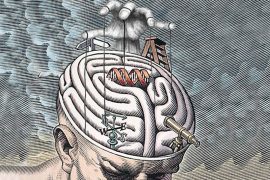
The consequences ripple through the wider media ecosystem. In democracies, political leaders signal acceptable behaviour. When a Prime Minister refuses open questioning for years, it communicates that adversarial journalism is unwelcome. Many media organisations respond by becoming more cautious.
Indeed, hundreds of journalists investigating corruption, communal violence or criminal networks have been attacked or killed over the past decade. Local reporters are especially vulnerable because they lack the protection of large international attention. In rural India, journalists who expose illegal mining, land grabs, or political corruption often work with minimal institutional support. Some have been arrested under anti-terror or sedition laws; others have faced mob violence.
The murder of the journalist Gauri Lankesh in 2017 became emblematic of the dangers confronting outspoken reporters. Ms Lankesh, a fierce critic of Hindu nationalism and misinformation, was shot dead outside her home in Bengaluru. Her killing shocked India’s liberal middle class, revealing how polarised the country had become. Online supporters of the ruling party celebrated her death openly on social media before public outrage forced some to retreat.
The problem is broader than isolated killings. Violence works because it creates a culture of caution. Editors begin asking whether certain investigations are worth the risk. Reporters self-censor. Young journalists migrate into safer professions such as corporate communications. And over time, the boundaries of journalism shrink.
If intimidation is one pillar of media control, ownership is another. The Indian media has experienced a remarkable concentration of power in the hands of a few billionaires, closely aligned with the government. The most consequential example was the Adani Group’s takeover of NDTV, long regarded as one of India’s last major independent television networks, in 2022.
Gautam Adani, the infrastructure tycoon close to Mr Modi, expanded rapidly during the BJP era into ports, energy, airports and media. RSF described the acquisition of NDTV as signalling “the end of pluralism” in India’s leading television news sector. Several prominent NDTV journalists resigned after the takeover.
The significance of the NDTV case lies not merely in ownership but in incentives. Large conglomerates that depend on government contracts, licences or regulatory approvals have little reason to encourage journalism that antagonises the state. India’s media industry has become financially fragile, with advertising revenues increasingly dependent on corporations and governments. Editorial independence weakens when survival depends on political goodwill.
Television news clearly illustrates the transformation. India’s prime-time media now resembles political theatre. Anchors shout down opposition figures, amplify government talking points and frame dissent as “anti-national”—whatever that means. Debates about unemployment, inflation or institutional decay are replaced by spectacles involving religion, nationalism and Pakistan.
This style of journalism has proved commercially successful. Outrage attracts viewers. Nationalism sells. But it also serves political power by redirecting public attention away from uncomfortable questions. Critics have coined the term “godi media”—meaning, “lapdog media”—to describe channels that are loyal to the government.
Digital media initially appeared to offer an escape. Independent outlets such as Scroll, The Wire, Newslaundry, Alt News, The India Forum and Madras Courier built audiences through investigative reporting, fact-checking, and in-depth analysis. However, they have faced immense pressure. Journalists and founders have been raided by tax authorities or questioned by police. Mr Modi’s troll army routinely discredits independent journalists as “presstitutes,” “urban naxals,” and “anti-nationals.”
Meanwhile, internet censorship has grown sophisticated. India regularly orders the blocking of websites, documentaries, and social media content, often invoking national security or public order. Researchers studying Indian internet censorship have documented extensive blocking practices among internet service providers.
The Modi government argues that regulation is necessary to combat fake news, communal violence and online extremism. Ironically, India’s digital sphere is flooded with misinformation primarily from Modi’s troll army. Rules ostensibly designed to control disinformation have become tools against inconvenient reporting. Broad powers granted to authorities have been consistently abused.
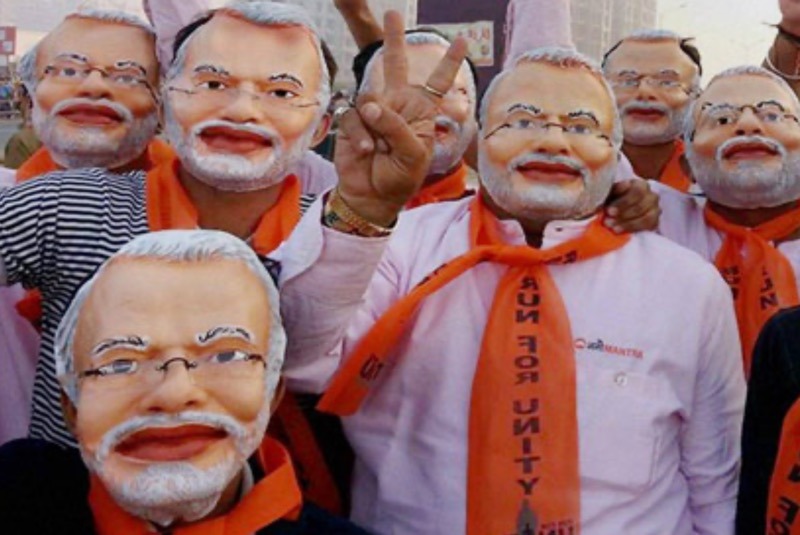
Online intimidation has become another weapon. Female journalists, particularly those critical of the government, face rape and death threats on social media. Muslim reporters are especially targeted. Modi’s troll armies, euphemistically called “IT Cell,” run harassment campaigns within hours. The goal is to exhaust and intimidate.
Ironically, Modi himself rose partly through skilful media management. In the early 2000s, after the Gujarat pogrom in which thousands of Muslims were massacred, he cultivated a direct connection with supporters through social media. As Prime Minister, he perfected this model. Traditional journalism became less important because communication flowed directly from leader to citizen through rallies, apps, YouTube clips and social media.
This reflects a global trend. Politicians from Donald Trump to Recep Tayyip Erdogan have tried to weaken media institutions while cultivating personal brands. But India’s case is distinctive because of the scale of its democracy and the weakness of institutional safeguards. Courts move slowly. Opposition parties are fragmented. Much of the business elite prefers accommodation over confrontation. In such an environment, the press becomes one of the few remaining checks on executive power.
Democracies do not turn into dictatorships overnight. Decline happens incrementally: raids, lawsuits, takeovers, intimidation, harassment, murders and a Prime Minister who never takes questions. Each incident appears manageable in isolation. Together, they change the trajectory of press freedom.
The Norwegian journalist’s question lingered because it highlighted a simple fact. Confident governments answer questions—insecure ones stage-manage appearances.
For decades, India prided itself on having a dynamic, robust press. Now, that reputation is fading. The danger is not merely for journalists. When the media becomes timid, citizens lose their ability to make informed choices. Corruption flourishes, masquerading as national interest. Institutions decay. Democracies become spectacles in which elections continue, but accountability weakens.
India possesses all the ingredients for a truly formidable press: immense linguistic diversity, a huge audience, talented reporters, and a constitutional tradition that once protected dissent. Tragically, it lacks is the confidence to tolerate uncomfortable questions.
In Oslo, one Norwegian reporter asked the question anyway. Millions of Indians were left wondering why it sounded so unusual.
-30-
Copyright©Madras Courier, All Rights Reserved. You may share using our article tools. Please don't cut articles from madrascourier.com and redistribute by email, post to the web, mobile phone or social media.Please send in your feed back and comments to editor@madrascourier.com