Prime Minister Narendra Modi’s recent plea, asking Indian citizens to postpone buying gold, reduce foreign travel, conserve fuel, and adopt work-from-home habits to save energy and foreign exchange reserves, presents a worrying scenario. In a country where the government measures political success by rising consumption, the sudden appeal for restraint sounded like a warning of things to come.
For many Indians, the message landed with a sense of unease. Gold purchases are woven into weddings and savings. Overseas travel is an aspiration of the growing middle class. Fuel consumption is tied to economic mobility. When a government that promised growth, good governance, and development begins asking citizens to consume less, markets inevitably ask whether the economy is under more pressure than officials admit.
That anxiety did not emerge overnight. It is the culmination of nearly a decade of policy shocks, uneven reforms and mounting vulnerabilities that began in November 2016.
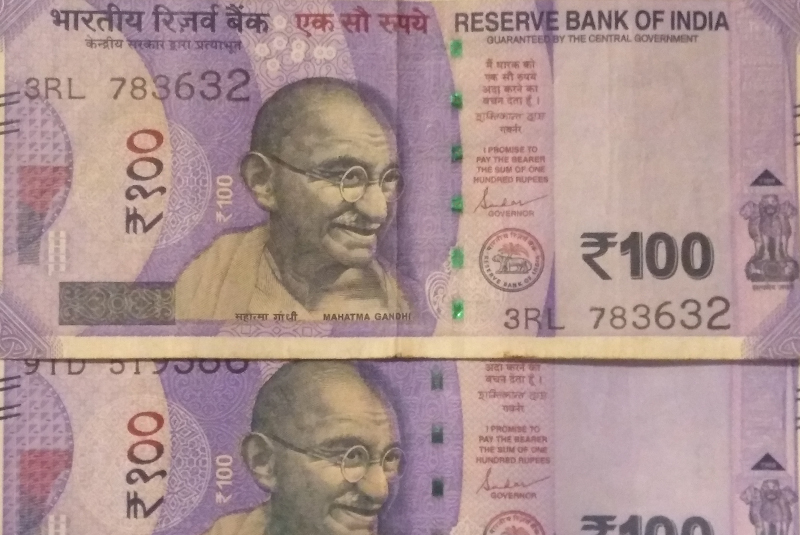
Demonetisation was presented as a moral crusade. Narendra Modi declared that ₹500 and ₹1,000 notes — then accounting for roughly eighty-six percent of India’s currency in circulation — would cease to be legal tender. The policy was sold as an assault on black money, counterfeit currency and corruption. Instead, it became one of the largest self-inflicted wounds in modern economic history.
India’s vast informal economy, still heavily dependent on cash, froze. Small manufacturers shut workshops. Construction sites emptied. Farmers struggled to sell produce. Migrant labourers were stranded without wages. Long queues outside banks became the defining image of the period. Eventually, nearly all the invalidated currency returned to the banking system, undermining the central claim that illicit wealth would be extinguished.
The long-term damage was deeper. Demonetisation accelerated distrust in policy predictability. Small businesses — the largest source of employment in India — never fully recovered. The economy increasingly tilted towards large corporations, which had easier access to formal credit and digital payments infrastructure. Productivity suffered. So did employment growth.
The Modi government insists that digitisation, tax formalisation and welfare transfers modernised the economy. However, it is a false assumption. Even after a decade, the economic trauma inflicted by demonetisation still carries costs.
Those costs are now colliding with a harsher global environment.
India remains heavily dependent on imported energy. Roughly eighty five per cent of its crude oil is imported. And so, every increase in global oil prices widens the trade deficit, weakens the rupee and feeds domestic inflation. The ongoing instability in West Asia has therefore exposed structural weaknesses that the Modi government has failed to address.
Fuel inflation is particularly toxic in India because it spreads quickly across the economy. Higher diesel prices raise transportation costs, which in turn raise food prices, squeezing household consumption. Cooking gas becomes costlier. Fertilisers become expensive. Airlines raise fares. For poor households, inflation is not an abstract macroeconomic statistic; it is the weekly struggle for survival.
The government’s response is reactive rather than strategic. Fuel taxes were aggressively increased during periods of lower crude prices after the pandemic, allowing the state to bolster revenues. But this also meant consumers never fully benefited from the decline in global oil prices. When prices rose again, households absorbed the pain with little fiscal cushion left.
Meanwhile, the rupee has emerged as one of Asia’s weakest-performing currencies. A weaker rupee makes imports expensive, further intensifying inflationary pressure. Officials often argue that all emerging-market currencies face similar stress when the dollar fluctuates. Yet India’s vulnerabilities are amplified by persistent trade deficits, heavy energy dependence and slowing foreign capital inflows.
That last factor is the most politically sensitive.
Foreign institutional investors, once enthusiastic about the “India growth story,” have become increasingly cautious. Billions of dollars have flowed out of Indian equity markets in recent months. Reports estimate that foreign investors have pulled roughly $21bn from Indian markets amid concerns over valuations, global uncertainty and weakening earnings momentum. The exits matter because they reveal declining confidence in the long-term trajectory of the Indian economy.
For years, India benefited from a powerful narrative advantage. China’s slowdown, geopolitical tensions and Western efforts to diversify supply chains created an opportunity for India to position itself as the next manufacturing giant. Mr Modi’s government promoted programmes such as “Make in India” and production-linked incentives with enormous fanfare.
The results, however, have been disastrous. Manufacturing’s share of GDP has not surged. Job creation remains despicably poor for a country where millions of young people enter the workforce each year. Exports remain vulnerable. Many global firms still view India as bureaucratically cumbersome despite reforms. Unemployment, therefore, remains one of Modi government’s greatest political liabilities.
Official statistics and independent surveys consistently point towards elevated youth unemployment and underemployment. Graduates increasingly compete for low-level government jobs. Recruitment exams are routinely delayed or cancelled amidst paper leaks, bribery and administrative chaos. Even highly educated urban workers face insecurity as private investment slows.
The irony is difficult to miss. Modi rose to power by promising efficiency, decisiveness and economic dynamism. He cultivated the image of a leader who would unleash entrepreneurship and reduce bureaucratic paralysis. Yet after more than a decade in office, India’s economy is trapped in his incompetence.
The contradiction is visible in infrastructure policy as well.
Capital expenditure has become the administration’s preferred economic instrument. New expressways and railway corridors are politically potent symbols. But infrastructure deals were awarded to Modi’s cronies, who delivered spectacularly poor-quality work that broke down months after inauguration. More importantly, infrastructure alone cannot sustain prosperity if private investment and household demand weaken simultaneously.
Indeed, one criticism increasingly voiced by economists is that growth under Mr Modi has become excessively uneven. Wealth concentration has intensified. Modi’s cronies have expanded rapidly while smaller firms struggle with compliance burdens, credit shortages and inconsistent demand. Wage growth for ordinary workers remains subdued.
This divergence explains why headline GDP numbers feel disconnected from everyday experience. On paper, India may still be a fast-growing economy, but growth without sufficient employment generation creates political and social strain. Consumption eventually weakens when income insecurity spreads.
The government’s appeals for economic restraint therefore carries a message. Asking citizens not to buy gold or travel abroad implicitly acknowledges pressure on foreign exchange reserves and external balances. Encouraging work-from-home arrangements to conserve fuel suggests anxiety over imported energy costs.
Governments, during periods of external stress, often encourage conservation. The problem lies in the broader context. Such appeals come after years in which the administration projected unwavering confidence about India’s economic trajectory. The sudden shift in tone jars with the triumphant rhetoric that has dominated official communication.
Critics argue that the Modi government has also become overly centralised in economic decision-making. Major policy announcements are often driven from the Prime Minister’s Office with limited institutional consultation. The demonetisation itself was carried out with extraordinary secrecy and speed. Agricultural reforms introduced in 2020 — eventually repealed after mass protests — similarly reflected a tendency towards top-down policymaking without adequate political consensus.
India’s economic story under Modi stands as an example of economic mismanagement and crony capitalism. The danger is that the narrative sustaining his economic credibility may be weakening faster than expected. Inflation remains stubborn. Employment generation is disappointing. The rupee is struggling. Foreign investors are retreating. Consumption pressures are mounting. And the government is now urging citizens to consume less.
In political terms, this represents a profound shift. Modiism was built partly on optimism — the promise that India stood on the threshold of unstoppable ascent. The language of sacrifice and restraint belongs to a different political mood altogether.
That may explain why the recent appeals unsettled markets and opposition parties alike. Governments rarely ask citizens to avoid buying gold unless they are worried about dollars leaving the country. They rarely promote work-from-home to save fuel unless energy insecurity feels acute. And they rarely discourage foreign travel unless external balances appear vulnerable.
A decade after demonetisation, India’s economy still carries the scars of abrupt policymaking. The pattern is repetitive: dramatic announcements followed by difficult adjustments borne disproportionately by ordinary citizens. Amidst this, Modi’s cronies minting money.
The question confronting India now is not whether the country can grow. The question is whether growth under the current model is becoming too fragile, too unequal and too dependent on political spectacle rather than institutional stability.
That is a far more difficult challenge than asking Indians to buy less gold.
-30-
Copyright©Madras Courier, All Rights Reserved. You may share using our article tools. Please don't cut articles from madrascourier.com and redistribute by email, post to the web, mobile phone or social media.Please send in your feed back and comments to editor@madrascourier.com