The African Union (AU) was born in July 2002 as a new union representing more than 50 African states, following the dissolution of the Organisation of African Unity, established by 26 countries in 1963.
I witnessed the ceremony, held in a large stadium in Durban, as part of the Indian delegation. As a young Joint Secretary in charge of a unified Africa Division, I received immense respect from African interlocutors. More importantly, it was an eye-opening experience for me to see how Africa was striving to shape its own destiny.
Simultaneously, African leaders were setting up the New Partnership for Africa’s Development (NEPAD), whose summit we had attended earlier. It was a moment charged with optimism and ambition.
Three years later, in 2005, I received my first ambassadorial posting to Addis Ababa, Ethiopia. Addis Ababa was not only Ethiopia’s capital but also the headquarters of the revitalised African Union. The AU had begun accepting accreditation from ambassadors specifically tasked with engaging the organisation. Serving at a time when Ethiopia was in a phase of resurgence, while the AU was simultaneously developing its own institutional personality, made it a uniquely significant assignment.
A year earlier, in 2004, the President of India, A.P.J. Abdul Kalam, had visited Sudan, Tanzania, and South Africa. In his address to the Pan-African Parliament, he declared that India would support Africa through technology-driven cooperation in education and healthcare. His vision was to establish a continent-wide tele-education and telemedicine initiative connecting India and Africa. By the time I arrived in Addis Ababa, it had been decided that this ambitious project would be implemented in partnership with the African Union, making it one of the largest and most innovative undertakings associated with the AU at that stage of its development.
When the AU was established, it had already inherited partnership arrangements with countries and institutions, including Japan, the European Union, France, and China. However, the Chairperson of the African Union Commission, former President of Mali, Alpha Oumar Konaré, had a much broader vision. He wanted Africa to expand its partnerships, especially with emerging powers. In several conversations with me, he indicated his personal desire for India to become one of the first new strategic partners under this envisioned framework. He also considered bringing in Brazil, Turkey, and others.
To institutionalise this idea, the AU drafted a resolution on partnerships, which was adopted at the July 2006 summit in Banjul, Gambia. Once again, I was present as part of the Indian delegation. During the summit, we held extensive meetings with African partners and with the AU Commission. The Commission was spearheading the partnerships initiative and repeatedly emphasised that India was viewed as a pivotal partner for Africa.
Across the continent, there was considerable appreciation for Indian small and medium enterprises, which had invested in African economies, generated employment, and transferred technology. Several heads of state and ministers had an easy familiarity with the Indian delegation
At the same summit, however, India’s immediate diplomatic attention was on Dr Shashi Tharoor’s candidature for the post of United Nations Secretary-General. When his candidacy was announced, I was asked to explore ways for him to engage African leaders. I suggested that he attend the AU Summit in Banjul. He undertook a complicated journey involving multiple connecting flights to arrive on time. His interactions with African leaders also buttressed the image of India as a valuable partner.
After our return to Addis Ababa from Banjul, with the AU partnership framework now firmly established, Konaré called me to discuss the next steps. He wanted to know how India and the AU could proceed toward a summit-level engagement. I asked him to explain his vision in detail.
Konaré argued that India’s investments in Africa — expanding trade ties, especially through the Pan-African e-Network Project — had earned India enormous credibility on the continent. He also acknowledged India’s long-standing contribution to UN peacekeeping operations in Africa.
In his conception, summits between Africa and individual partner countries should remain compact and effective. Following what came to be known as the “Banjul format,” participation would be restricted to 15 African countries: 8 chairs of regional economic communities, the Chairperson of the African Union, the Chairperson of the AU Commission, and the 5 founding countries of NEPAD. This, he believed, would ensure broad regional representation while preserving efficiency.
My task was to persuade New Delhi to invite Konaré to India. His visit finally took place in December 2006. His principal interlocutor was the External Affairs Minister, Pranab Mukherjee. However, because President Kalam’s vision for PANEP was being implemented through the AU, we succeeded in arranging a meeting between Konaré and President Kalam.
During the visit, Konaré toured the facilities of TCIL, from where the Pan-African e-Network Project was being coordinated. He also visited the IGNOU studios through which online education sessions were being transmitted to different parts of Africa. He was deeply impressed by the possibilities of this technology and repeatedly praised the initiative during subsequent meetings. My familiarity with the project as its co-chair helped.
Konaré promised me that upon his return to Addis Ababa, he would personally write to all African heads of state, urging them to support the implementation of PANEP. This commitment gave tremendous momentum to the project, which had moved slowly in some countries but rapidly in others.
The crucial moment of the visit came during Konaré’s meeting with Pranab Mukherjee. Until then, there was some hesitation within sections of the Indian establishment about committing to an Africa summit. The concern was that the AU might eventually expect a gathering involving all fifty-plus African countries, creating a massive logistical burden.
Throughout the visit, Konaré repeatedly asked me whether India was genuinely interested in the summit idea. I could not give him a definitive answer, but I encouraged him to make his strongest possible case.
In the meeting, attended by Minister of State Anand Sharma and senior officials, Konaré laid out his vision for India-Africa engagement. He emphasised Africa’s appreciation for India’s developmental role on the continent. Then, toward the conclusion, he calmly said: “I will bring fifteen heads of state, and we can have a summit.”
Pranab Mukherjee, visibly surprised, immediately asked, “Only fifteen countries will participate?” When Konaré confirmed that this was the Banjul format approved by the AU, Mukherjee turned to us and said, “This is eminently doable. Let’s do it.” That single moment transformed the atmosphere. From then on, all of us became committed advocates of the India-Africa Forum Summit process.
The meeting with President Kalam almost didn’t happen because of the traffic in Delhi. Konaré, a warm and highly conversational personality, was delayed at a gathering with the African Diplomatic Corps at the Ghana High Commission in Chanakyapuri. Despite repeated reminders, he lingered in conversation until I finally had to escort him out personally. Unfortunately, we were soon trapped in a severe traffic jam near Teen Murti House.
Konaré became increasingly anxious and kept asking me whether the President would wait. I had no answer, though I fervently hoped he would. Finally, our security officer cleared a path with the help of the traffic police, and we rushed to Rashtrapati Bhavan.
Naturally, I received several unhappy looks from senior officials for the delay. When I introduced Konaré to President Kalam, he immediately apologised and even remarked that I had repeatedly urged him to leave earlier, thereby absolving me of responsibility.
President Kalam was keen to meet Konaré because the AU was implementing his vision for PANEP. Their discussion focused not on summit diplomacy but on the transformative potential of tele-education and telemedicine for Africa. Konaré was effusive in his praise for the project and emphasised its potential to advance African development. Kalam was visibly pleased that his vision had found such resonance across the continent.
Upon returning to Addis Ababa, Konaré fulfilled his promise. He wrote personally to African heads of state, highlighting both the importance of PANEP and his intention to engage India under the AU’s new partnership framework.
Subsequently, the AU organised a special session in which the ambassadors of India, Brazil, and China were invited to present their respective visions for partnership with Africa. By then, China, despite initially being outside the AU framework because of its separate FOCAC process, had become interested in engaging the AU directly.
I was given pride of place at the meeting following Konaré’s successful visit to India. African interlocutors expressed immense satisfaction with India’s development cooperation programs, especially ITEC and PANEP. The Brazilian representative also received a warm reception, though Brazil’s engagement remained on a smaller scale.
The Chinese ambassador, however, faced pointed criticism. African representatives questioned why the Forum on China-Africa Cooperation excluded the African Union as an institutional partner. Indeed, the AU later passed a resolution criticising China’s approach.
The consequences were immediate. Realising the importance of the AU, China responded in characteristic fashion by offering to construct a new headquarters building for the African Union Commission in Addis Ababa, complete with an adjoining conference facility. Ethiopia generously provided the land, and by 2011, the impressive complex was completed.
In retrospect, that AU partnership discussion marked an inflexion point not only for India-Africa relations but also for China’s subsequent engagement with the AU.
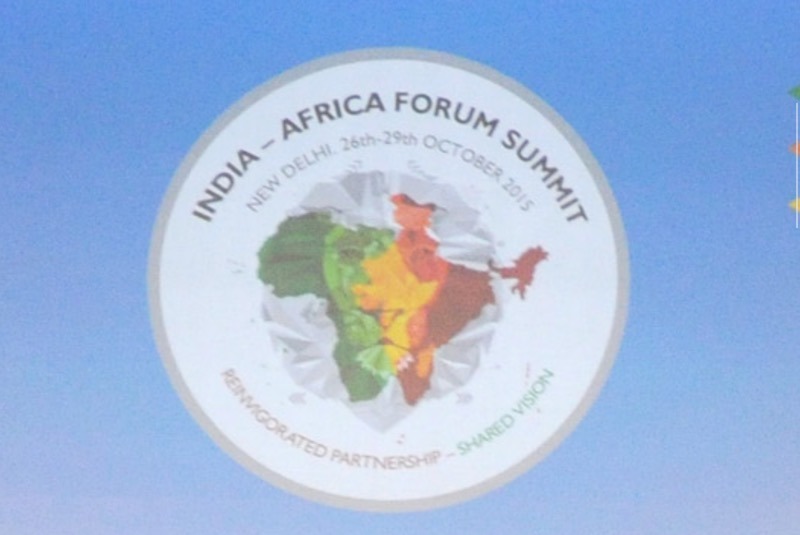
Finally, in 2008, the first India-Africa Forum Summit (IAFS) was held in New Delhi under the Banjul format at the request of the African Union. Alongside the designated participants, we included Ethiopian Prime Minister Meles Zenawi in his capacity as Chair of NEPAD and an influential African statesman.
The summit was a landmark moment. India announced major initiatives, including expanded lines of credit of $5.4 billion, grants worth $700 million, and a substantial increase in training programs and scholarships under ITEC. These deeply impressed African leaders many of whose countries were emerging from debt relief.
For me personally, being present at that summit as Ambassador to the AU was deeply satisfying. Years of diplomatic effort, persuasion, and institution-building had culminated in a durable framework for India-Africa engagement. The India-Africa Forum Summit process has continued ever since, and with IAFS-IV scheduled for May 2026, the relationship continues to evolve with renewed expectations and significance.
-30-
Copyright©Madras Courier, All Rights Reserved. You may share using our article tools. Please don't cut articles from madrascourier.com and redistribute by email, post to the web, mobile phone or social media.Please send in your feed back and comments to [email protected]