
Technology reshapes human society. Undoubtedly, Artificial Intelligence (AI) is reshaping the way we access, analyse, and articulate information. If one scans through LinkedIn posts, Twitter feeds, or social media communications, they would inevitably find reams and reams of ‘content’ generated by machines. Some of it is sloppy; some of it is good. It is also increasingly becoming difficult to distinguish between what is written by humans and what is written by machines.
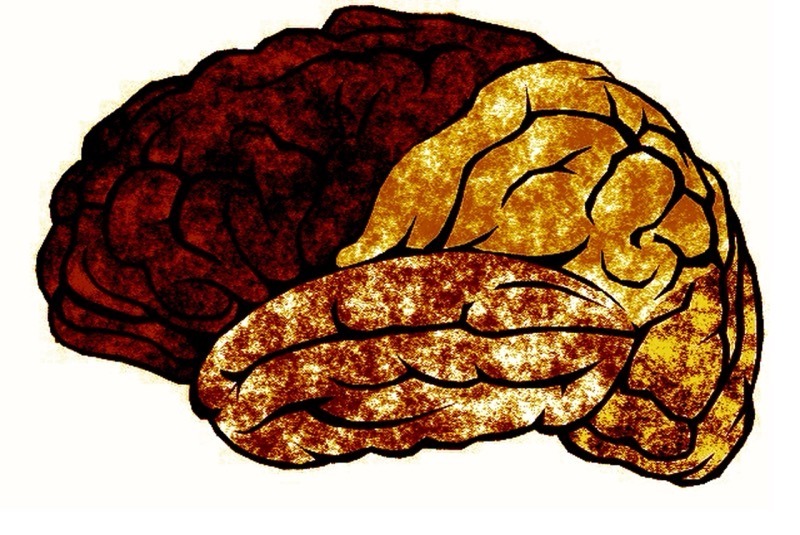
AI is replacing—at a dramatic pace—tasks that many people once performed themselves. Many of these tasks are cognitive functions—thinking, writing, creating, and analysing. Unfortunately, when cognitive skills, like all other skills, are not used regularly, they decline. Researchers refer to this as “cognitive atrophy.” There is a different term for it in casual language: “Brain Rot.”
There is also the very real risk of getting things wrong. Generative AI operates by predicting likely words from patterns in vast datasets. When asked to write an email or give advice, its responses can sound logical, but it does not understand or determine what is true. That is also primarily because the prompts we give—the act of codifying knowledge—are devoid of context. Machines, unlike humans, lack tacit knowledge.
There are numerous examples which suggest that people who use AI feel that it is making them “lazy” or “stupid.” A recent study found that higher workloads and time pressure is driving increased use of generative AI among university students. Moreover, anecdotal evidence indicates that greater AI use is associated with higher levels of procrastination, memory loss, and poorer academic performance.
Misuse of generative AI tools, such as using them to cheat on exams, will undermine crucial cognitive skills, including critical thinking, creativity, and ethical decision-making.
One may begin to recognise this atrophy in one’s own life. A sign might be moving away from creating an initial, unpolished version of a task. Not long ago, one might have started with a rough draft—a messy, human brainstorming process on a whiteboard, a notepad, or even the back of a napkin.
There may now be a growing comfort with a “prompt-and-accept” reflex, where solutions are requested and accepted rather than developed through personal effort. If the first instinct for every task is to ask an AI tool for a starting point, the most vital part of thinking is skipped. This stage involves structuring ideas, applying logic, and generating new concepts that create genuine engagement.
Another indication of atrophy is a reduced tolerance for frustration. If, after only a short period of mental effort, there is an urge to turn to AI for suggestions, the capacity to sit with ambiguity, self-doubt, and difficulty may be diminishing. Impatience limits the cognitive space needed for divergent thinking, which is the ability to generate multiple unique solutions.
There may also be a tendency to accept AI-generated output without questioning its validity, or an increasing inability to trust one’s own instincts without verification from an AI tool. This reflects a shift from being a decision-maker to becoming a decision-approver, or even a passive participant in one’s own thinking process.
Addressing this cognitive atrophy requires moving toward responsible autonomy. This involves reclaiming the ability to think and make decisions independently rather than outsourcing judgment to AI systems. It requires intentionally reintroducing friction into daily routines, embracing uncertainty, and learning through the process of thinking, even when mistakes occur.
Committing to a period of deep thinking before using AI can help restore cognitive engagement. Using pen and paper to map out problems, potential solutions, risks, and stakeholders encourages ownership of the final output.
Maintaining a sceptical approach is equally important. Treating AI as an unreliable source that may produce convincing but flawed outputs encourages critical evaluation. Actively searching for errors or weaknesses in its responses shifts the mind from passive consumption to active creation and analysis.
Creating dedicated processes for independent thinking is essential. Identifying tasks completed without AI assistance helps preserve the ability to navigate complex, open-ended challenges. Over time, this practice can be expanded in professional environments, allowing space for independent thought.
Finally, reflecting on whether a tool enhances understanding or increases speed helps determine its value. If AI reveals insights that would not have been noticed otherwise, it may strengthen thinking. However, if it replaces an existing skill without providing a new capability, it risks contributing to cognitive decline.
-30-
Copyright©Madras Courier, All Rights Reserved. You may share using our article tools. Please don't cut articles from madrascourier.com and redistribute by email, post to the web, mobile phone or social media.Please send in your feed back and comments to editor@madrascourier.com